House sends multiple constitutional referrals to voters, including limits on public‑resource use by labor groups and a medical‑decision amendment
March 02, 2026 | 2026 Legislature Arizona, Arizona
This article was created by AI summarizing key points discussed. AI makes mistakes, so for full details and context, please refer to the video of the full meeting. Please report any errors so we can fix them. Report an error »
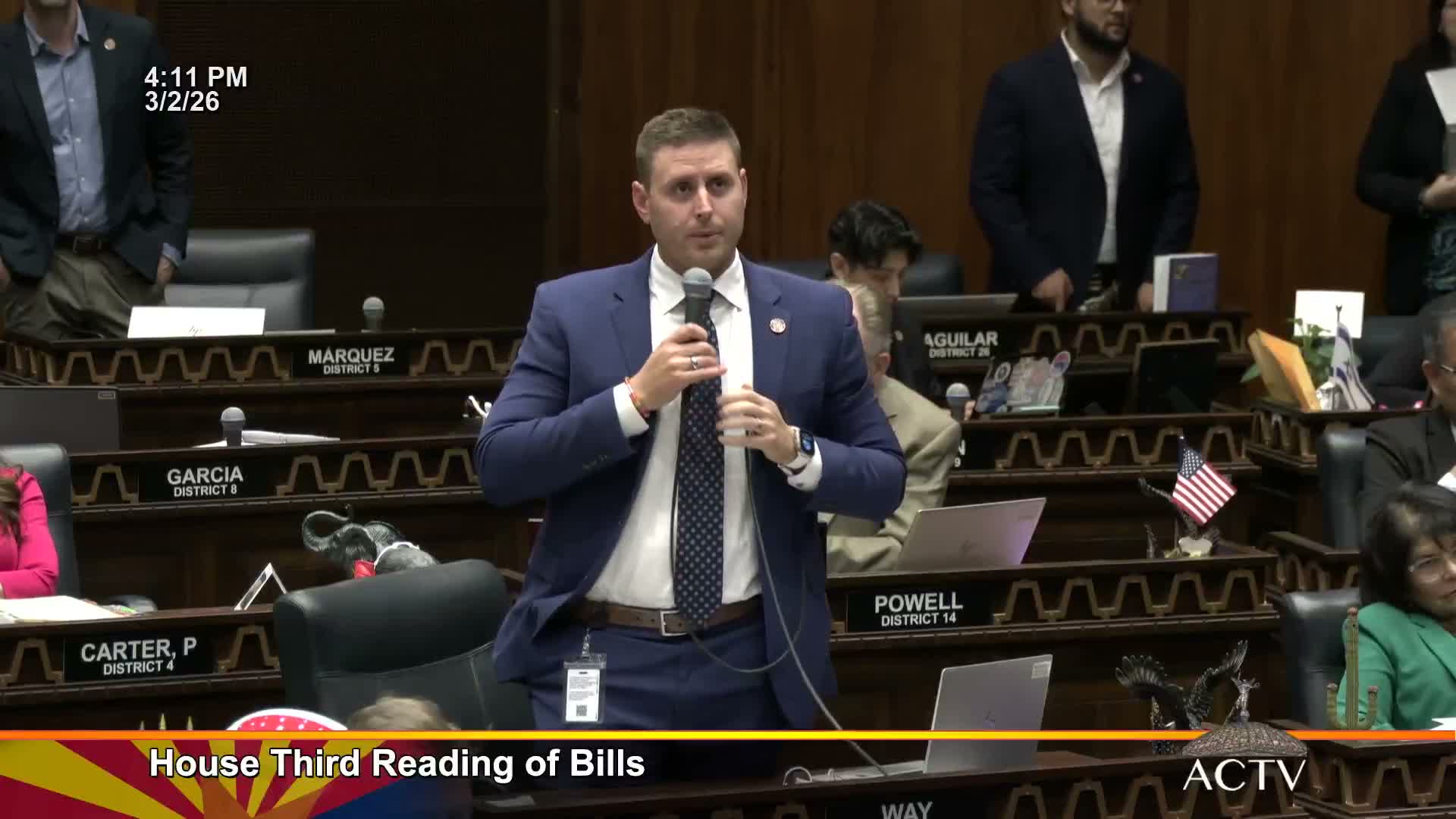
Lawmakers spent large portions of the day debating a group of proposed constitutional referrals and nonbinding resolutions that the House chose to place on the ballot.
HCR2040 would amend the Arizona Constitution to limit or prohibit the use of public resources for labor‑organization activities, including some payroll deductions and use of public email or time for union coordination. Proponents argued the change prevents public funds from supporting private political activity; opponents—including multiple educators and legislative Democrats—said the measure is a targeted attack on unions that would weaken teachers’ bargaining power and harm retention. The House approved HCR2040 on a 31–25 recorded vote.
HCR2056, presented as a "declaration of rights" measure protecting personal medical decisions from government mandates, drew another lengthy round of debate. Supporters framed it as restoring individual medical decision‑making and bodily autonomy; critics—including public‑health advocates—warned it could constrain schools and public‑health authorities during disease outbreaks, limit vaccine requirements, and increase healthcare costs. The House approved HCR2056 for referral to the ballot on a 31–23 recorded vote (with five members not voting or absent in the tally recorded in the transcript).
Several other constitutional referral items also moved forward during the session (HCR2048, HCR2045 etc. as listed on the calendar), and House leaders instructed clerks to record the committee reports and convey the measures to the Senate. The debates featured frequent points of order and extended explanations of votes from members on both sides.
HCR2040 would amend the Arizona Constitution to limit or prohibit the use of public resources for labor‑organization activities, including some payroll deductions and use of public email or time for union coordination. Proponents argued the change prevents public funds from supporting private political activity; opponents—including multiple educators and legislative Democrats—said the measure is a targeted attack on unions that would weaken teachers’ bargaining power and harm retention. The House approved HCR2040 on a 31–25 recorded vote.
HCR2056, presented as a "declaration of rights" measure protecting personal medical decisions from government mandates, drew another lengthy round of debate. Supporters framed it as restoring individual medical decision‑making and bodily autonomy; critics—including public‑health advocates—warned it could constrain schools and public‑health authorities during disease outbreaks, limit vaccine requirements, and increase healthcare costs. The House approved HCR2056 for referral to the ballot on a 31–23 recorded vote (with five members not voting or absent in the tally recorded in the transcript).
Several other constitutional referral items also moved forward during the session (HCR2048, HCR2045 etc. as listed on the calendar), and House leaders instructed clerks to record the committee reports and convey the measures to the Senate. The debates featured frequent points of order and extended explanations of votes from members on both sides.
View the Full Meeting & All Its Details
This article offers just a summary. Unlock complete video, transcripts, and insights as a Founder Member.
✓
Watch full, unedited meeting videos
✓
Search every word spoken in unlimited transcripts
✓
AI summaries & real-time alerts (all government levels)
✓
Permanent access to expanding government content
30-day money-back guarantee
