Connecticut Board of Pardons and Paroles grants multiple COEs and pardons, refers several cases to full hearing
March 02, 2026 | Board of Pardons and Paroles, Departments and Agencies, Organizations, Executive, Connecticut
This article was created by AI summarizing key points discussed. AI makes mistakes, so for full details and context, please refer to the video of the full meeting. Please report any errors so we can fix them. Report an error »
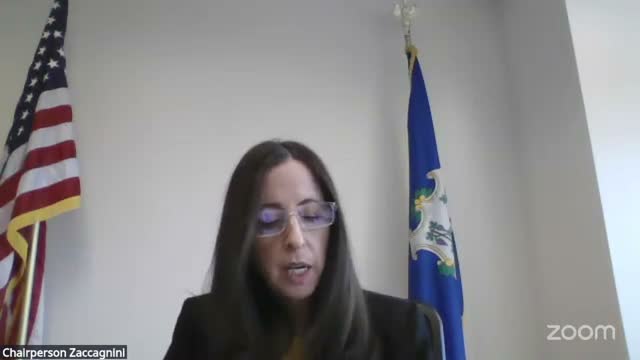
The Connecticut Board of Pardons and Paroles met March 2 for an expedited prescreen and certificate-of-employability (COE) review and decided a series of administrative grants, denials and referrals.
Jennifer Medina Zaccagnini, who opened the public session, reviewed procedures and reminded applicants that “if you are granted an absolute pardon today, it may take up to 10 weeks from the date of this hearing to erase your criminal history securely and safely from public record.” The board began with COE applications and then moved to its expedited pardon docket for cases that do not require victim outreach.
On certificates of employability, the board granted COEs to several applicants. Joy Chance summarized Trevorrow Jones’s case and recommended a COE based on completed probation and education; the board approved the COE. The panel granted a COE to Jennifer Sandoval but imposed a condition prohibiting direct contact with children after members noted her license and past work with students with disabilities. The board also granted COEs to Matthew Charlot (with a restriction that his employment not involve driving), Shaira Hawkins and Sheila Mullins.
On the expedited pardon docket the board approved a number of absolute pardons for applicants whose last convictions were many years in the past and who the panel said had demonstrated rehabilitation through work, volunteerism or sustained sobriety. Examples include grants for Robert Grant, MD Raman, Anthony Stella, Sebastiano Aresco and several others. In contrast, the board denied an absolute pardon for Sarah Hough, citing the recency and repetition of DUI offenses and concerns about public safety.
One notable contested decision involved Stacy Broadnax, whose case drew disagreement among panelists. Aileen Keyes said video evidence and witness statements contradicted Broadnax’s account and showed Broadnax and her daughter as aggressors; Joy Chance and the chair emphasized Broadnax’s completion of probation and programs. The board granted Broadnax an absolute pardon by majority vote, with Keyes recorded as dissenting.
The panel then moved to the prescreen review docket, where members voted on whether to send cases forward for full hearings (because those items require victim outreach). The board voted to grant hearings for multiple applicants — for example, Armand Amendola, Alejandro Falcon Garcia, Christopher Gleason, Nicholas Mitre and others — while denying some petitions at prescreen, including Eric Small, where members cited an extensive criminal history and multiple unsatisfactory probations.
Decisions were recorded on the public record and the meeting concluded after the last prescreen votes. Applicants granted absolute pardons were told they would be notified and that administrative record-erasure processes could take up to about 10 weeks; applicants granted COEs were told certificates would be mailed within two weeks. Cases referred for full hearings will be scheduled to allow victim outreach or additional in-person testimony.
What to watch next: the board’s referrals now set dates for full hearings on multiple cases — those hearings will allow applicants to present testimony in person and will include victim-outreach procedures the board follows before issuing final pardons.
Jennifer Medina Zaccagnini, who opened the public session, reviewed procedures and reminded applicants that “if you are granted an absolute pardon today, it may take up to 10 weeks from the date of this hearing to erase your criminal history securely and safely from public record.” The board began with COE applications and then moved to its expedited pardon docket for cases that do not require victim outreach.
On certificates of employability, the board granted COEs to several applicants. Joy Chance summarized Trevorrow Jones’s case and recommended a COE based on completed probation and education; the board approved the COE. The panel granted a COE to Jennifer Sandoval but imposed a condition prohibiting direct contact with children after members noted her license and past work with students with disabilities. The board also granted COEs to Matthew Charlot (with a restriction that his employment not involve driving), Shaira Hawkins and Sheila Mullins.
On the expedited pardon docket the board approved a number of absolute pardons for applicants whose last convictions were many years in the past and who the panel said had demonstrated rehabilitation through work, volunteerism or sustained sobriety. Examples include grants for Robert Grant, MD Raman, Anthony Stella, Sebastiano Aresco and several others. In contrast, the board denied an absolute pardon for Sarah Hough, citing the recency and repetition of DUI offenses and concerns about public safety.
One notable contested decision involved Stacy Broadnax, whose case drew disagreement among panelists. Aileen Keyes said video evidence and witness statements contradicted Broadnax’s account and showed Broadnax and her daughter as aggressors; Joy Chance and the chair emphasized Broadnax’s completion of probation and programs. The board granted Broadnax an absolute pardon by majority vote, with Keyes recorded as dissenting.
The panel then moved to the prescreen review docket, where members voted on whether to send cases forward for full hearings (because those items require victim outreach). The board voted to grant hearings for multiple applicants — for example, Armand Amendola, Alejandro Falcon Garcia, Christopher Gleason, Nicholas Mitre and others — while denying some petitions at prescreen, including Eric Small, where members cited an extensive criminal history and multiple unsatisfactory probations.
Decisions were recorded on the public record and the meeting concluded after the last prescreen votes. Applicants granted absolute pardons were told they would be notified and that administrative record-erasure processes could take up to about 10 weeks; applicants granted COEs were told certificates would be mailed within two weeks. Cases referred for full hearings will be scheduled to allow victim outreach or additional in-person testimony.
What to watch next: the board’s referrals now set dates for full hearings on multiple cases — those hearings will allow applicants to present testimony in person and will include victim-outreach procedures the board follows before issuing final pardons.
Don't Miss a Word: See the Full Meeting!
Go beyond summaries. Unlock every video, transcript, and key insight with a Founder Membership.
✓
Get instant access to full meeting videos
✓
Search and clip any phrase from complete transcripts
✓
Receive AI-powered summaries & custom alerts
✓
Enjoy lifetime, unrestricted access to government data
30-day money-back guarantee
