San Angelo planners say $1.1M in infill grants since 2019 returned taxable value and coincided with crime decreases in funded neighborhoods
March 03, 2026 | San Angelo, Tom Green County, Texas
This article was created by AI summarizing key points discussed. AI makes mistakes, so for full details and context, please refer to the video of the full meeting. Please report any errors so we can fix them. Report an error »
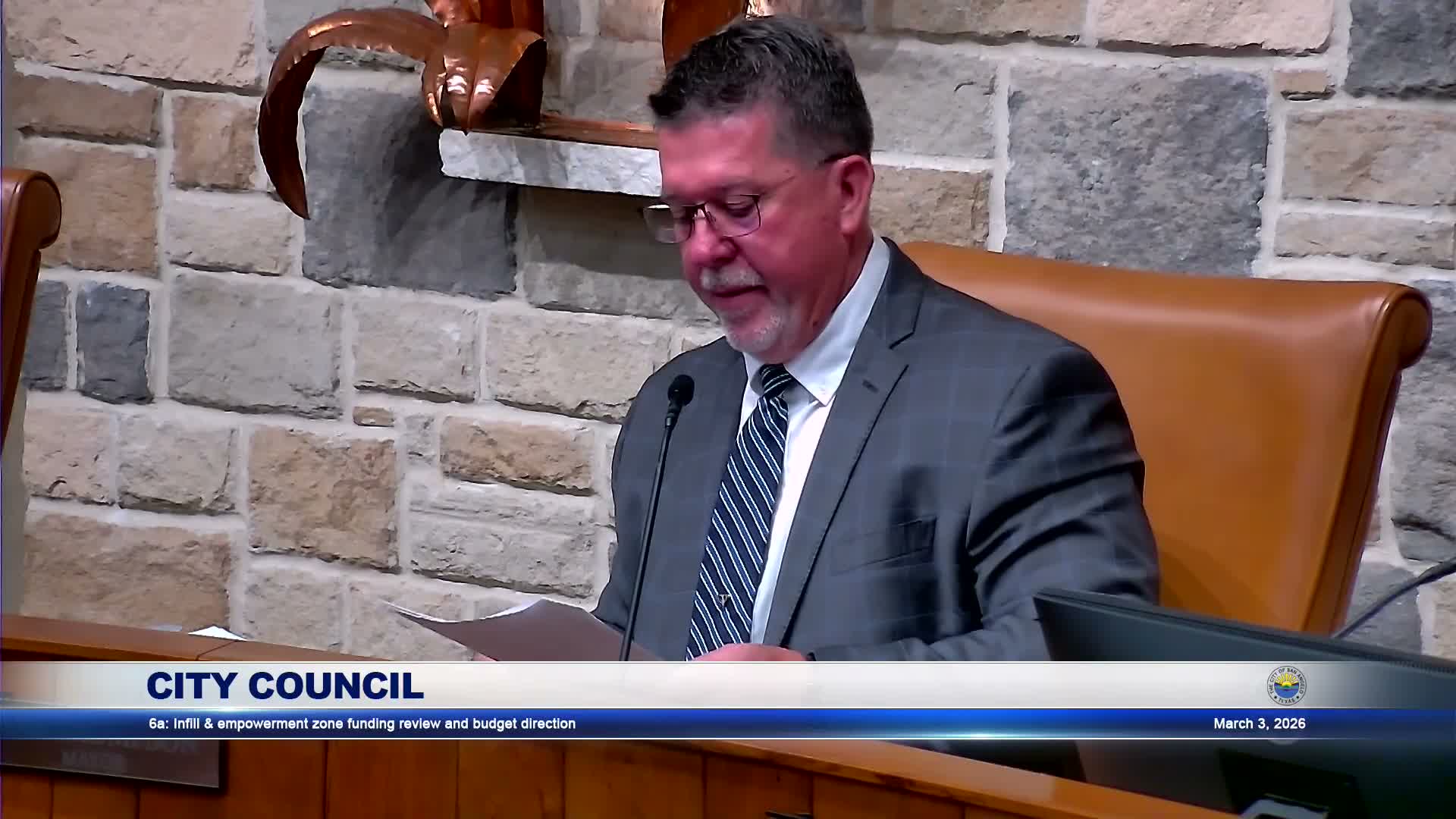
City planning staff told the San Angelo City Council on March 3 that targeted infill funding since 2019 has converted vacant lots into homes, produced measurable tax returns, and correlated with reductions in some neighborhood crime rates.
Arden (planner, presenting the team's analysis) said the infill program produced 196 awards and four infrastructure projects covering 222 lots and that staff has spent just over $1,000,000 for the program through the study cutoff. Arden reported that a typical $5,000 grant to an infill lot was associated with a median completed-lot value of about $183,000 and, "When we invest $5,000, we receive an average tax return of $1,454 each year after it's completed." The presentation estimated that the city would recoup the program's investment on those 222 lots within about four years and then realize ongoing tax revenue.
Arden and the analysis team also reported neighborhood-level differences: Lakeview (with two large infrastructure investments) received the largest share of funds and experienced a roughly 70% decrease in crime since 2019; Reagan and Blackshear also showed pronounced decreases. At the same time, planners said the infill area still contains roughly 1,800 vacant, infill-eligible lots that, if developed at the median infill lot value used in the study, could generate substantially more tax revenue.
Planning & Development Director Aaron Vannoy framed the presentation within broader housing-market data: the housing study shows strongest demand for $175,000–$225,000 homes and rental ranges of $875–$1,300, but local median incomes mean many households struggle to afford entry-level prices. Vannoy recommended zoning flexibility (smaller lot options), targeted CIP (capital improvements) investments to support clusters of blocks, and formation of a housing-supply accelerator committee to review ordinances, codes and permitting processes to encourage attainable construction.
Council members praised the data-driven approach and suggested routing recommendations through the comprehensive-plan and CIP processes. Nonprofit and social-service leaders backed the program during public comment: Mike Burnett of the Concho Valley Community Action Agency said infill investments stabilize neighborhoods and are part of a broader strategy to address housing burden and homelessness.
Why it matters: The staff analysis ties modest per-lot grants to substantial post-completion appraised values and recurring tax revenue, framing infill investment as both a community-stabilization and fiscal strategy. Council discussion indicated interest in folding these findings into CIP budgeting and the upcoming comprehensive-plan work.
Next steps: Staff and council members discussed returning recommendations for CIP consideration, examining targeted block-level strategies, and continuing to evaluate program metrics as more data accumulates.
Arden (planner, presenting the team's analysis) said the infill program produced 196 awards and four infrastructure projects covering 222 lots and that staff has spent just over $1,000,000 for the program through the study cutoff. Arden reported that a typical $5,000 grant to an infill lot was associated with a median completed-lot value of about $183,000 and, "When we invest $5,000, we receive an average tax return of $1,454 each year after it's completed." The presentation estimated that the city would recoup the program's investment on those 222 lots within about four years and then realize ongoing tax revenue.
Arden and the analysis team also reported neighborhood-level differences: Lakeview (with two large infrastructure investments) received the largest share of funds and experienced a roughly 70% decrease in crime since 2019; Reagan and Blackshear also showed pronounced decreases. At the same time, planners said the infill area still contains roughly 1,800 vacant, infill-eligible lots that, if developed at the median infill lot value used in the study, could generate substantially more tax revenue.
Planning & Development Director Aaron Vannoy framed the presentation within broader housing-market data: the housing study shows strongest demand for $175,000–$225,000 homes and rental ranges of $875–$1,300, but local median incomes mean many households struggle to afford entry-level prices. Vannoy recommended zoning flexibility (smaller lot options), targeted CIP (capital improvements) investments to support clusters of blocks, and formation of a housing-supply accelerator committee to review ordinances, codes and permitting processes to encourage attainable construction.
Council members praised the data-driven approach and suggested routing recommendations through the comprehensive-plan and CIP processes. Nonprofit and social-service leaders backed the program during public comment: Mike Burnett of the Concho Valley Community Action Agency said infill investments stabilize neighborhoods and are part of a broader strategy to address housing burden and homelessness.
Why it matters: The staff analysis ties modest per-lot grants to substantial post-completion appraised values and recurring tax revenue, framing infill investment as both a community-stabilization and fiscal strategy. Council discussion indicated interest in folding these findings into CIP budgeting and the upcoming comprehensive-plan work.
Next steps: Staff and council members discussed returning recommendations for CIP consideration, examining targeted block-level strategies, and continuing to evaluate program metrics as more data accumulates.
Don't Miss a Word: See the Full Meeting!
Go beyond summaries. Unlock every video, transcript, and key insight with a Founder Membership.
✓
Get instant access to full meeting videos
✓
Search and clip any phrase from complete transcripts
✓
Receive AI-powered summaries & custom alerts
✓
Enjoy lifetime, unrestricted access to government data
30-day money-back guarantee
