Judge upholds automated camera evidence in contested Lake Forest Park hearings
March 03, 2026 | Lake Forest Park, King County, Washington
This article was created by AI summarizing key points discussed. AI makes mistakes, so for full details and context, please refer to the video of the full meeting. Please report any errors so we can fix them. Report an error »
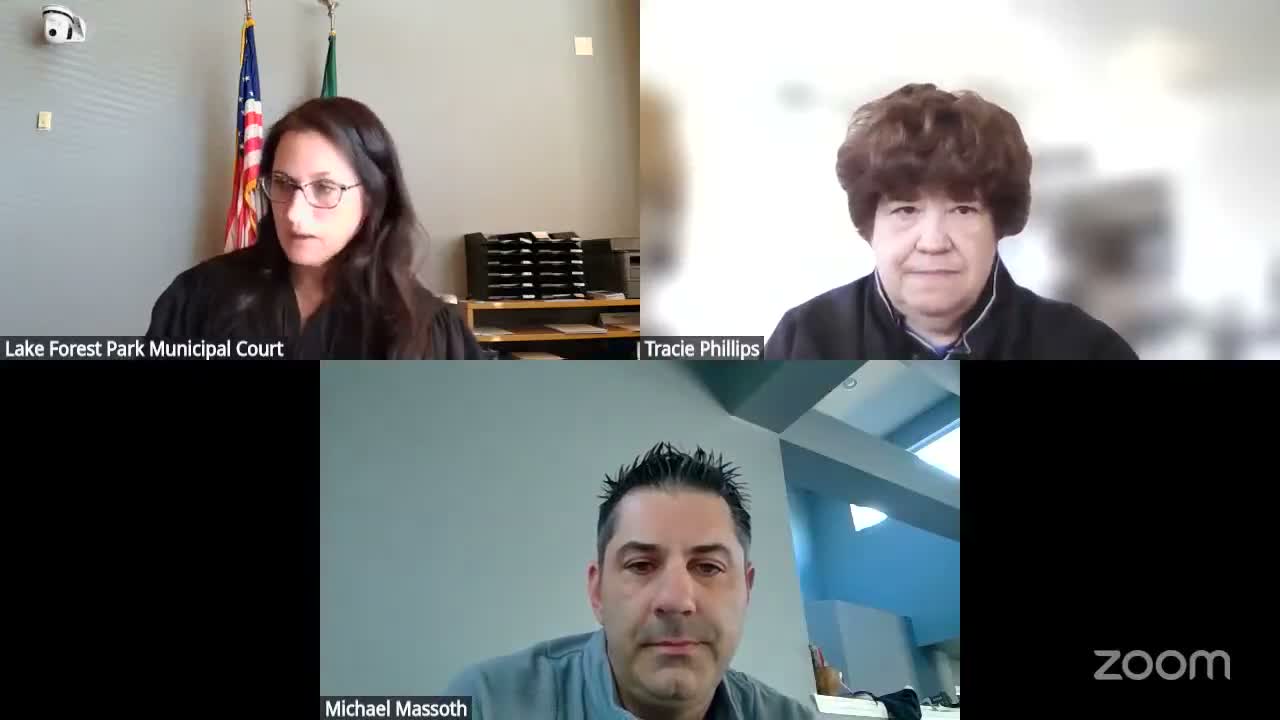
Two contested hearings on March 2 focused on whether automated traffic‑safety cameras properly identified offending vehicles and whether a triggered flash could reflect another car’s movement.
Eric Evans (case 250431288) testified that the device may have been triggered by the car in front of his vehicle and questioned whether the measurement recorded his speed. "According to the Lake Forest Park website, it says that traffic safety cameras are only triggered when a law is broken," Evans said, arguing the camera might have recorded a different vehicle. Judge Grant reviewed the notice of infraction, the officer's sworn statement, multiple photos and the video, explained that the equipment is calibrated and that maintenance and calibration records are public, and found the city met its preponderance burden. "I have confidence in the machine and the result," the judge said before imposing a $145 penalty.
Michael Masaltz (case 250416081) likewise raised concerns about dark photographs and the timing of flashes; after the court reviewed the available video and evidence and heard testimony, Judge Grant again found the city's evidence sufficient and imposed the penalty recorded on the notice.
Why it matters: these hearings show how the court assesses automated enforcement evidence. The judge relied on officer declarations, photographs, and video frames, noted the machine’s calibration and public maintenance records, and applied the preponderance standard for contested infractions.
What the judge said: Judge Grant repeatedly emphasized the evidentiary standard and the availability of machine maintenance records to the public while explaining why the court could rely on the photo/video record in finding violations. In Evans’s hearing she said the device "has identified this specific vehicle" and thus supported the finding by a preponderance.
Next steps: the court will mail orders and invoices to defendants who lost contested hearings and will continue to accept mitigation requests or community‑service options for qualifying defendants in other matters.
Eric Evans (case 250431288) testified that the device may have been triggered by the car in front of his vehicle and questioned whether the measurement recorded his speed. "According to the Lake Forest Park website, it says that traffic safety cameras are only triggered when a law is broken," Evans said, arguing the camera might have recorded a different vehicle. Judge Grant reviewed the notice of infraction, the officer's sworn statement, multiple photos and the video, explained that the equipment is calibrated and that maintenance and calibration records are public, and found the city met its preponderance burden. "I have confidence in the machine and the result," the judge said before imposing a $145 penalty.
Michael Masaltz (case 250416081) likewise raised concerns about dark photographs and the timing of flashes; after the court reviewed the available video and evidence and heard testimony, Judge Grant again found the city's evidence sufficient and imposed the penalty recorded on the notice.
Why it matters: these hearings show how the court assesses automated enforcement evidence. The judge relied on officer declarations, photographs, and video frames, noted the machine’s calibration and public maintenance records, and applied the preponderance standard for contested infractions.
What the judge said: Judge Grant repeatedly emphasized the evidentiary standard and the availability of machine maintenance records to the public while explaining why the court could rely on the photo/video record in finding violations. In Evans’s hearing she said the device "has identified this specific vehicle" and thus supported the finding by a preponderance.
Next steps: the court will mail orders and invoices to defendants who lost contested hearings and will continue to accept mitigation requests or community‑service options for qualifying defendants in other matters.
View the Full Meeting & All Its Details
This article offers just a summary. Unlock complete video, transcripts, and insights as a Founder Member.
✓
Watch full, unedited meeting videos
✓
Search every word spoken in unlimited transcripts
✓
AI summaries & real-time alerts (all government levels)
✓
Permanent access to expanding government content
30-day money-back guarantee
