Senate panel backs broad public‑assistance overhaul that includes Medicaid work rules and SNAP fixes
March 02, 2026 | 2026 Legislature FL, Florida
This article was created by AI summarizing key points discussed. AI makes mistakes, so for full details and context, please refer to the video of the full meeting. Please report any errors so we can fix them. Report an error »
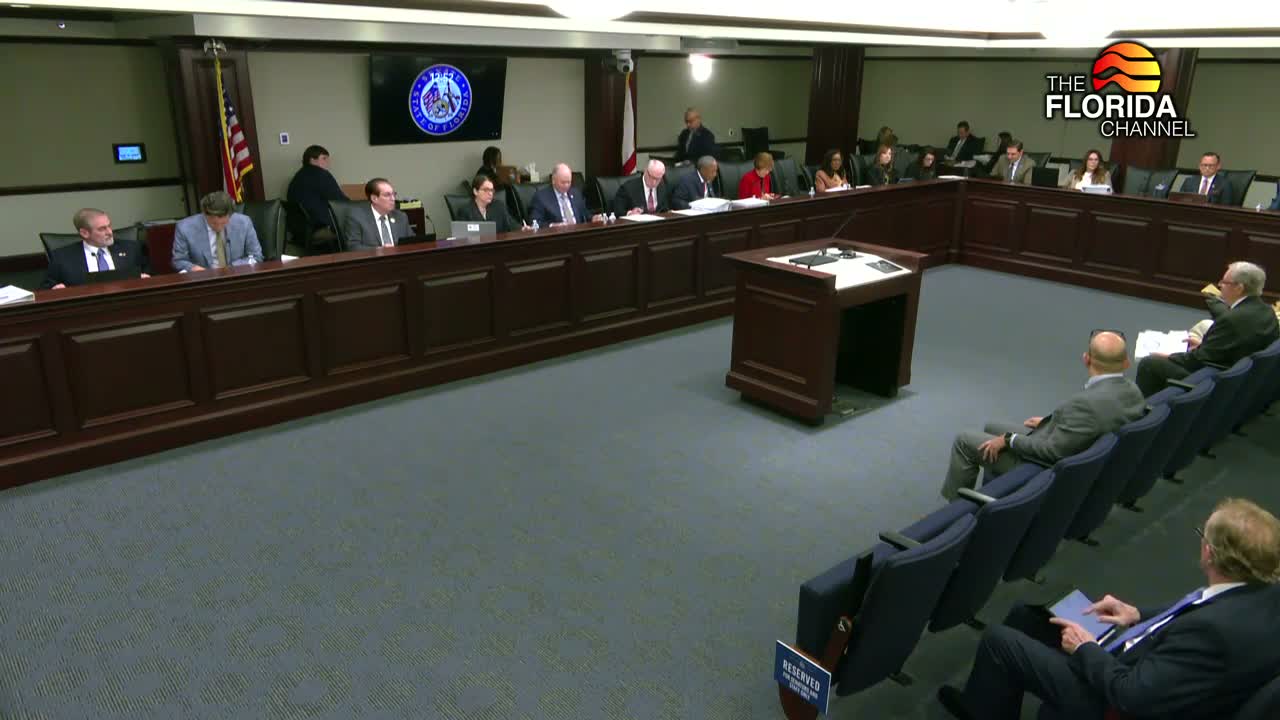
The Senate Appropriations Committee on Feb. 17 reported CS/CS for SB 1758 favorably after lengthy debate that centered on new Medicaid work requirements and measures aimed at reducing SNAP payment errors.
Sponsor Sen. Joseph Gates, presenting the bill, said it bundles five reforms: stronger authority for the Agency for Health Care Administration to investigate and recover Medicaid overpayments; a work requirement for certain able‑bodied adults (80 hours a month or training, subject to a federal waiver); expanded home‑ and community‑based behavioral‑health services under Medicaid waivers; modernization of Medicaid pharmacy purchasing to obtain rebates and reduce institutional costs; and a corrective action plan to cut Florida’s SNAP error rate from the current level to 6 percent. “This bill sets a state policy to improve stewardship, expand behavioral‑health services, fix drug purchasing and reduce SNAP errors,” Gates said.
Why it matters: Sponsors argued the package will curb waste, strengthen care for people with serious mental illness, and protect state funds from significant federal penalties tied to SNAP error rates. Gates and backers said the business‑plan requirement — agencies must develop operational and fiscal plans before implementation — provides guardrails and a glide path to avoid abrupt coverage loss.
Critics from health and advocacy groups warned the work requirements and stricter SNAP rules risk disenrolling eligible people because of paperwork or system failures. “Work reporting requirements in other states did not meaningfully increase employment but did increase the uninsured rate,” said Susan Harbin of the American Cancer Society Cancer Action Network, citing studies and experience. Cindy Huddleston of the Florida Policy Institute warned the SNAP EBT photo‑ID requirement and limits on self‑attestation could add cost, delay benefits and stigmatize families.
Amendments and concessions: The committee adopted an amendment from Sen. Gates that added a 12‑month transitional Medicaid benefit glide path (modeled on existing TANF transitional benefits) to ease the risk that individuals who gain employment immediately lose coverage. Another amendment by Sen. Gaetz added an explicit hospice exemption for people with six months or less to live.
Operational safeguards: Gates said the Agency for Health Care Administration and the Department of Children and Families must produce a business plan by Dec. 1, 2026, detailing costs, implementation and how CareerSource Florida will help people meet work requirements. The plan must be reviewed by the Legislature before any enforcement begins. “We are laying out state policy subject to implementation plans,” Gates said.
What the opponents pressed: Multiple witnesses, including public‑health groups and legal advocates, said DCF lacks capacity and the state has recently faced court scrutiny over redeterminations. Florida Health Justice Project’s Melanie Williams warned that adding verification systems risks litigation and erroneous disenrollments. Testimony from health‑care providers emphasized the difficulty of applying additional administrative burdens to populations with cancer, disabilities or caregiving responsibilities.
What happens next: The committee moved the bill forward. Sponsor Gates said the business‑plan requirement is intended to avoid unintended coverage loss and that specific operational details will be returned to the Legislature for review. Voting records were recorded on the committee floor and the measure was reported favorably to the next step in the process.
Ending note: The bill couples fiscal‑oversight priorities with expansions of behavioral‑health services; implementation hinges on the interagency business plan and — for work requirements — any federal waiver approval.
Sponsor Sen. Joseph Gates, presenting the bill, said it bundles five reforms: stronger authority for the Agency for Health Care Administration to investigate and recover Medicaid overpayments; a work requirement for certain able‑bodied adults (80 hours a month or training, subject to a federal waiver); expanded home‑ and community‑based behavioral‑health services under Medicaid waivers; modernization of Medicaid pharmacy purchasing to obtain rebates and reduce institutional costs; and a corrective action plan to cut Florida’s SNAP error rate from the current level to 6 percent. “This bill sets a state policy to improve stewardship, expand behavioral‑health services, fix drug purchasing and reduce SNAP errors,” Gates said.
Why it matters: Sponsors argued the package will curb waste, strengthen care for people with serious mental illness, and protect state funds from significant federal penalties tied to SNAP error rates. Gates and backers said the business‑plan requirement — agencies must develop operational and fiscal plans before implementation — provides guardrails and a glide path to avoid abrupt coverage loss.
Critics from health and advocacy groups warned the work requirements and stricter SNAP rules risk disenrolling eligible people because of paperwork or system failures. “Work reporting requirements in other states did not meaningfully increase employment but did increase the uninsured rate,” said Susan Harbin of the American Cancer Society Cancer Action Network, citing studies and experience. Cindy Huddleston of the Florida Policy Institute warned the SNAP EBT photo‑ID requirement and limits on self‑attestation could add cost, delay benefits and stigmatize families.
Amendments and concessions: The committee adopted an amendment from Sen. Gates that added a 12‑month transitional Medicaid benefit glide path (modeled on existing TANF transitional benefits) to ease the risk that individuals who gain employment immediately lose coverage. Another amendment by Sen. Gaetz added an explicit hospice exemption for people with six months or less to live.
Operational safeguards: Gates said the Agency for Health Care Administration and the Department of Children and Families must produce a business plan by Dec. 1, 2026, detailing costs, implementation and how CareerSource Florida will help people meet work requirements. The plan must be reviewed by the Legislature before any enforcement begins. “We are laying out state policy subject to implementation plans,” Gates said.
What the opponents pressed: Multiple witnesses, including public‑health groups and legal advocates, said DCF lacks capacity and the state has recently faced court scrutiny over redeterminations. Florida Health Justice Project’s Melanie Williams warned that adding verification systems risks litigation and erroneous disenrollments. Testimony from health‑care providers emphasized the difficulty of applying additional administrative burdens to populations with cancer, disabilities or caregiving responsibilities.
What happens next: The committee moved the bill forward. Sponsor Gates said the business‑plan requirement is intended to avoid unintended coverage loss and that specific operational details will be returned to the Legislature for review. Voting records were recorded on the committee floor and the measure was reported favorably to the next step in the process.
Ending note: The bill couples fiscal‑oversight priorities with expansions of behavioral‑health services; implementation hinges on the interagency business plan and — for work requirements — any federal waiver approval.
View the Full Meeting & All Its Details
This article offers just a summary. Unlock complete video, transcripts, and insights as a Founder Member.
✓
Watch full, unedited meeting videos
✓
Search every word spoken in unlimited transcripts
✓
AI summaries & real-time alerts (all government levels)
✓
Permanent access to expanding government content
30-day money-back guarantee
