Nebraska hearing spotlights McCook detention conversion and bills to require notice or legislative approval for immigration-enforcement agreements
February 27, 2026 | 2026 Legislature NE, Nebraska
This article was created by AI summarizing key points discussed. AI makes mistakes, so for full details and context, please refer to the video of the full meeting. Please report any errors so we can fix them. Report an error »
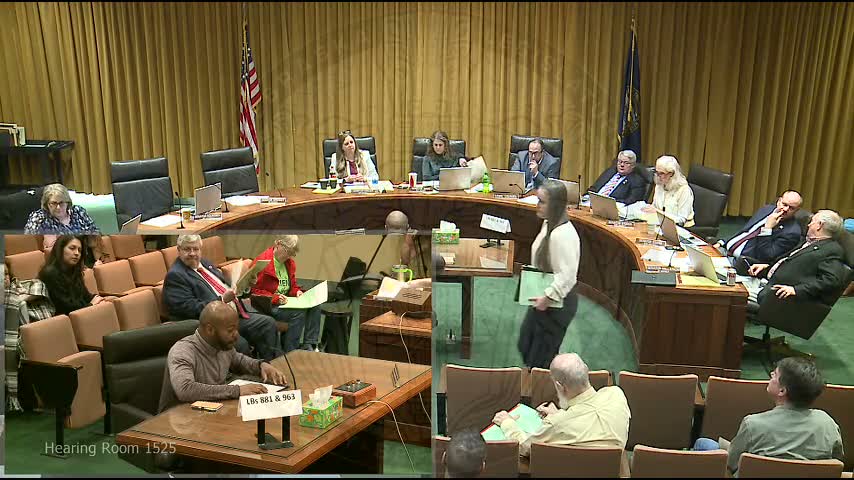
Lincoln — The Judiciary Committee spent a session hearing competing bills that would increase transparency or legislative oversight for agreements between Nebraska public entities and federal immigration authorities.
Senator Terrell McKinney opened LB 963, which would prohibit state agencies and officials from entering into immigration‑enforcement agreements without prior legislative approval and would void any prior agreements that were not approved. McKinney said the McCook work‑ethic camp’s conversion into an ICE detention facility demonstrated the need for legislative review.
Senator Duxi Dureka (transcript spelling) opened LB 881, a narrower measure that would require any law‑enforcement agency entering an agreement to enforce immigration law to notify the governing political subdivision at least 30 days before the agreement and place the notice on the next regularly scheduled public agenda, giving local officials and residents an opportunity to weigh in.
Supporters: Community groups, immigrant‑advocacy organizations and local residents testified at length that many Nebraskans — particularly immigrant families — were shut out of decisions affecting local facilities and that agreements can carry unanticipated programmatic and fiscal costs. Phil Lyons and other McCook residents described being told the state would convert the work‑ethic camp to a detention site with little local notice. Civil‑rights groups, including Nebraska Appleseed, the ACLU and CIRA, warned of “mission drift” if local police are pulled toward immigration enforcement, and urged safeguards to protect trust and public safety.
Opponents and state agencies: Colonel Ryan Waugh/Wall of the Nebraska State Patrol testified in opposition to LB 881, saying that the bill’s notice and approval requirements could slow or complicate time‑sensitive operations, expose sensitive operational details in public hearings and create regulatory burdens without funding. He also said the State Patrol participates in multiple federal task forces under existing MOUs and described reimbursement processes for troopers assigned to federal task forces.
Rob Jeffries, director of the Nebraska Department of Correctional Services, testified about the McCook facility and said DCS’s statutory authority supports partnership with federal agencies; he said DCS manages custody, not federal enforcement, that the facility is being operated under federal standards and that the state has received federal reimbursement for costs and facility modifications.
Why it matters: Proponents argued the bills protect local taxpayers and ensure elected local officials have a say before public resources, staff time or facilities are committed to federal enforcement activities. Opponents warned the proposed processes could jeopardize public‑safety flexibility and duplicate existing oversight; agency witnesses described existing agreements as public records with reimbursement mechanisms.
What was clarified on the record: Witnesses described specific facts about McCook’s operation: DCS said the facility had been operating under federal custody since November 2025 with an initial capacity near 200 (with expansion toward 300 underway) and that DHS has provided reimbursements for state expenditures and modifications. The State Patrol said its 287(g)-type task force troopers are part‑time assignments and the federal government reimburses salaries and other costs for those hours.
Next steps: Both bills remain in committee. The hearing record contains substantial community testimony and detailed agency responses; committee members asked follow‑up questions about costs, reimbursement, statutory authority and the interplay between state constitutional provisions and executive‑branch decisions.
Senator Terrell McKinney opened LB 963, which would prohibit state agencies and officials from entering into immigration‑enforcement agreements without prior legislative approval and would void any prior agreements that were not approved. McKinney said the McCook work‑ethic camp’s conversion into an ICE detention facility demonstrated the need for legislative review.
Senator Duxi Dureka (transcript spelling) opened LB 881, a narrower measure that would require any law‑enforcement agency entering an agreement to enforce immigration law to notify the governing political subdivision at least 30 days before the agreement and place the notice on the next regularly scheduled public agenda, giving local officials and residents an opportunity to weigh in.
Supporters: Community groups, immigrant‑advocacy organizations and local residents testified at length that many Nebraskans — particularly immigrant families — were shut out of decisions affecting local facilities and that agreements can carry unanticipated programmatic and fiscal costs. Phil Lyons and other McCook residents described being told the state would convert the work‑ethic camp to a detention site with little local notice. Civil‑rights groups, including Nebraska Appleseed, the ACLU and CIRA, warned of “mission drift” if local police are pulled toward immigration enforcement, and urged safeguards to protect trust and public safety.
Opponents and state agencies: Colonel Ryan Waugh/Wall of the Nebraska State Patrol testified in opposition to LB 881, saying that the bill’s notice and approval requirements could slow or complicate time‑sensitive operations, expose sensitive operational details in public hearings and create regulatory burdens without funding. He also said the State Patrol participates in multiple federal task forces under existing MOUs and described reimbursement processes for troopers assigned to federal task forces.
Rob Jeffries, director of the Nebraska Department of Correctional Services, testified about the McCook facility and said DCS’s statutory authority supports partnership with federal agencies; he said DCS manages custody, not federal enforcement, that the facility is being operated under federal standards and that the state has received federal reimbursement for costs and facility modifications.
Why it matters: Proponents argued the bills protect local taxpayers and ensure elected local officials have a say before public resources, staff time or facilities are committed to federal enforcement activities. Opponents warned the proposed processes could jeopardize public‑safety flexibility and duplicate existing oversight; agency witnesses described existing agreements as public records with reimbursement mechanisms.
What was clarified on the record: Witnesses described specific facts about McCook’s operation: DCS said the facility had been operating under federal custody since November 2025 with an initial capacity near 200 (with expansion toward 300 underway) and that DHS has provided reimbursements for state expenditures and modifications. The State Patrol said its 287(g)-type task force troopers are part‑time assignments and the federal government reimburses salaries and other costs for those hours.
Next steps: Both bills remain in committee. The hearing record contains substantial community testimony and detailed agency responses; committee members asked follow‑up questions about costs, reimbursement, statutory authority and the interplay between state constitutional provisions and executive‑branch decisions.
Don't Miss a Word: See the Full Meeting!
Go beyond summaries. Unlock every video, transcript, and key insight with a Founder Membership.
✓
Get instant access to full meeting videos
✓
Search and clip any phrase from complete transcripts
✓
Receive AI-powered summaries & custom alerts
✓
Enjoy lifetime, unrestricted access to government data
30-day money-back guarantee
