Treasurer warns proposed state carryover cap could force districts to 'use it or lose it'
April 12, 2025 | Grandview Heights Schools, School Districts, Ohio
This article was created by AI summarizing key points discussed. AI makes mistakes, so for full details and context, please refer to the video of the full meeting. Please report any errors so we can fix them. Report an error »
Beth, the district treasurer, told the Grandview Heights Schools Board of Education that a change in a state budget bill would sharply limit school districts' ability to carry forward unspent general‑fund dollars and could force districts to spend reserves to avoid losing local tax revenue.
"The House Finance Committee increased that 25% carryover to 30," Beth said, describing the amendment under consideration. She said the provision would mean that if a district ended the fiscal year with more than the specified carryover percentage, "the county budget commission would have to take away that much of our tax revenue collections next year." She added that the proposal creates a "use it or lose it" incentive that could encourage unnecessary or short‑term spending.
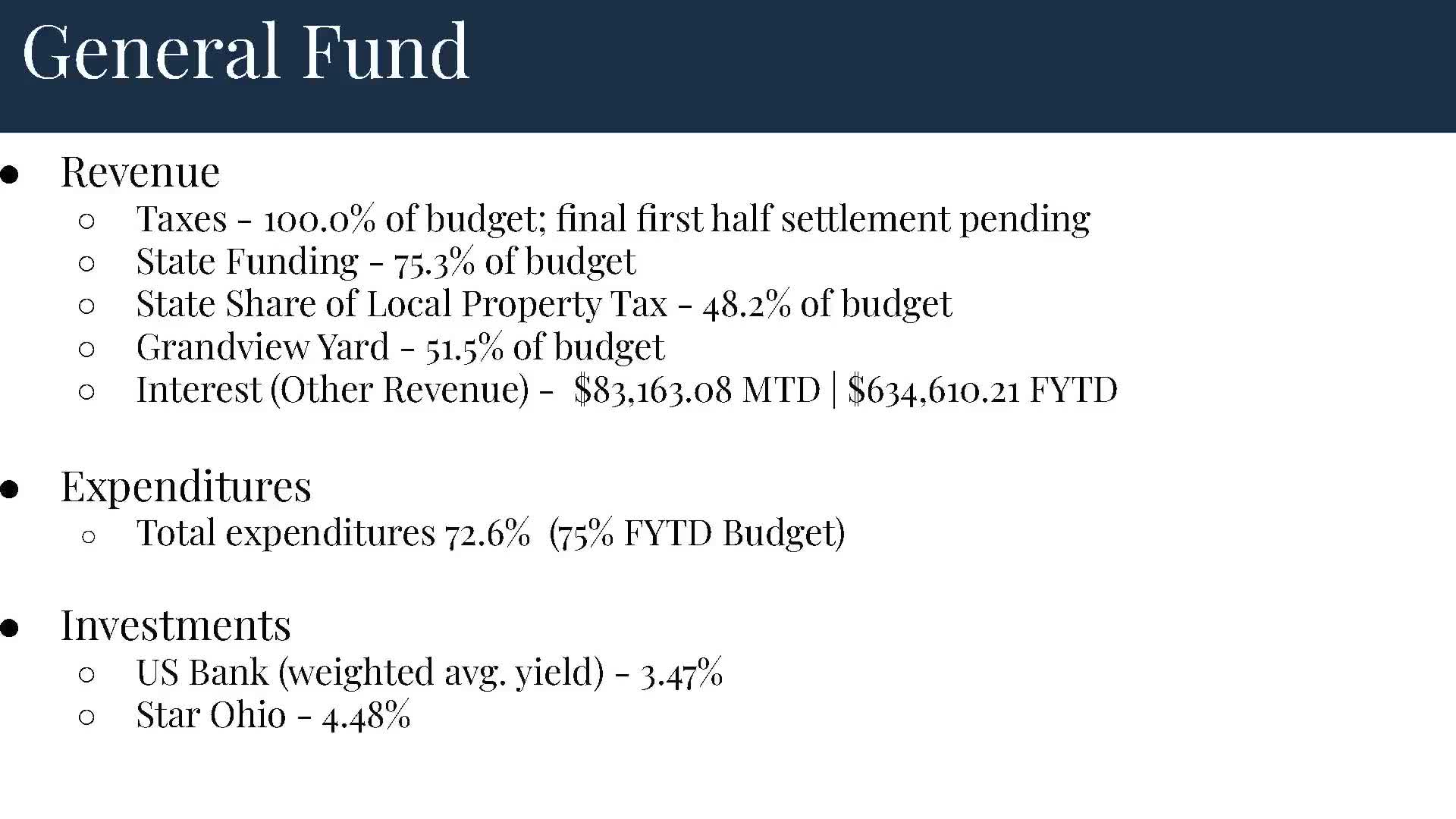
Beth gave the board several figures to illustrate local impact. She said the district's final tax settlement came in nearly on projection, interest revenue for the month was "just over $83,000" and fiscal‑year interest revenue was about $634,000. She said the district's calculations show a roughly 62% carryover balance when the board's policy set‑asides (TIF for debt service and a 5% general‑fund reserve) are not excluded from the measure.
"Those dollars are not unreserved and they're not available," she said, arguing the bill's formula "ignores those factors." Beth said the bond proceeds for current construction were received April 1 and that the district is tracking interest earnings separately for clearer arbitrage calculations.
Board members pushed back on the proposal's effect on local control and fiscal planning. One member said a 25%–30% cap was unreasonable for districts that plan multi‑year levy and bond cycles. Committee member Kevin Guse (name as read during roll call) noted the potential effect on bond ratings and long‑term borrowing costs.
Beth urged trustees and the community to contact state senators and representatives; she and district staff said they have been working with associations and meeting with legislators to convey the district's concerns.
The board did not take formal action on the issue at the meeting; Beth said she will continue to monitor the bill's progress in the Senate and share options for how the district might respond administratively.
The board's immediate next step: continue outreach through associations and direct conversations with state lawmakers and update the board at future meetings.
"The House Finance Committee increased that 25% carryover to 30," Beth said, describing the amendment under consideration. She said the provision would mean that if a district ended the fiscal year with more than the specified carryover percentage, "the county budget commission would have to take away that much of our tax revenue collections next year." She added that the proposal creates a "use it or lose it" incentive that could encourage unnecessary or short‑term spending.
Beth gave the board several figures to illustrate local impact. She said the district's final tax settlement came in nearly on projection, interest revenue for the month was "just over $83,000" and fiscal‑year interest revenue was about $634,000. She said the district's calculations show a roughly 62% carryover balance when the board's policy set‑asides (TIF for debt service and a 5% general‑fund reserve) are not excluded from the measure.
"Those dollars are not unreserved and they're not available," she said, arguing the bill's formula "ignores those factors." Beth said the bond proceeds for current construction were received April 1 and that the district is tracking interest earnings separately for clearer arbitrage calculations.
Board members pushed back on the proposal's effect on local control and fiscal planning. One member said a 25%–30% cap was unreasonable for districts that plan multi‑year levy and bond cycles. Committee member Kevin Guse (name as read during roll call) noted the potential effect on bond ratings and long‑term borrowing costs.
Beth urged trustees and the community to contact state senators and representatives; she and district staff said they have been working with associations and meeting with legislators to convey the district's concerns.
The board did not take formal action on the issue at the meeting; Beth said she will continue to monitor the bill's progress in the Senate and share options for how the district might respond administratively.
The board's immediate next step: continue outreach through associations and direct conversations with state lawmakers and update the board at future meetings.
Don't Miss a Word: See the Full Meeting!
Go beyond summaries. Unlock every video, transcript, and key insight with a Founder Membership.
✓
Get instant access to full meeting videos
✓
Search and clip any phrase from complete transcripts
✓
Receive AI-powered summaries & custom alerts
✓
Enjoy lifetime, unrestricted access to government data
30-day money-back guarantee
