Wyandotte Creek GSA adopts new sustainable‑yield method and reclassifies PMAs
February 27, 2026 | Oroville, Butte County, California
This article was created by AI summarizing key points discussed. AI makes mistakes, so for full details and context, please refer to the video of the full meeting. Please report any errors so we can fix them. Report an error »
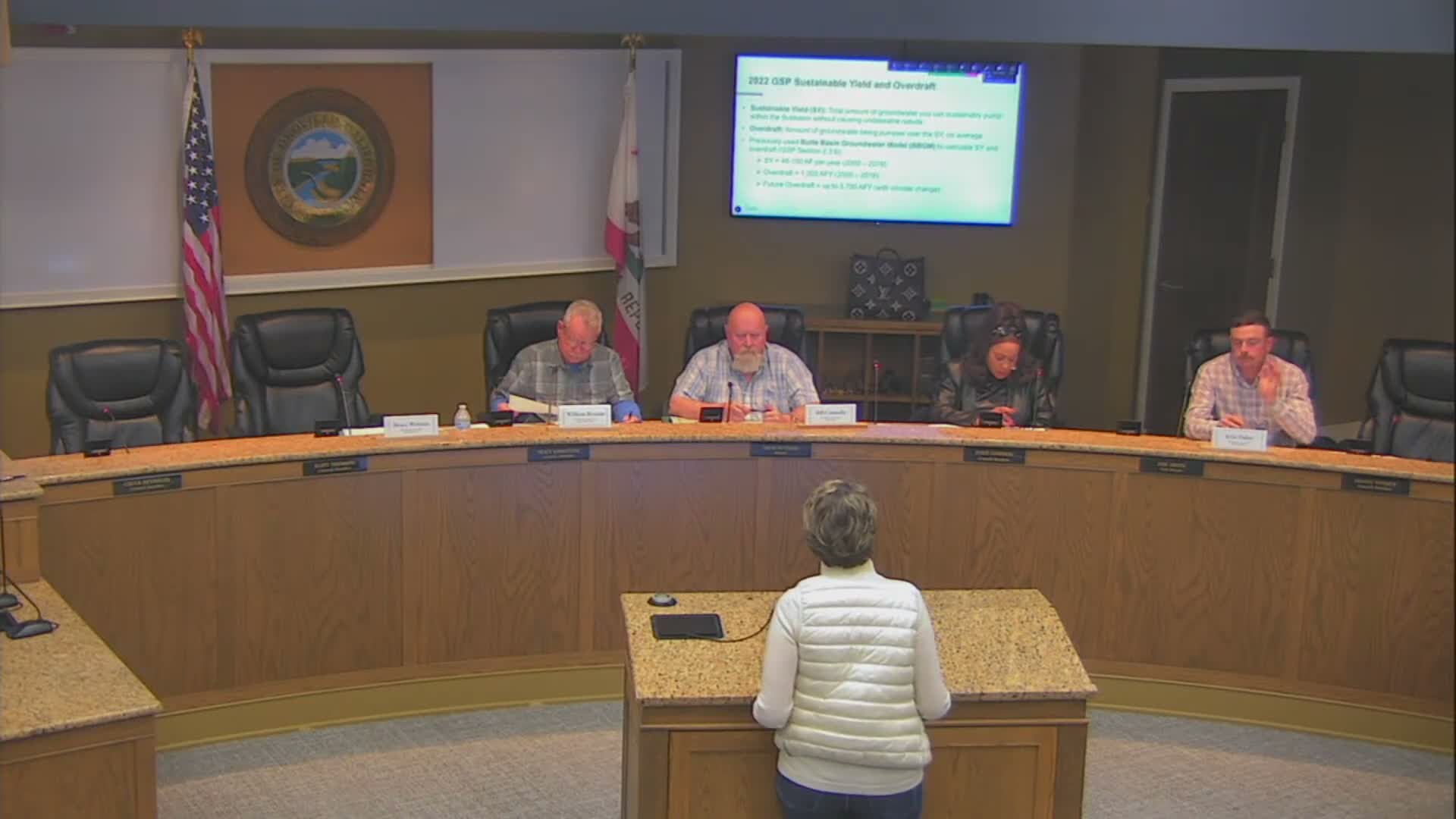
The Wyandotte Creek Groundwater Sustainability Agency on Feb. 26 voted to change how the agency calculates the basin’s sustainable yield and to adopt revised classifications for project and management actions.
The board approved a consultant recommendation to calculate sustainable yield from measured data in the annual report using a 10‑year rolling average (2015–2024 in the draft), rather than relying each year on an updated regional groundwater model. Laura Fadia of Larry Walker Associates explained that using observed groundwater levels and the annual report’s storage calculations would allow the GSA to update yield annually without the higher cost and delay of model updates. “If we use a methodology that just rely on data that are available, we don't need to wait every year for updating the model,” Fadia said.
Fadia reported that applying the proposed approach to available data produced an updated sustainable‑yield estimate of about 43,600 acre‑feet per year and indicated that the basin’s 10‑year change‑in‑storage has been positive. The board discussed the proposal: some members emphasized caution about direct‑injection recharge projects and said they prefer passive or multi‑benefit recharge approaches that the GSA or county can manage and that avoid unintended ownership or legal consequences.
On a separate but related item, staff and consultants proposed simplifying PMA categories into four practical groups—completed, in‑progress, potential and other‑led projects—so GSA staff can prioritize GSA‑led or county‑led projects and stop annually chasing status updates from outside agencies. The reclassification is intended to reduce staff tracking burden and to highlight projects the GSA can implement or influence directly.
Both actions were moved and put to voice votes in open session; members responded “aye” and the board adopted the methodology update and the PMA reclassification. The board indicated the draft periodic evaluation and plan amendments will be made available for public review in March, followed by a formal 45‑day public comment period later in 2026 and final board action in November 2026 to meet DWR submission timelines.
The actions do not, by themselves, change project implementation or funding; they change how the GSA calculates sustainable yield and how it records and priorities projects in the GSP amendment documents. The board directed staff and consultants to post the draft documents for public review and return with recommended language for formal adoption.
The board approved a consultant recommendation to calculate sustainable yield from measured data in the annual report using a 10‑year rolling average (2015–2024 in the draft), rather than relying each year on an updated regional groundwater model. Laura Fadia of Larry Walker Associates explained that using observed groundwater levels and the annual report’s storage calculations would allow the GSA to update yield annually without the higher cost and delay of model updates. “If we use a methodology that just rely on data that are available, we don't need to wait every year for updating the model,” Fadia said.
Fadia reported that applying the proposed approach to available data produced an updated sustainable‑yield estimate of about 43,600 acre‑feet per year and indicated that the basin’s 10‑year change‑in‑storage has been positive. The board discussed the proposal: some members emphasized caution about direct‑injection recharge projects and said they prefer passive or multi‑benefit recharge approaches that the GSA or county can manage and that avoid unintended ownership or legal consequences.
On a separate but related item, staff and consultants proposed simplifying PMA categories into four practical groups—completed, in‑progress, potential and other‑led projects—so GSA staff can prioritize GSA‑led or county‑led projects and stop annually chasing status updates from outside agencies. The reclassification is intended to reduce staff tracking burden and to highlight projects the GSA can implement or influence directly.
Both actions were moved and put to voice votes in open session; members responded “aye” and the board adopted the methodology update and the PMA reclassification. The board indicated the draft periodic evaluation and plan amendments will be made available for public review in March, followed by a formal 45‑day public comment period later in 2026 and final board action in November 2026 to meet DWR submission timelines.
The actions do not, by themselves, change project implementation or funding; they change how the GSA calculates sustainable yield and how it records and priorities projects in the GSP amendment documents. The board directed staff and consultants to post the draft documents for public review and return with recommended language for formal adoption.
View the Full Meeting & All Its Details
This article offers just a summary. Unlock complete video, transcripts, and insights as a Founder Member.
✓
Watch full, unedited meeting videos
✓
Search every word spoken in unlimited transcripts
✓
AI summaries & real-time alerts (all government levels)
✓
Permanent access to expanding government content
30-day money-back guarantee
