Bay Area Creative showcases ‘Unheard Voices’ program, seeks funding for juvenile hall workshops
March 02, 2026 | San Mateo County, California
This article was created by AI summarizing key points discussed. AI makes mistakes, so for full details and context, please refer to the video of the full meeting. Please report any errors so we can fix them. Report an error »
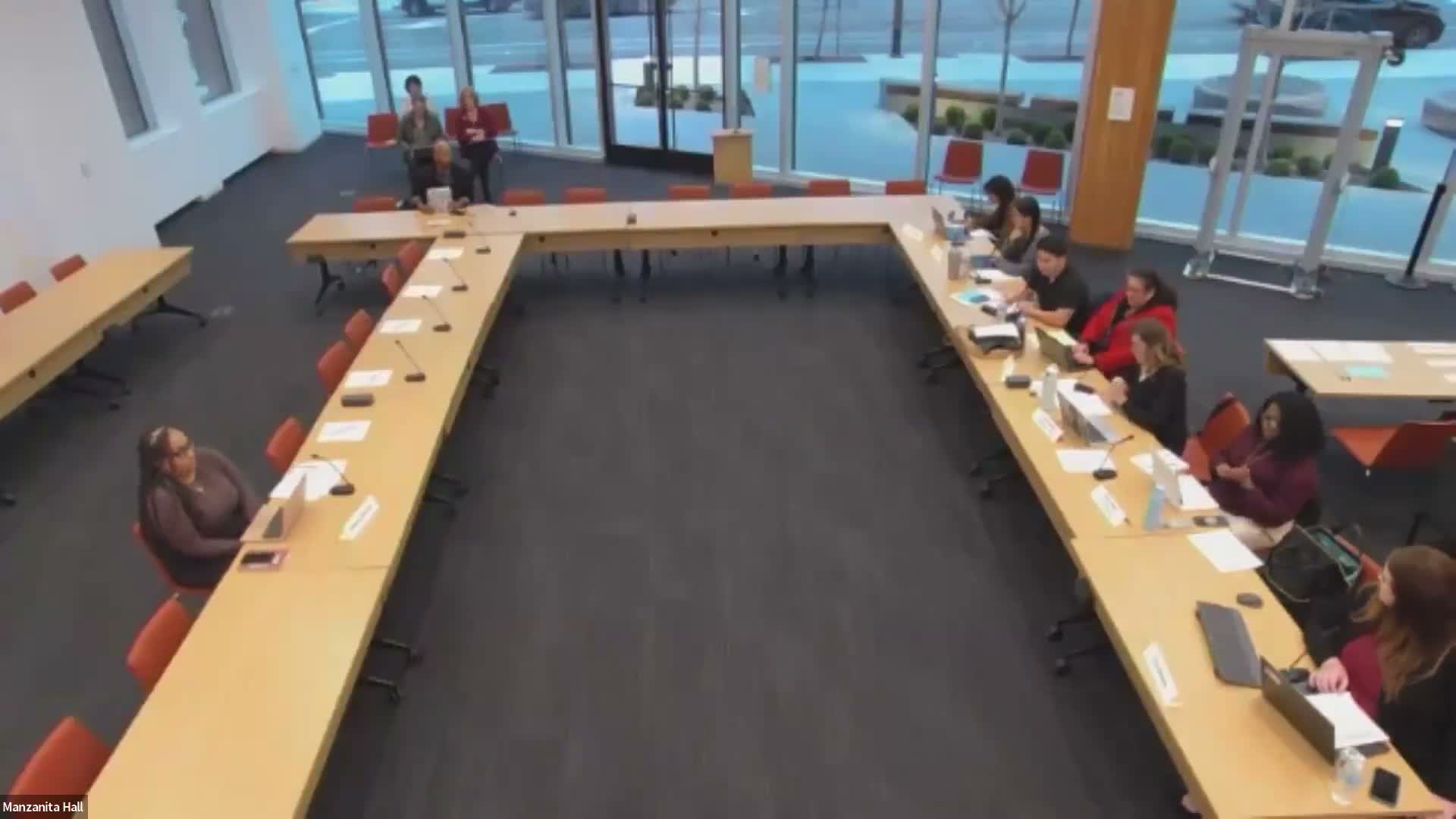
Mike Taylor, executive director of Bay Area Creative, told the San Mateo County Juvenile Justice and Delinquency Prevention commissions on Feb. 24 that the arts nonprofit’s Unheard Voices program pairs juvenile-hall youth with high-school students to produce a three-round poetry exchange intended to foster empathy and social-emotional learning.
Taylor described the program’s structure and reported that in one recent cycle roughly 20 juvenile-hall youth took part and about 200 high-school students submitted responses. He said the anthology the organization produced from the work cost about $4,000 to print and that delivering a sustained weekly program for one juvenile-hall cohort — including regular visits and wraparound support — would require approximately $20,000.
The program, led in part by program director Jenna Robinson (a licensed art therapist, Taylor said), has been used in schools, community centers and juvenile facilities; Taylor said the core practice is to move beyond literary analysis to give youth space to write, be heard and process emotional responses. He told commissioners Bay Area Creative can arrange contracts and operations through staff including Patrick Oslund and Jenna Robinson, and invited agencies to contact bayareacreative.org to discuss partnerships.
Taylor read a poem and led a condensed workshop exercise with commissioners to demonstrate the curriculum: participants wrote about a moment they expected something to be stable and were let down. Several commissioners and attendees responded to lines and emotions from the exercise; one participant gave a brief personal account that meeting leaders prefaced with a trigger warning. The group closed with collective affirmations — phrases such as “I hear you” and “I see you” — after participants shared excerpts.
Taylor said the Unheard Voices cycle produced measurable shifts in tone across rounds — from darker first drafts toward more hopeful composition after responses from peers — and argued the model supports restorative goals by bridging distance between incarcerated youth and community readers. He noted the anthology is sold at cost and that the copies he brought were from the last print run.
The commission did not take a funding vote at the meeting but invited Taylor to present the program at a statewide commissioners meeting and encouraged staff to explore contracting options. Taylor offered follow-up contacts for any agency or probation department interested in piloting the program locally.
The presentation and workshop demonstration lasted roughly 20–30 minutes; commissioners asked about costs, contracting and how the program would be introduced to local facilities. Taylor recommended site-specific operational conversations through his staff and the organization’s website. Ending: Taylor offered to bring additional materials and a full demonstration to interested stakeholders and left copies of the anthology for commissioners to review.
Taylor described the program’s structure and reported that in one recent cycle roughly 20 juvenile-hall youth took part and about 200 high-school students submitted responses. He said the anthology the organization produced from the work cost about $4,000 to print and that delivering a sustained weekly program for one juvenile-hall cohort — including regular visits and wraparound support — would require approximately $20,000.
The program, led in part by program director Jenna Robinson (a licensed art therapist, Taylor said), has been used in schools, community centers and juvenile facilities; Taylor said the core practice is to move beyond literary analysis to give youth space to write, be heard and process emotional responses. He told commissioners Bay Area Creative can arrange contracts and operations through staff including Patrick Oslund and Jenna Robinson, and invited agencies to contact bayareacreative.org to discuss partnerships.
Taylor read a poem and led a condensed workshop exercise with commissioners to demonstrate the curriculum: participants wrote about a moment they expected something to be stable and were let down. Several commissioners and attendees responded to lines and emotions from the exercise; one participant gave a brief personal account that meeting leaders prefaced with a trigger warning. The group closed with collective affirmations — phrases such as “I hear you” and “I see you” — after participants shared excerpts.
Taylor said the Unheard Voices cycle produced measurable shifts in tone across rounds — from darker first drafts toward more hopeful composition after responses from peers — and argued the model supports restorative goals by bridging distance between incarcerated youth and community readers. He noted the anthology is sold at cost and that the copies he brought were from the last print run.
The commission did not take a funding vote at the meeting but invited Taylor to present the program at a statewide commissioners meeting and encouraged staff to explore contracting options. Taylor offered follow-up contacts for any agency or probation department interested in piloting the program locally.
The presentation and workshop demonstration lasted roughly 20–30 minutes; commissioners asked about costs, contracting and how the program would be introduced to local facilities. Taylor recommended site-specific operational conversations through his staff and the organization’s website. Ending: Taylor offered to bring additional materials and a full demonstration to interested stakeholders and left copies of the anthology for commissioners to review.
View the Full Meeting & All Its Details
This article offers just a summary. Unlock complete video, transcripts, and insights as a Founder Member.
✓
Watch full, unedited meeting videos
✓
Search every word spoken in unlimited transcripts
✓
AI summaries & real-time alerts (all government levels)
✓
Permanent access to expanding government content
30-day money-back guarantee
