Commissioner Stamps: data centers pay for their own power and fund reliability upgrades in Madison County
February 27, 2026 | Madison County, Mississippi
This article was created by AI summarizing key points discussed. AI makes mistakes, so for full details and context, please refer to the video of the full meeting. Please report any errors so we can fix them. Report an error »
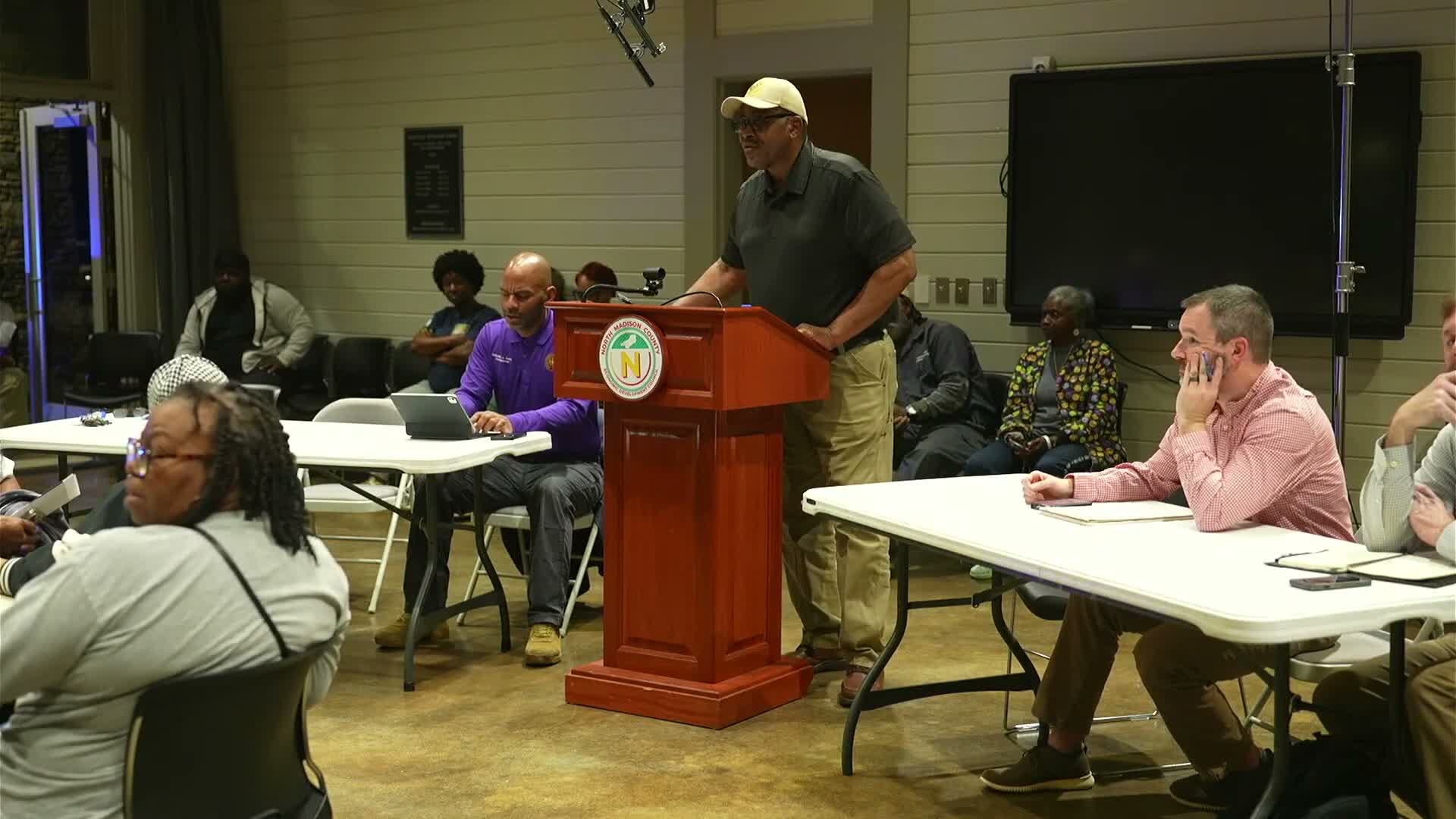
Commissioner Stamps told residents at a Madison County community meeting that data centers and other high‑volume users do not shift their direct electricity costs onto residential customers and that those facilities contribute property tax and negotiated funding to local reliability investments. "You are not paying for a data center's electrical needs," Stamps said, adding that large users also contribute to Superpower Mississippi, a program to buy poles, lines and transformers for reliability improvements.
Why this matters: Residents in northeastern Madison County had voiced concerns that nearby data centers and their large electricity use would increase household bills or pollute local water resources. Stamps said Entergy and other large users fund targeted reliability work and that parts of the revenue stream should be distributed to districts to pay for right‑of‑way clearing and local public works.
Stamps framed the issue as both regulatory and fiscal: while major facilities pay for their own generation and transmission, the commission negotiated a roughly $60 million‑a‑year contribution to Superpower Mississippi to support reliability projects around the state. He urged county supervisors to seek a fair share of resources for district needs such as road clearing and local maintenance. "Your slice of that pie should go to your district," he said.
During the discussion he also addressed environmental and operational concerns. Stamps said on‑site data centers do not burn fuel and that Entergy uses a mix of natural‑gas‑fired plants (noted as higher‑efficiency units) and some nuclear imports via agreements with neighboring states. He said those generation choices reduce onsite emissions while allowing negotiated funds to be directed to local grid resilience projects.
Residents and county leaders pressed for local benefits from the revenues. Stamps repeatedly told the audience that supervisors and local officials should ‘‘bake’’ community priorities into budget and planning processes so money targeted for reliability and economic development supports local projects like right‑of‑way clearing and public works capacity.
The meeting closed with a promise of continued follow up: Stamps and his staff said they will return to the community in months with progress updates and urged residents to sign the meeting sheet so officials can follow up on specific concerns.
Next steps: Officials encouraged residents to leave contact information or submit bill and outage details for individualized follow‑up and said the commission and Entergy will incorporate community feedback into the Superpower Mississippi planning and project prioritization.
Why this matters: Residents in northeastern Madison County had voiced concerns that nearby data centers and their large electricity use would increase household bills or pollute local water resources. Stamps said Entergy and other large users fund targeted reliability work and that parts of the revenue stream should be distributed to districts to pay for right‑of‑way clearing and local public works.
Stamps framed the issue as both regulatory and fiscal: while major facilities pay for their own generation and transmission, the commission negotiated a roughly $60 million‑a‑year contribution to Superpower Mississippi to support reliability projects around the state. He urged county supervisors to seek a fair share of resources for district needs such as road clearing and local maintenance. "Your slice of that pie should go to your district," he said.
During the discussion he also addressed environmental and operational concerns. Stamps said on‑site data centers do not burn fuel and that Entergy uses a mix of natural‑gas‑fired plants (noted as higher‑efficiency units) and some nuclear imports via agreements with neighboring states. He said those generation choices reduce onsite emissions while allowing negotiated funds to be directed to local grid resilience projects.
Residents and county leaders pressed for local benefits from the revenues. Stamps repeatedly told the audience that supervisors and local officials should ‘‘bake’’ community priorities into budget and planning processes so money targeted for reliability and economic development supports local projects like right‑of‑way clearing and public works capacity.
The meeting closed with a promise of continued follow up: Stamps and his staff said they will return to the community in months with progress updates and urged residents to sign the meeting sheet so officials can follow up on specific concerns.
Next steps: Officials encouraged residents to leave contact information or submit bill and outage details for individualized follow‑up and said the commission and Entergy will incorporate community feedback into the Superpower Mississippi planning and project prioritization.
Don't Miss a Word: See the Full Meeting!
Go beyond summaries. Unlock every video, transcript, and key insight with a Founder Membership.
✓
Get instant access to full meeting videos
✓
Search and clip any phrase from complete transcripts
✓
Receive AI-powered summaries & custom alerts
✓
Enjoy lifetime, unrestricted access to government data
30-day money-back guarantee
