Bill would bar candidates from buying discounted airtime for ballot-question ads, closing 2024 pass-through loophole
February 27, 2026 | 2026 Legislature NE, Nebraska
This article was created by AI summarizing key points discussed. AI makes mistakes, so for full details and context, please refer to the video of the full meeting. Please report any errors so we can fix them. Report an error »
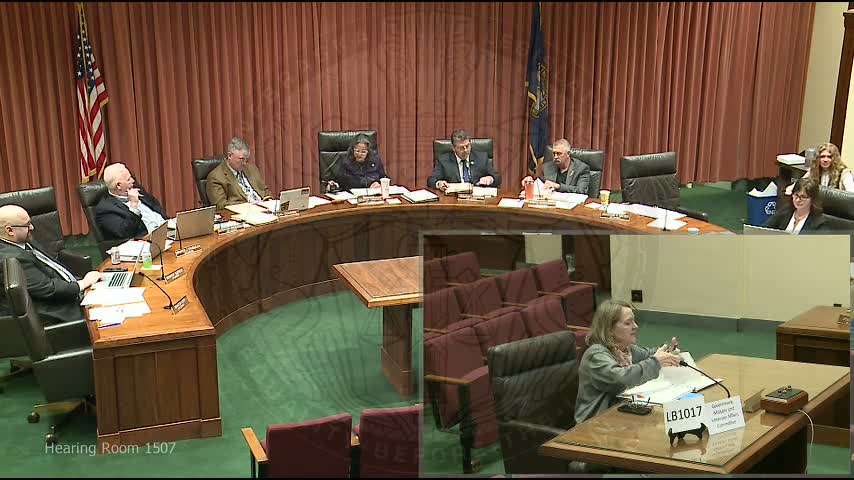
Senator Jane Raybould told the committee LB1018 is intended to close a loophole that allowed candidate committees to buy discounted broadcast airtime and run ads produced by ballot-question committees, effectively passing money through to ballot efforts while using candidate-committee discounts.
"LB 10 18 is a simple bill to close a loophole in our campaign finance laws," Raybould said, citing 2024 examples in which candidate committees paid for ballot-question advertising to take advantage of federally mandated lowest-unit-rate discounts for candidates.
Gavin Geis of Common Cause Nebraska described the mechanics: some organizations provided funds that were routed through candidate accounts so the campaign could buy airtime at lower rates and run material produced by a ballot committee. Geis said the arrangement can produce confusing reporting and creates incentives for coordination between candidate and ballot campaigns. He warned the practice could become more common without statutory clarity.
Scott Danigole, testifying in a neutral capacity for the NADC, said the commission believes the Nebraska Accountability and Disclosure Act already contains provisions that limit this behavior in principle, but he acknowledged that LB1018 would explicitly prohibit candidate committees from purchasing goods, materials, services or facilities on behalf of ballot-question committees and would make the prohibition clearer for reporting and enforcement. Danigole noted LB1018 would not limit independent expenditures by outside groups.
Senators raised technical questions about whether independent expenditures or other reporting paths could still result in the same outcome; witnesses said independent expenditures remain a separate channel and would not be directly curtailed by LB1018, although LB1017 (contribution caps) could reduce incentives for pass-throughs if both bills passed. The committee received proponents, one opponent and neutral testimony and closed the hearing without a committee vote.
"LB 10 18 is a simple bill to close a loophole in our campaign finance laws," Raybould said, citing 2024 examples in which candidate committees paid for ballot-question advertising to take advantage of federally mandated lowest-unit-rate discounts for candidates.
Gavin Geis of Common Cause Nebraska described the mechanics: some organizations provided funds that were routed through candidate accounts so the campaign could buy airtime at lower rates and run material produced by a ballot committee. Geis said the arrangement can produce confusing reporting and creates incentives for coordination between candidate and ballot campaigns. He warned the practice could become more common without statutory clarity.
Scott Danigole, testifying in a neutral capacity for the NADC, said the commission believes the Nebraska Accountability and Disclosure Act already contains provisions that limit this behavior in principle, but he acknowledged that LB1018 would explicitly prohibit candidate committees from purchasing goods, materials, services or facilities on behalf of ballot-question committees and would make the prohibition clearer for reporting and enforcement. Danigole noted LB1018 would not limit independent expenditures by outside groups.
Senators raised technical questions about whether independent expenditures or other reporting paths could still result in the same outcome; witnesses said independent expenditures remain a separate channel and would not be directly curtailed by LB1018, although LB1017 (contribution caps) could reduce incentives for pass-throughs if both bills passed. The committee received proponents, one opponent and neutral testimony and closed the hearing without a committee vote.
View the Full Meeting & All Its Details
This article offers just a summary. Unlock complete video, transcripts, and insights as a Founder Member.
✓
Watch full, unedited meeting videos
✓
Search every word spoken in unlimited transcripts
✓
AI summaries & real-time alerts (all government levels)
✓
Permanent access to expanding government content
30-day money-back guarantee
