Bill would direct Nebraska to divest retirement funds from federally identified Chinese entities, sponsors say
February 27, 2026 | 2026 Legislature NE, Nebraska
This article was created by AI summarizing key points discussed. AI makes mistakes, so for full details and context, please refer to the video of the full meeting. Please report any errors so we can fix them. Report an error »
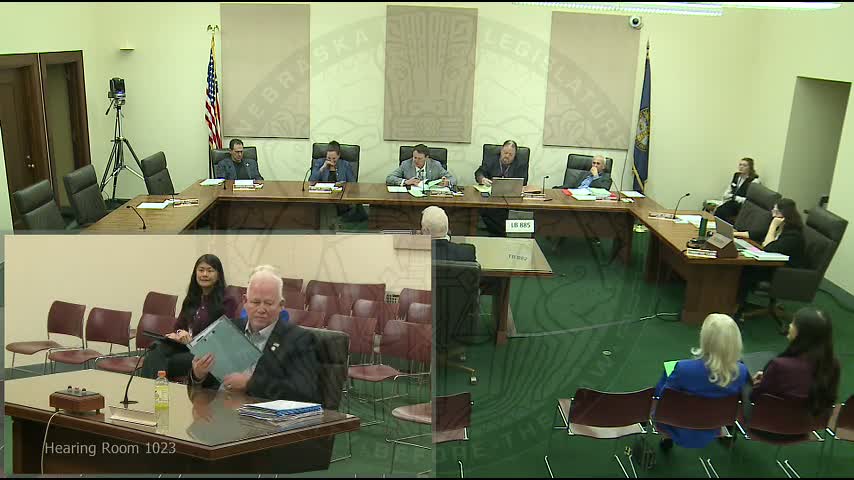
Sen. Bob Anderson introduced LB 1095, which would direct the Nebraska Investment Council to divest state pension and retirement funds from Chinese entities identified by federal and state governments as restricted for national-security or human-rights reasons. Anderson said the change is targeted and would be carried out "as soon as practicable," emphasizing gradual, fiscally prudent divestment and increased transparency.
Supporters who testified said LB 1095 advances fiduciary responsibility and addresses national-security and human-rights concerns. Steven Sookup, scholar in residence at the State Financial Officers Foundation's public fiduciary network and visiting fellow at the Heritage Foundation, argued publicly traded Chinese companies often stand two or more legal steps removed from underlying operating firms through variable interest entities (VIEs) and other structures, which can create governance and legal risk for foreign investors. He said federal and state lists already identify some restricted entities and that semiannual reporting and orderly divestment could be accomplished with limited compliance costs.
Tom Rawlins, policy director for State Shield, framed support in human-rights and national-security terms and pointed to other states that have taken divestment steps. Adam Schwed of Look to the States described the bill's mechanics: prohibiting new investments in U.S. or state-designated restricted Chinese entities, requiring the identification and orderly divestment of existing holdings as practical and respecting fiduciary duties, and mandating semiannual transparency reports to the legislature.
Committee members pressed sponsors on several issues. Sen. Tony Sorrentino asked why the bill singles out China rather than other adversarial countries; Anderson said China represents the largest exposure of concern. Sen. Conrad questioned the reliability of one handout from the Epoch Times; Anderson said he provided multiple sources (Wall Street Journal, Forbes, Epoch Times) and could provide additional material. Committee members also requested more detailed information from the state investment officer about the council's current China-related exposures, including whether holdings are held through Cayman-registered shell companies or index funds.
Supporters cited other states (including Indiana, Florida, Kansas, Missouri, Oklahoma, Pennsylvania, Texas and others) as having taken similar steps; witnesses disputed that divestment necessarily produced losses in every case, but committee members asked for independent financial analysis. The hearing record included no committee vote; Sen. Anderson said he will continue to work with the committee and pursue specific holdings information from the state investment officer.
Supporters who testified said LB 1095 advances fiduciary responsibility and addresses national-security and human-rights concerns. Steven Sookup, scholar in residence at the State Financial Officers Foundation's public fiduciary network and visiting fellow at the Heritage Foundation, argued publicly traded Chinese companies often stand two or more legal steps removed from underlying operating firms through variable interest entities (VIEs) and other structures, which can create governance and legal risk for foreign investors. He said federal and state lists already identify some restricted entities and that semiannual reporting and orderly divestment could be accomplished with limited compliance costs.
Tom Rawlins, policy director for State Shield, framed support in human-rights and national-security terms and pointed to other states that have taken divestment steps. Adam Schwed of Look to the States described the bill's mechanics: prohibiting new investments in U.S. or state-designated restricted Chinese entities, requiring the identification and orderly divestment of existing holdings as practical and respecting fiduciary duties, and mandating semiannual transparency reports to the legislature.
Committee members pressed sponsors on several issues. Sen. Tony Sorrentino asked why the bill singles out China rather than other adversarial countries; Anderson said China represents the largest exposure of concern. Sen. Conrad questioned the reliability of one handout from the Epoch Times; Anderson said he provided multiple sources (Wall Street Journal, Forbes, Epoch Times) and could provide additional material. Committee members also requested more detailed information from the state investment officer about the council's current China-related exposures, including whether holdings are held through Cayman-registered shell companies or index funds.
Supporters cited other states (including Indiana, Florida, Kansas, Missouri, Oklahoma, Pennsylvania, Texas and others) as having taken similar steps; witnesses disputed that divestment necessarily produced losses in every case, but committee members asked for independent financial analysis. The hearing record included no committee vote; Sen. Anderson said he will continue to work with the committee and pursue specific holdings information from the state investment officer.
View the Full Meeting & All Its Details
This article offers just a summary. Unlock complete video, transcripts, and insights as a Founder Member.
✓
Watch full, unedited meeting videos
✓
Search every word spoken in unlimited transcripts
✓
AI summaries & real-time alerts (all government levels)
✓
Permanent access to expanding government content
30-day money-back guarantee
