Charter Review Committee delivers final report, urges referendum planning and public outreach
February 27, 2026 | Palatka, Putnam County, Florida
This article was created by AI summarizing key points discussed. AI makes mistakes, so for full details and context, please refer to the video of the full meeting. Please report any errors so we can fix them. Report an error »
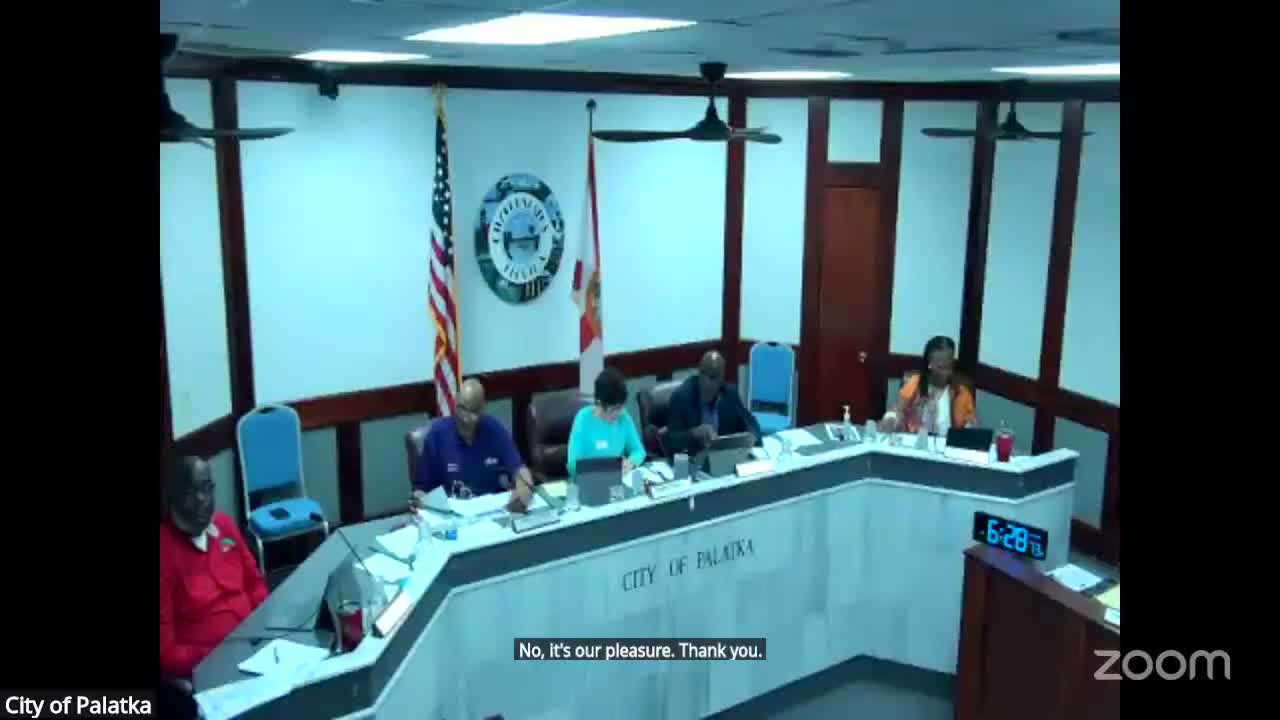
The Charter Review Committee presented its final report to the Palatka City Commission on Feb. 26, outlining a set of proposed amendments the committee recommends be placed before voters.
The committee chair (speaker S15) told the commission the group held 17 public meetings since March 2024 and proposed roughly 18 questions ranging from a new preamble and language modernizations to changes in commissioner residency requirements, timing for taking office, virtual-attendance and quorum rules, candidate background checks and a formal citizen-referral process that "shadows the Florida statutes." The committee recommended establishing a timeline that would allow ballot language to be certified by April so items could appear on the November ballot without an additional special-election cost.
Why it matters: Palatka's charter is one of the state's oldest, and the package combines routine housekeeping updates with structural suggestions that could change how elections and certain appointments are handled. Among the more consequential proposals are a requirement that candidates submit to background checks before qualifying, a clarified separation-of-powers clause limiting commissioners' direct orders to staff, and a change to how the city attorney is appointed and removed.
Committee chair (speaker S15) framed many items as modernization: ‘‘It gets rid of archaic language and gender-specific phrasing and moves us into more modern charter language,’’ the chair said. City staff and committee members emphasized outreach: Jane West (speaker S16) told the commission committee members are prepared to lead public outreach and answer residents' questions at workshops before the commission selects which referendum items to place on the ballot.
Commissioner discussion focused on schedule and public education. Commissioners asked for clarity on the April deadline for the supervisor of elections and requested a future meeting to select which referendum items the commission wants on the ballot. The committee noted some items are technical housekeeping while others would alter the city's governance structure and therefore require more public engagement.
What happens next: Staff said the commission will have an opportunity at the next regular meeting to decide which referendum questions to forward to the supervisor of elections and that staff will draft an ordinance for adoption if the commission so chooses. The committee also recommended a coordinated outreach campaign to explain each proposed change to voters before language is finalized.
The committee chair (speaker S15) told the commission the group held 17 public meetings since March 2024 and proposed roughly 18 questions ranging from a new preamble and language modernizations to changes in commissioner residency requirements, timing for taking office, virtual-attendance and quorum rules, candidate background checks and a formal citizen-referral process that "shadows the Florida statutes." The committee recommended establishing a timeline that would allow ballot language to be certified by April so items could appear on the November ballot without an additional special-election cost.
Why it matters: Palatka's charter is one of the state's oldest, and the package combines routine housekeeping updates with structural suggestions that could change how elections and certain appointments are handled. Among the more consequential proposals are a requirement that candidates submit to background checks before qualifying, a clarified separation-of-powers clause limiting commissioners' direct orders to staff, and a change to how the city attorney is appointed and removed.
Committee chair (speaker S15) framed many items as modernization: ‘‘It gets rid of archaic language and gender-specific phrasing and moves us into more modern charter language,’’ the chair said. City staff and committee members emphasized outreach: Jane West (speaker S16) told the commission committee members are prepared to lead public outreach and answer residents' questions at workshops before the commission selects which referendum items to place on the ballot.
Commissioner discussion focused on schedule and public education. Commissioners asked for clarity on the April deadline for the supervisor of elections and requested a future meeting to select which referendum items the commission wants on the ballot. The committee noted some items are technical housekeeping while others would alter the city's governance structure and therefore require more public engagement.
What happens next: Staff said the commission will have an opportunity at the next regular meeting to decide which referendum questions to forward to the supervisor of elections and that staff will draft an ordinance for adoption if the commission so chooses. The committee also recommended a coordinated outreach campaign to explain each proposed change to voters before language is finalized.
View the Full Meeting & All Its Details
This article offers just a summary. Unlock complete video, transcripts, and insights as a Founder Member.
✓
Watch full, unedited meeting videos
✓
Search every word spoken in unlimited transcripts
✓
AI summaries & real-time alerts (all government levels)
✓
Permanent access to expanding government content
30-day money-back guarantee
