Work session: staff briefs members on court ruling, tree-ordinance change and multiple variance requests
March 01, 2026 | Brookhaven, DeKalb County, Georgia
This article was created by AI summarizing key points discussed. AI makes mistakes, so for full details and context, please refer to the video of the full meeting. Please report any errors so we can fix them. Report an error »
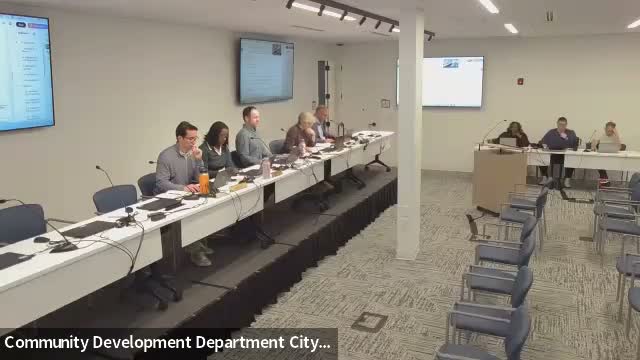
At a work session, staff told members that an applicant who previously lost a tree-variance request had appealed to the Cap County Superior Court and that the court ruled to allow the applicant to remove the tree. Staff said the written findings were not yet available and asked the board to request a copy so it could better understand how the court applied the criteria. "The court did rule to allow them to basically remove that tree," staff said.
Staff also reported that the city council approved a text amendment to the tree ordinance the night before, removing the prior "economic value" criterion and focusing variance review on the tree's age, size, health and significance, the feasibility of alternative design and the due diligence performed on the project. Staff said the amendment also added an administrative variance tied to site constraints and that those changes should streamline future decisions.
Board members reviewed a slate of pending and new variance cases. Several applicants requested to withdraw applications without prejudice; staff said some withdrawals follow prior deferrals and that applicants may refile or reconfigure plans rather than seek variances. For VAR2528 (1307 Mayfair Drive), staff said the applicant intends to proceed without a variance and will rely, if necessary, on an existing blanket variance that applies to the property.
Members spent substantive time on a series of lot- and buffer-related variance requests. On VAR2531 (2485 Apalachee Drive), staff recommended approval of an increase in impervious coverage (from 35% to 43%) and a reduced rear setback (30 to 20 feet) because the block already contains lots with similarly high coverage; one member cautioned about transparency and fairness for neighbors who might be unaware of historical entitlements. On VAR2532 (2853 Redding Road), staff recommended denial of a request to reduce a 75-foot stream buffer to 53 feet to install a putting green, saying the lot has ample usable yard and that granting the variance would amount to a special privilege.
No formal roll-call votes were recorded in the work session transcript for most items. A motion to move several items to the regular meeting agenda died for lack of a second.
Staff also reported that the city council approved a text amendment to the tree ordinance the night before, removing the prior "economic value" criterion and focusing variance review on the tree's age, size, health and significance, the feasibility of alternative design and the due diligence performed on the project. Staff said the amendment also added an administrative variance tied to site constraints and that those changes should streamline future decisions.
Board members reviewed a slate of pending and new variance cases. Several applicants requested to withdraw applications without prejudice; staff said some withdrawals follow prior deferrals and that applicants may refile or reconfigure plans rather than seek variances. For VAR2528 (1307 Mayfair Drive), staff said the applicant intends to proceed without a variance and will rely, if necessary, on an existing blanket variance that applies to the property.
Members spent substantive time on a series of lot- and buffer-related variance requests. On VAR2531 (2485 Apalachee Drive), staff recommended approval of an increase in impervious coverage (from 35% to 43%) and a reduced rear setback (30 to 20 feet) because the block already contains lots with similarly high coverage; one member cautioned about transparency and fairness for neighbors who might be unaware of historical entitlements. On VAR2532 (2853 Redding Road), staff recommended denial of a request to reduce a 75-foot stream buffer to 53 feet to install a putting green, saying the lot has ample usable yard and that granting the variance would amount to a special privilege.
No formal roll-call votes were recorded in the work session transcript for most items. A motion to move several items to the regular meeting agenda died for lack of a second.
Don't Miss a Word: See the Full Meeting!
Go beyond summaries. Unlock every video, transcript, and key insight with a Founder Membership.
✓
Get instant access to full meeting videos
✓
Search and clip any phrase from complete transcripts
✓
Receive AI-powered summaries & custom alerts
✓
Enjoy lifetime, unrestricted access to government data
30-day money-back guarantee
