Franklin Properties pitches Westcourt Lofts: 22 condos, 14,000-square-foot wellness collective at former library site
March 01, 2026 | Tompkins County, New York
This article was created by AI summarizing key points discussed. AI makes mistakes, so for full details and context, please refer to the video of the full meeting. Please report any errors so we can fix them. Report an error »
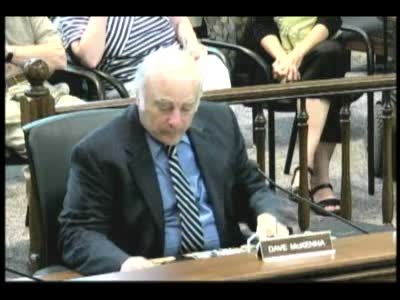
Franklin Properties told a Tompkins County committee meeting that it plans to convert the former library into a mixed-use project called Westcourt Lofts that would include 22 condominium units, a 14,000-square-foot wellness collective with a public community room and cafe, and about 31 parking spaces.
"We are buying the building for $925,000," said Doug Sutherland, partner at Franklin Properties, describing the developer'led proposal and the company's track record in historic rehabs. Sutherland said the proposal is a roughly $12,000,000 investment financed in part by a $9,600,000 construction loan committed by the Community Preservation Corporation.
The developers said they plan to retain the building's steel and concrete frame and rebuild the exterior skin and interior to create a mix of residences, ground-floor commercial space and a wellness collective. "We're maximizing our solar every square inch that we can do," Noah Demarest, the project architect and head of Stream Collaborative Architects and Landscape Architects, told the committee, adding that the team aims to meet the Architecture 2030 Challenge'target of a roughly 70% reduction in fossil-fuel usage compared with conventional construction.
Project numbers presented to the committee include about 58,000 square feet total: 26,000 square feet of residential area, 14,000 square feet for the wellness collective, 10,800 square feet of shared parking area and about 7,200 square feet for mechanical and circulation. The presenters said the building would provide 24 covered parking spaces inside the structure plus seven exterior spaces for a total of 31 parking stalls, and that the team expects a roughly 1.5-use-per-space pattern that works in downtown settings.
Committee members and neighbors pressed the team on specifics. Kathy Luce Herrera (District 2) asked about the size and availability of the community room and cafe; Demarest said the community room and cafe together total about 2,500 square feet and could accommodate "somewhere between 50 and 100 people," depending on layout. Disability advocate Larry Roberts raised accessibility concerns: "I wouldn't be happy if I lived there that I would have to go into a lift," he said. Demarest responded that the design will include renovated elevators meeting state and ADA requirements and that accessible parking will be provided at the lower level with direct elevator access.
On hazardous materials, the presenters said asbestos and other contaminants will be remediated as required: encapsulated elements that are not disturbed may remain, but disturbed materials will be removed and handled per state rules. For construction impacts, Ted Kinder (construction manager) said demolition is expected to be largely selective and hand-performed, with a short (one to six weeks) period of heavier noise during initial work and an overall delivery target of roughly 12 to 13 months after the developer takes possession.
Developers said the project is targeted at market-rate condominium buyers rather than an affordability program. "These would not be what you'd call affordable units for folks with modest income," Sutherland said, noting a target build cost in the neighborhood of $300 per square foot and an anticipated two-year sales period after construction.
Several planning questions remain to be resolved through site-plan review and neighborhood review. The presenters said the Ithaca Landmarks Preservation Commission provided positive feedback on massing but raised questions about exterior materials; the team said materials and detailed energy modeling will be refined during the design-development phase.
After the public question-and-answer period, the chair asked for a motion "to go into executive session to discuss negotiations for real estate sale." The motion was seconded by Dooley and the committee voted to enter executive session; the public was asked to leave and the committee said it did not plan to take action immediately upon returning.
Next steps cited by the developers and staff include further design development, energy modeling and formal site-plan review with local planning bodies; the project team said it will provide more detailed materials on embodied-energy calculations, final materials and the energy systems proposed as the design advances.
"We are buying the building for $925,000," said Doug Sutherland, partner at Franklin Properties, describing the developer'led proposal and the company's track record in historic rehabs. Sutherland said the proposal is a roughly $12,000,000 investment financed in part by a $9,600,000 construction loan committed by the Community Preservation Corporation.
The developers said they plan to retain the building's steel and concrete frame and rebuild the exterior skin and interior to create a mix of residences, ground-floor commercial space and a wellness collective. "We're maximizing our solar every square inch that we can do," Noah Demarest, the project architect and head of Stream Collaborative Architects and Landscape Architects, told the committee, adding that the team aims to meet the Architecture 2030 Challenge'target of a roughly 70% reduction in fossil-fuel usage compared with conventional construction.
Project numbers presented to the committee include about 58,000 square feet total: 26,000 square feet of residential area, 14,000 square feet for the wellness collective, 10,800 square feet of shared parking area and about 7,200 square feet for mechanical and circulation. The presenters said the building would provide 24 covered parking spaces inside the structure plus seven exterior spaces for a total of 31 parking stalls, and that the team expects a roughly 1.5-use-per-space pattern that works in downtown settings.
Committee members and neighbors pressed the team on specifics. Kathy Luce Herrera (District 2) asked about the size and availability of the community room and cafe; Demarest said the community room and cafe together total about 2,500 square feet and could accommodate "somewhere between 50 and 100 people," depending on layout. Disability advocate Larry Roberts raised accessibility concerns: "I wouldn't be happy if I lived there that I would have to go into a lift," he said. Demarest responded that the design will include renovated elevators meeting state and ADA requirements and that accessible parking will be provided at the lower level with direct elevator access.
On hazardous materials, the presenters said asbestos and other contaminants will be remediated as required: encapsulated elements that are not disturbed may remain, but disturbed materials will be removed and handled per state rules. For construction impacts, Ted Kinder (construction manager) said demolition is expected to be largely selective and hand-performed, with a short (one to six weeks) period of heavier noise during initial work and an overall delivery target of roughly 12 to 13 months after the developer takes possession.
Developers said the project is targeted at market-rate condominium buyers rather than an affordability program. "These would not be what you'd call affordable units for folks with modest income," Sutherland said, noting a target build cost in the neighborhood of $300 per square foot and an anticipated two-year sales period after construction.
Several planning questions remain to be resolved through site-plan review and neighborhood review. The presenters said the Ithaca Landmarks Preservation Commission provided positive feedback on massing but raised questions about exterior materials; the team said materials and detailed energy modeling will be refined during the design-development phase.
After the public question-and-answer period, the chair asked for a motion "to go into executive session to discuss negotiations for real estate sale." The motion was seconded by Dooley and the committee voted to enter executive session; the public was asked to leave and the committee said it did not plan to take action immediately upon returning.
Next steps cited by the developers and staff include further design development, energy modeling and formal site-plan review with local planning bodies; the project team said it will provide more detailed materials on embodied-energy calculations, final materials and the energy systems proposed as the design advances.
View the Full Meeting & All Its Details
This article offers just a summary. Unlock complete video, transcripts, and insights as a Founder Member.
✓
Watch full, unedited meeting videos
✓
Search every word spoken in unlimited transcripts
✓
AI summaries & real-time alerts (all government levels)
✓
Permanent access to expanding government content
30-day money-back guarantee
