U.N. urges immediate de-escalation as regional strikes spread
March 02, 2026 | United Nations, International
This article was created by AI summarizing key points discussed. AI makes mistakes, so for full details and context, please refer to the video of the full meeting. Please report any errors so we can fix them. Report an error »
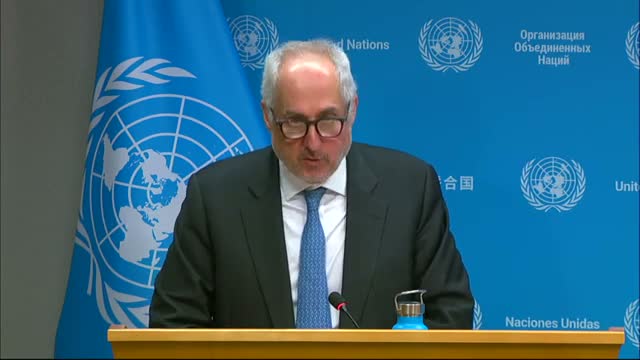
The United Nations on Monday urged an immediate cessation of hostilities after recent strikes spread across the Gulf and raised the risk of a wider regional war. Steph, a U.N. staff member speaking at the U.N. Secretariat, said the Secretary‑General had been in contact with several regional leaders, including Qatar’s emir, to press for de‑escalation and a renewed focus on negotiations.
The Secretary‑General “reiterated his condemnation of the recent attacks” and has called on all parties to uphold the Charter of the United Nations, Steph said, warning that the expansion of attacks to countries not originally involved was “particularly worrying.” The spokesperson added that the Secretary‑General was in touch with Oman’s foreign minister and ambassadors from the Gulf Cooperation Council and praised Oman's mediation efforts.
Why this matters: U.N. intervention and diplomatic engagement can shape international responses at a moment the briefing described as having “no room for miscalculation.” The U.N. also warned that the humanitarian and economic effects of escalating fighting would likely hit vulnerable populations hardest.
Supporting details: The U.N. highlighted reported exchanges of fire north of the Blue Line in Lebanon, where U.N. Interim Force in Lebanon (UNIFIL) personnel remain in position and leadership is engaging with parties to prevent further escalation. The U.N. voiced concern about strikes that the briefing said had reportedly resulted in at least 31 fatalities north of the Blue Line and urged all parties to preserve the cessation of hostilities agreement.
The briefing also referenced statements by U.N. agencies and partners: UNICEF described the grave danger to children after reports of schools being hit, and the IAEA’s director general, Rafael Grossi, told the agency’s board that monitoring networks had not detected radiation above background levels in countries bordering Iran but reiterated calls for maximum restraint.
What was not decided: Reporters pressed whether the Secretary‑General had directly contacted the U.S. president; the spokesperson said no such call had taken place and explained that diplomatic engagement typically proceeds through formal channels. The U.N. did not announce any new measures at the briefing.
Next steps: The Secretary‑General’s office continues to hold conversations with regional leaders and U.N. agencies, and the Security Council will hold an open meeting on children, technology and education in conflict where Under‑Secretary‑General Rosemarie DeCarlo will brief members later in the day.
The Secretary‑General “reiterated his condemnation of the recent attacks” and has called on all parties to uphold the Charter of the United Nations, Steph said, warning that the expansion of attacks to countries not originally involved was “particularly worrying.” The spokesperson added that the Secretary‑General was in touch with Oman’s foreign minister and ambassadors from the Gulf Cooperation Council and praised Oman's mediation efforts.
Why this matters: U.N. intervention and diplomatic engagement can shape international responses at a moment the briefing described as having “no room for miscalculation.” The U.N. also warned that the humanitarian and economic effects of escalating fighting would likely hit vulnerable populations hardest.
Supporting details: The U.N. highlighted reported exchanges of fire north of the Blue Line in Lebanon, where U.N. Interim Force in Lebanon (UNIFIL) personnel remain in position and leadership is engaging with parties to prevent further escalation. The U.N. voiced concern about strikes that the briefing said had reportedly resulted in at least 31 fatalities north of the Blue Line and urged all parties to preserve the cessation of hostilities agreement.
The briefing also referenced statements by U.N. agencies and partners: UNICEF described the grave danger to children after reports of schools being hit, and the IAEA’s director general, Rafael Grossi, told the agency’s board that monitoring networks had not detected radiation above background levels in countries bordering Iran but reiterated calls for maximum restraint.
What was not decided: Reporters pressed whether the Secretary‑General had directly contacted the U.S. president; the spokesperson said no such call had taken place and explained that diplomatic engagement typically proceeds through formal channels. The U.N. did not announce any new measures at the briefing.
Next steps: The Secretary‑General’s office continues to hold conversations with regional leaders and U.N. agencies, and the Security Council will hold an open meeting on children, technology and education in conflict where Under‑Secretary‑General Rosemarie DeCarlo will brief members later in the day.
Don't Miss a Word: See the Full Meeting!
Go beyond summaries. Unlock every video, transcript, and key insight with a Founder Membership.
✓
Get instant access to full meeting videos
✓
Search and clip any phrase from complete transcripts
✓
Receive AI-powered summaries & custom alerts
✓
Enjoy lifetime, unrestricted access to government data
30-day money-back guarantee
