Committee approves ordinance to return state demolition reimbursements to Cleveland demolition fund
March 02, 2026 | Cleveland, Cuyahoga County, Ohio
This article was created by AI summarizing key points discussed. AI makes mistakes, so for full details and context, please refer to the video of the full meeting. Please report any errors so we can fix them. Report an error »
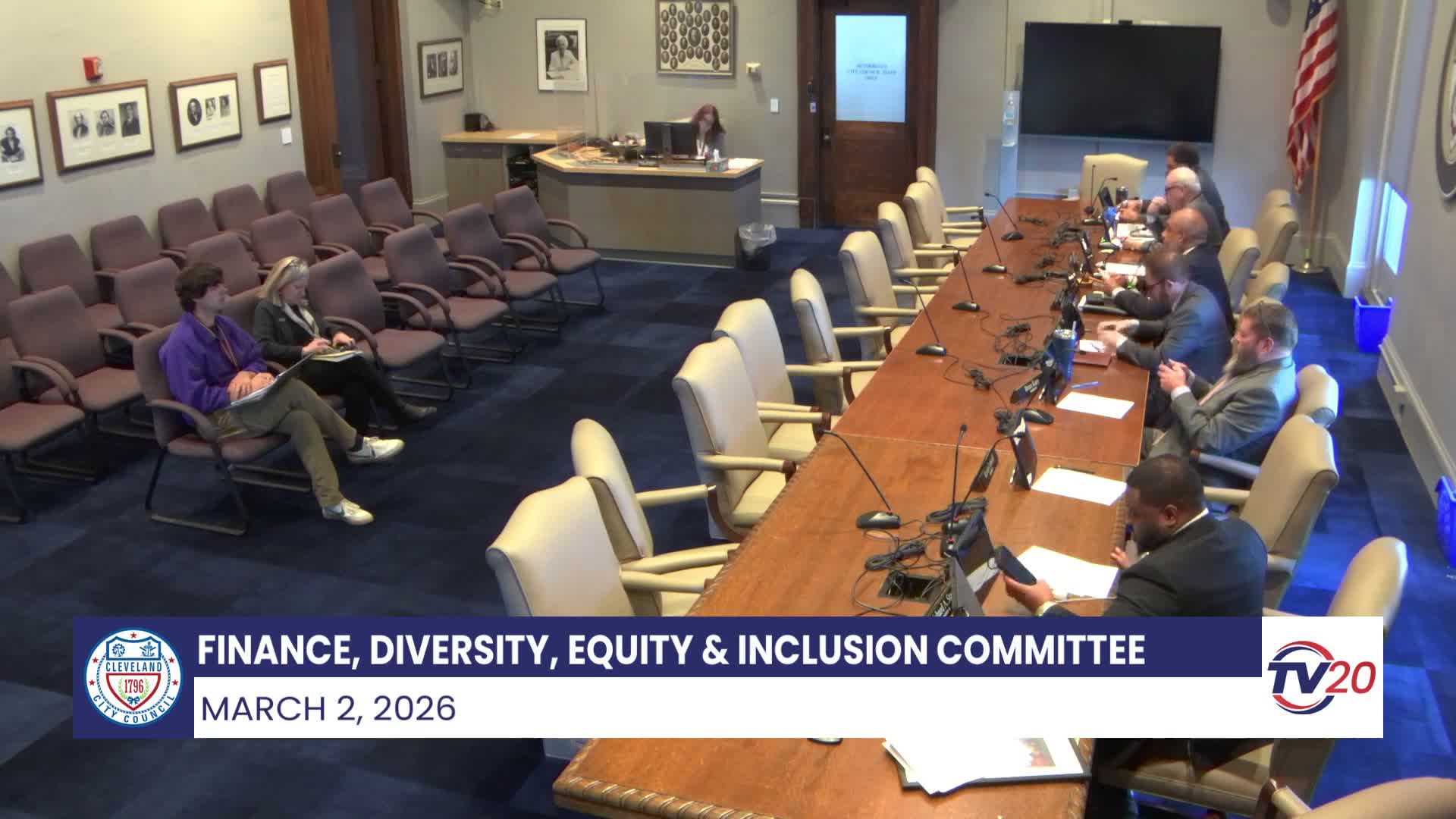
The Cleveland committee on Finance, Diversity, Equity and Inclusion approved an emergency ordinance March 2 allowing the director of the Department of Building and Housing to enter agreements with the Cuyahoga County Land Reutilization Corporation to accept reimbursements tied to a state demolition grant.
The director of the Department of Building and Housing told the committee the city was a subgrantee on an ODOD demolition grant worth $7,500,000 and has been receiving reimbursements slowly. "We were able to be the recipient of the ODOT demolition grant. It was $7,500,000," the director said, and asked for legislation to allow reimbursements to be returned to the demolition fund rather than routed to the general fund so the program can continue operating.
Committee members pressed for details about which properties would be demolished and how the money would be accounted for. Councilman Bishop requested a spreadsheet listing targeted properties; the director said the department would circulate its list and that building and housing data appears on the city’s open data portal. A staff member estimated the funding could support roughly 500 demolitions in a year, counting surveys and abatements. The director said single‑family demolitions typically run about $12,000 or less, with larger industrial projects costing more.
The director said reimbursements arrive in batches and the first recent payment was roughly $725,000; the department expects the full $7.5 million but needs the ability to recycle incoming reimbursements into the demolition fund because the program has exhausted other sources (including earlier ARPA allocations). The director described the city as having been the subgrantee under the Cuyahoga County Land Reutilization Corporation and said the reimbursements are processed through receipts submitted to the grantee.
Council members also asked about workforce and local‑hire opportunities; the director said most demolition contractors in the program are local and that many meet minority‑owned business descriptions. The committee approved ordinance 97‑2026 without a recorded roll‑call vote in the transcript and asked members to sign on.
The ordinance enables a short‑term accounting change intended to address an immediate cash‑flow constraint while the department awaits full reimbursement from the state program. The committee did not record a formal vote tally on the record; implementation details — including the list of properties and a proposed public dashboard — were left to the department to provide to council members.
The director of the Department of Building and Housing told the committee the city was a subgrantee on an ODOD demolition grant worth $7,500,000 and has been receiving reimbursements slowly. "We were able to be the recipient of the ODOT demolition grant. It was $7,500,000," the director said, and asked for legislation to allow reimbursements to be returned to the demolition fund rather than routed to the general fund so the program can continue operating.
Committee members pressed for details about which properties would be demolished and how the money would be accounted for. Councilman Bishop requested a spreadsheet listing targeted properties; the director said the department would circulate its list and that building and housing data appears on the city’s open data portal. A staff member estimated the funding could support roughly 500 demolitions in a year, counting surveys and abatements. The director said single‑family demolitions typically run about $12,000 or less, with larger industrial projects costing more.
The director said reimbursements arrive in batches and the first recent payment was roughly $725,000; the department expects the full $7.5 million but needs the ability to recycle incoming reimbursements into the demolition fund because the program has exhausted other sources (including earlier ARPA allocations). The director described the city as having been the subgrantee under the Cuyahoga County Land Reutilization Corporation and said the reimbursements are processed through receipts submitted to the grantee.
Council members also asked about workforce and local‑hire opportunities; the director said most demolition contractors in the program are local and that many meet minority‑owned business descriptions. The committee approved ordinance 97‑2026 without a recorded roll‑call vote in the transcript and asked members to sign on.
The ordinance enables a short‑term accounting change intended to address an immediate cash‑flow constraint while the department awaits full reimbursement from the state program. The committee did not record a formal vote tally on the record; implementation details — including the list of properties and a proposed public dashboard — were left to the department to provide to council members.
Don't Miss a Word: See the Full Meeting!
Go beyond summaries. Unlock every video, transcript, and key insight with a Founder Membership.
✓
Get instant access to full meeting videos
✓
Search and clip any phrase from complete transcripts
✓
Receive AI-powered summaries & custom alerts
✓
Enjoy lifetime, unrestricted access to government data
30-day money-back guarantee
