Manatee trustees debate new library‑materials policy language; trustees ask staff to refine challenge and 'access' rules
August 30, 2024 | Manatee, School Districts, Florida
This article was created by AI summarizing key points discussed. AI makes mistakes, so for full details and context, please refer to the video of the full meeting. Please report any errors so we can fix them. Report an error »
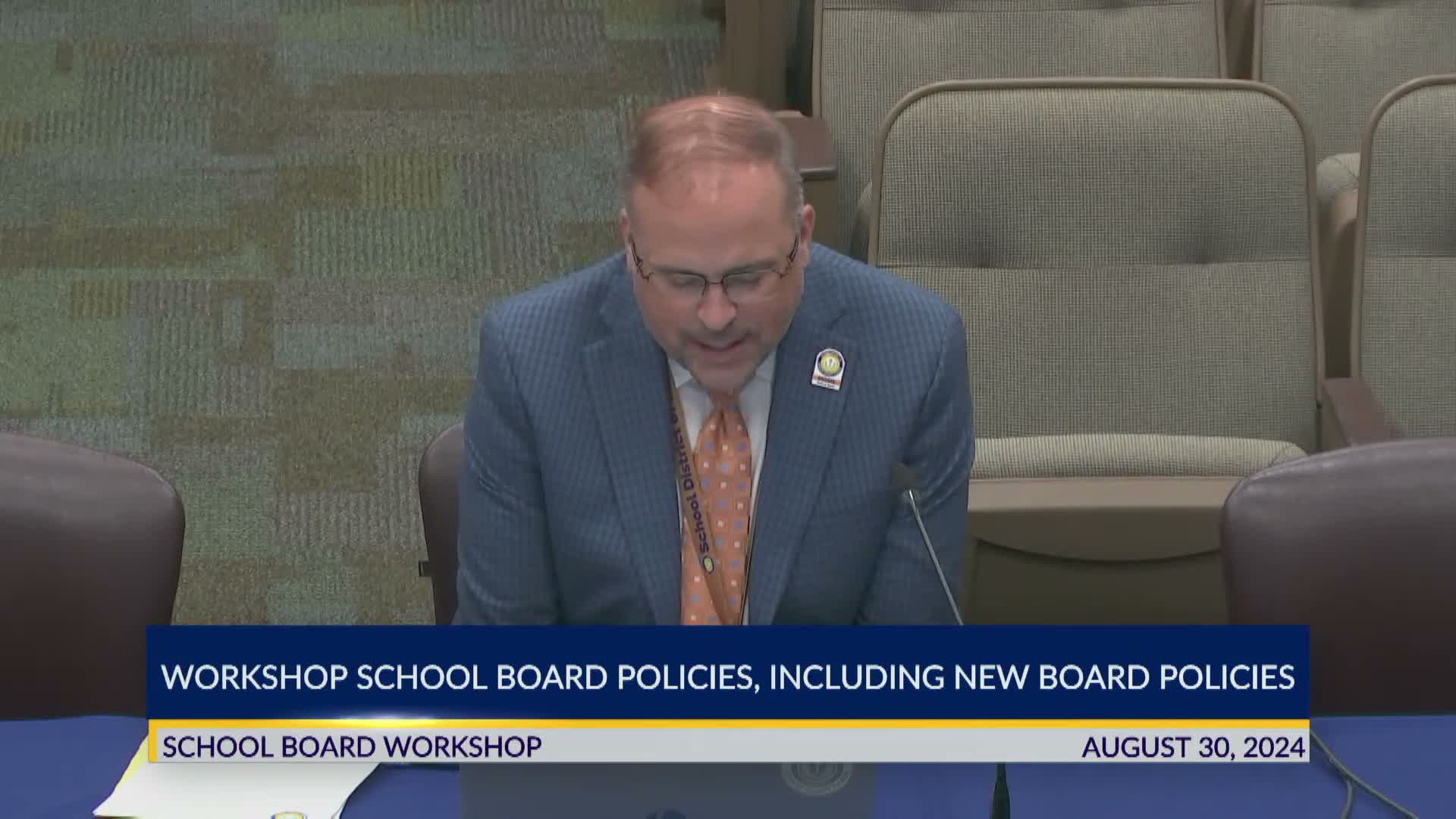
During the workshop the School Board examined proposed NEOLA updates that would change how school libraries and classroom instructional materials are governed under state rule.
Board members raised repeated concerns about a provision that, as drafted, could be read to prohibit principals from preventing student access to materials unless all board and state review steps were followed. Trustee Messenger asked whether the policy meant "a student could access any material in a classroom or a library, unless the person, teacher, whomever says no," noting older teachers may have had materials appropriate only for older students in their classroom collections.
Legal counsel Stephen Dye and staff said the NEOLA language closely tracks a recent State Board of Education rule amendment intended to ensure principals do not improperly deny or remove materials outside formal procedures. "Today's amendment ensures that principals understand their responsibility to provide students with access to appropriate educational materials and that students are not denied access due to improper conduct relating to school library and classroom book review processes," Dye read from the rule press release.
Trustees nonetheless warned the draft could unintentionally curtail routine "weeding" (removal of worn, out‑of‑date, or low‑circulation items) and penalize principals who act to maintain age‑appropriate collections. Trustee Foreman asked whether a principal who purges old books that are not circulating could be found in violation; staff clarified the district separates normal weeding procedures from a formal public challenge process that can impose cross‑campus restrictions.
Several trustees asked staff and counsel to revise the policy text to preserve ordinary collection management while enforcing compliance with statutory prohibitions and the formal challenge process. Staff said they would return the cited rule and statute references and circulate a redraft before the packet is advertised for public comment.
Next steps: staff/legal will reread the governing state rule and statute, propose clarified wording to distinguish routine collection maintenance from formal challenge/removal procedures, and return with a revised draft for the Sept. 10 meeting so the policy can be advertised for the 30‑day public comment period.
Board members raised repeated concerns about a provision that, as drafted, could be read to prohibit principals from preventing student access to materials unless all board and state review steps were followed. Trustee Messenger asked whether the policy meant "a student could access any material in a classroom or a library, unless the person, teacher, whomever says no," noting older teachers may have had materials appropriate only for older students in their classroom collections.
Legal counsel Stephen Dye and staff said the NEOLA language closely tracks a recent State Board of Education rule amendment intended to ensure principals do not improperly deny or remove materials outside formal procedures. "Today's amendment ensures that principals understand their responsibility to provide students with access to appropriate educational materials and that students are not denied access due to improper conduct relating to school library and classroom book review processes," Dye read from the rule press release.
Trustees nonetheless warned the draft could unintentionally curtail routine "weeding" (removal of worn, out‑of‑date, or low‑circulation items) and penalize principals who act to maintain age‑appropriate collections. Trustee Foreman asked whether a principal who purges old books that are not circulating could be found in violation; staff clarified the district separates normal weeding procedures from a formal public challenge process that can impose cross‑campus restrictions.
Several trustees asked staff and counsel to revise the policy text to preserve ordinary collection management while enforcing compliance with statutory prohibitions and the formal challenge process. Staff said they would return the cited rule and statute references and circulate a redraft before the packet is advertised for public comment.
Next steps: staff/legal will reread the governing state rule and statute, propose clarified wording to distinguish routine collection maintenance from formal challenge/removal procedures, and return with a revised draft for the Sept. 10 meeting so the policy can be advertised for the 30‑day public comment period.
Don't Miss a Word: See the Full Meeting!
Go beyond summaries. Unlock every video, transcript, and key insight with a Founder Membership.
✓
Get instant access to full meeting videos
✓
Search and clip any phrase from complete transcripts
✓
Receive AI-powered summaries & custom alerts
✓
Enjoy lifetime, unrestricted access to government data
30-day money-back guarantee
