Board reviews new rezoning policy draft; asks staff to clarify initiation, public input and timing
August 30, 2024 | Manatee, School Districts, Florida
This article was created by AI summarizing key points discussed. AI makes mistakes, so for full details and context, please refer to the video of the full meeting. Please report any errors so we can fix them. Report an error »
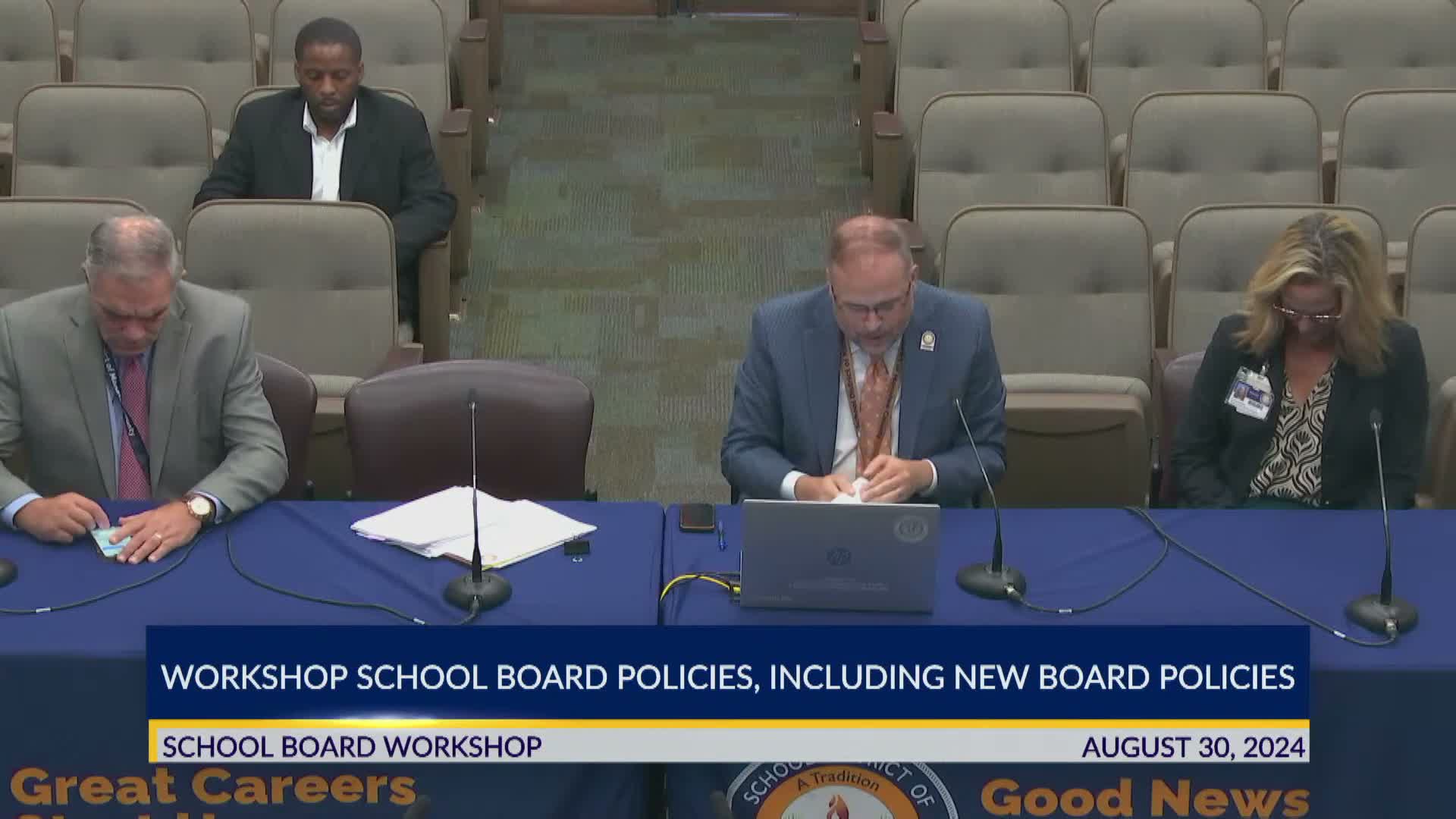
The board debated a major rewrite of Policy 51.20 that would split school choice, enrollment, attendance zones and rezoning into separate policies and present a new process for rezoning residential attendance zones.
Staff said the redesign is intended to make the policy clearer as student population growth and multiple new campus openings require more frequent capacity planning. The proposed 51.20.02 draft defines "FISH" (facility) and program capacity, lists reasons to consider rezoning (new schools, over/under capacity, population shifts), and prescribes implementation steps including public meetings, generation of at least three mapping concepts and stated exemptions.
Trustees asked that staff clarify several items before the draft is advertised: remove or reword the word "annual" so routine reviews are not misread by parents as an annual requirement to reassign students; combine or relocate initiation language so the board is aware of staff's analyses before implementation; and define how public outreach will vary with rezoning footprint. Trustee Messenger praised the exemptions section as a tool to limit ad hoc negotiations during hearings; others expressed concern that the board, not staff, should authorize initiation in some circumstances.
Superintendent Dr. Wysong said the district must be able to act operationally to open new schools without leaving them with no assigned students. Staff and trustees agreed to revise the draft and return an updated version the following week; staff proposed posting the revised policy for advertisement on the Sept. 10 agenda and targeting final approval at the Oct. 22 meeting after the 30‑day public comment period.
Trustees asked staff to include clear workshop notification to the board before initiation of any rezoning process and to provide the mapping tools and data in workshops so the board and community can view concept maps and underlying capacity calculations.
Next steps: staff to produce a redline that collapses initiation/implementation language for clarity, strike or reword "annual" review language, and present the revised draft for the Sept. 10 agenda so the board may vote to advertise the policy for public comment.
Staff said the redesign is intended to make the policy clearer as student population growth and multiple new campus openings require more frequent capacity planning. The proposed 51.20.02 draft defines "FISH" (facility) and program capacity, lists reasons to consider rezoning (new schools, over/under capacity, population shifts), and prescribes implementation steps including public meetings, generation of at least three mapping concepts and stated exemptions.
Trustees asked that staff clarify several items before the draft is advertised: remove or reword the word "annual" so routine reviews are not misread by parents as an annual requirement to reassign students; combine or relocate initiation language so the board is aware of staff's analyses before implementation; and define how public outreach will vary with rezoning footprint. Trustee Messenger praised the exemptions section as a tool to limit ad hoc negotiations during hearings; others expressed concern that the board, not staff, should authorize initiation in some circumstances.
Superintendent Dr. Wysong said the district must be able to act operationally to open new schools without leaving them with no assigned students. Staff and trustees agreed to revise the draft and return an updated version the following week; staff proposed posting the revised policy for advertisement on the Sept. 10 agenda and targeting final approval at the Oct. 22 meeting after the 30‑day public comment period.
Trustees asked staff to include clear workshop notification to the board before initiation of any rezoning process and to provide the mapping tools and data in workshops so the board and community can view concept maps and underlying capacity calculations.
Next steps: staff to produce a redline that collapses initiation/implementation language for clarity, strike or reword "annual" review language, and present the revised draft for the Sept. 10 agenda so the board may vote to advertise the policy for public comment.
View the Full Meeting & All Its Details
This article offers just a summary. Unlock complete video, transcripts, and insights as a Founder Member.
✓
Watch full, unedited meeting videos
✓
Search every word spoken in unlimited transcripts
✓
AI summaries & real-time alerts (all government levels)
✓
Permanent access to expanding government content
30-day money-back guarantee
