Disciplinary counsel urges disbarment of Wynn; respondent tells Washington Supreme Court he lacked criminal intent
May 28, 2024 | Supreme Court, Judicial , Washington
This article was created by AI summarizing key points discussed. AI makes mistakes, so for full details and context, please refer to the video of the full meeting. Please report any errors so we can fix them. Report an error »
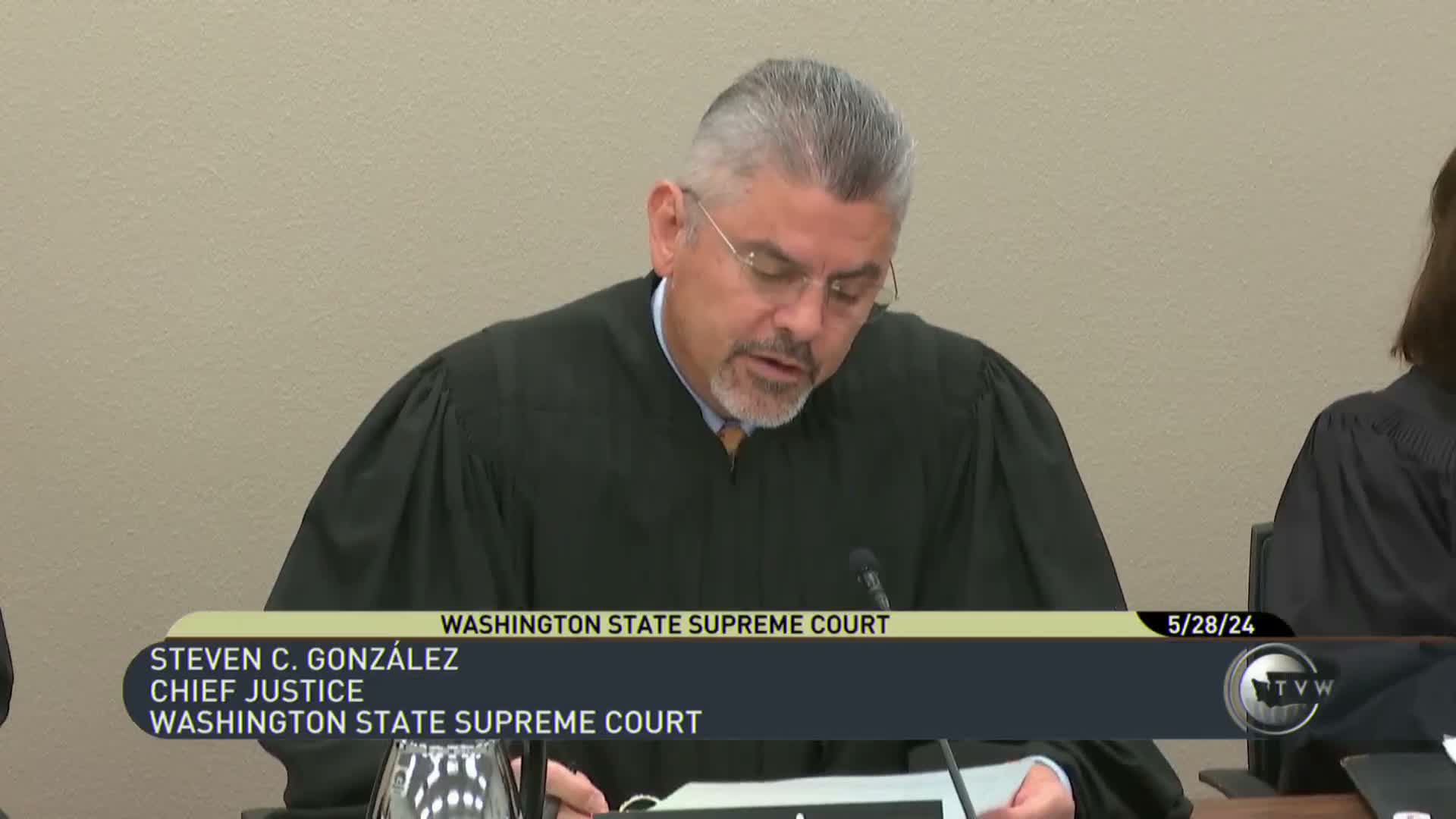
The Washington Supreme Court heard arguments May 28, 2024, in In Re Wynn, a disciplinary appeal in which the Office of Disciplinary Counsel (ODC) asked the court to affirm the disciplinary board's unanimous recommendation that the respondent be disbarred. Henry Cruz, appearing for the ODC, told the court the board found respondent had embezzled "hundreds of thousands of dollars of client and investor funds," engaged in intentional misrepresentations and conflicts of interest, and that those findings warranted disbarment.
Why it matters: Disbarment would end the lawyer's ability to practice and follows findings the hearing officer and board concluded involved conversion of funds, a fraudulent reconveyance deed, and false accounting. The high court's decision will determine whether the board's credibility assessments and sanction recommendation must be upheld.
Cruz summarized the board's findings and sanction reasoning, telling the court the record supports substantial evidence of unauthorized transfers and concealment of three transactions that were omitted from an accounting provided to investors. "The disciplinary board unanimously recommended respondent's disbarment for embezzling hundreds of thousands of dollars of client and investor funds for committing fraudulent acts and intentional misrepresentations and for engaging in conflicts of interest with the intent to benefit himself," Cruz said, arguing the board's credibility determinations are entitled to great weight.
Respondent — identified in the record as Wynn and speaking pro se — framed the central legal question as whether the record proves the criminal intent required for theft. Wynn argued the ODC and board started from the wrong legal premise and said that, for several challenged counts, the evidence did not establish an intent to deprive investors or clients. "The issue here today is whether I had the criminal intent to commit theft," Wynn told the court, later adding, "I didn't have the criminal intent. I didn't intend to steal anything." He said investors had paid $445,000 for a 10% membership interest and that the operating agreement allowed discretionary use of the funds, which he said he reinvested into the larger project.
Justices pressed both sides on how particular transactions were categorized in the record. The court questioned whether portions of the Takenaka/Rounds proceeds had been used to pay personal credit-card balances (including one in the respondent's mother's name) and whether those items were part of the accounting Wynn provided. Cruz acknowledged one count related to the loan was not sustained but said other counts connected to the same transactions were supported by the evidence, noting, for example, withdrawals made the day after deposit and subsequent use of funds to pay respondent's credit-card debts.
The ODC also argued that inferences of intent can be drawn from circumstantial evidence and from the respondent's alleged effort to hide unauthorized transactions from investors. Cruz disputed the respondent's reliance on course-of-performance doctrines, saying "there's simply no authority permitting course of performance as a defense to crimes such as theft." Cruz pointed to a finding that the respondent executed a reconveyance deed that falsely stated beneficiaries had requested reconveyance and that respondent directed staff to record the deed despite knowing the information was false.
Wynn conceded some procedural lapses and said, if given the chance to keep his license, he would have documented withdrawals of representation and produced clearer escrow instructions. He pressed the court on witness credibility, questioning why the hearing officer credited testimony from a witness the respondent alleged had committed notary fraud and arguing the ODC did not adequately develop testimony from a central witness he identified as Mr. Lam, whom Wynn said would have supported his authorization defense.
The court heard argument on the interplay of counts alleged in the hearing record, statutory citations cited by parties, and American Bar Association sanction standards referenced by counsel. After argument and brief rebuttal by Wynn, the court submitted the case for decision and took a 10-minute recess.
What the record shows: The transcript records ODC's assertion of conversion, a false reconveyance, false accounting and conflicts of interest; the respondent repeatedly denied criminal intent and emphasized course-of-performance and authorization defenses. The parties and court repeatedly referenced a $445,000 investment, withdrawals of approximately $50,000 the day after deposit, and a $7,000 payment to a witness tied to the reconveyance question. Specific statutory citations appear in the record as quoted by parties (e.g., as cited in briefs, RCW 9 8.56 0.02 and RCW 9.38 0.02) and counsel cited ABA sanction standards (5.11B, 4.11 and 4.31) in arguing presumptive sanctioning ranges.
Next step: The court took the case under submission; no ruling was announced at the hearing. The next public development will be the court's opinion or order resolving whether to affirm the board's recommendation and any resulting sanction.
Why it matters: Disbarment would end the lawyer's ability to practice and follows findings the hearing officer and board concluded involved conversion of funds, a fraudulent reconveyance deed, and false accounting. The high court's decision will determine whether the board's credibility assessments and sanction recommendation must be upheld.
Cruz summarized the board's findings and sanction reasoning, telling the court the record supports substantial evidence of unauthorized transfers and concealment of three transactions that were omitted from an accounting provided to investors. "The disciplinary board unanimously recommended respondent's disbarment for embezzling hundreds of thousands of dollars of client and investor funds for committing fraudulent acts and intentional misrepresentations and for engaging in conflicts of interest with the intent to benefit himself," Cruz said, arguing the board's credibility determinations are entitled to great weight.
Respondent — identified in the record as Wynn and speaking pro se — framed the central legal question as whether the record proves the criminal intent required for theft. Wynn argued the ODC and board started from the wrong legal premise and said that, for several challenged counts, the evidence did not establish an intent to deprive investors or clients. "The issue here today is whether I had the criminal intent to commit theft," Wynn told the court, later adding, "I didn't have the criminal intent. I didn't intend to steal anything." He said investors had paid $445,000 for a 10% membership interest and that the operating agreement allowed discretionary use of the funds, which he said he reinvested into the larger project.
Justices pressed both sides on how particular transactions were categorized in the record. The court questioned whether portions of the Takenaka/Rounds proceeds had been used to pay personal credit-card balances (including one in the respondent's mother's name) and whether those items were part of the accounting Wynn provided. Cruz acknowledged one count related to the loan was not sustained but said other counts connected to the same transactions were supported by the evidence, noting, for example, withdrawals made the day after deposit and subsequent use of funds to pay respondent's credit-card debts.
The ODC also argued that inferences of intent can be drawn from circumstantial evidence and from the respondent's alleged effort to hide unauthorized transactions from investors. Cruz disputed the respondent's reliance on course-of-performance doctrines, saying "there's simply no authority permitting course of performance as a defense to crimes such as theft." Cruz pointed to a finding that the respondent executed a reconveyance deed that falsely stated beneficiaries had requested reconveyance and that respondent directed staff to record the deed despite knowing the information was false.
Wynn conceded some procedural lapses and said, if given the chance to keep his license, he would have documented withdrawals of representation and produced clearer escrow instructions. He pressed the court on witness credibility, questioning why the hearing officer credited testimony from a witness the respondent alleged had committed notary fraud and arguing the ODC did not adequately develop testimony from a central witness he identified as Mr. Lam, whom Wynn said would have supported his authorization defense.
The court heard argument on the interplay of counts alleged in the hearing record, statutory citations cited by parties, and American Bar Association sanction standards referenced by counsel. After argument and brief rebuttal by Wynn, the court submitted the case for decision and took a 10-minute recess.
What the record shows: The transcript records ODC's assertion of conversion, a false reconveyance, false accounting and conflicts of interest; the respondent repeatedly denied criminal intent and emphasized course-of-performance and authorization defenses. The parties and court repeatedly referenced a $445,000 investment, withdrawals of approximately $50,000 the day after deposit, and a $7,000 payment to a witness tied to the reconveyance question. Specific statutory citations appear in the record as quoted by parties (e.g., as cited in briefs, RCW 9 8.56 0.02 and RCW 9.38 0.02) and counsel cited ABA sanction standards (5.11B, 4.11 and 4.31) in arguing presumptive sanctioning ranges.
Next step: The court took the case under submission; no ruling was announced at the hearing. The next public development will be the court's opinion or order resolving whether to affirm the board's recommendation and any resulting sanction.
Don't Miss a Word: See the Full Meeting!
Go beyond summaries. Unlock every video, transcript, and key insight with a Founder Membership.
✓
Get instant access to full meeting videos
✓
Search and clip any phrase from complete transcripts
✓
Receive AI-powered summaries & custom alerts
✓
Enjoy lifetime, unrestricted access to government data
30-day money-back guarantee
