Task force urges clearer character-and-fitness guidance; court debates dropping financial‑responsibility question
May 08, 2024 | Supreme Court, Judicial , Washington
This article was created by AI summarizing key points discussed. AI makes mistakes, so for full details and context, please refer to the video of the full meeting. Please report any errors so we can fix them. Report an error »
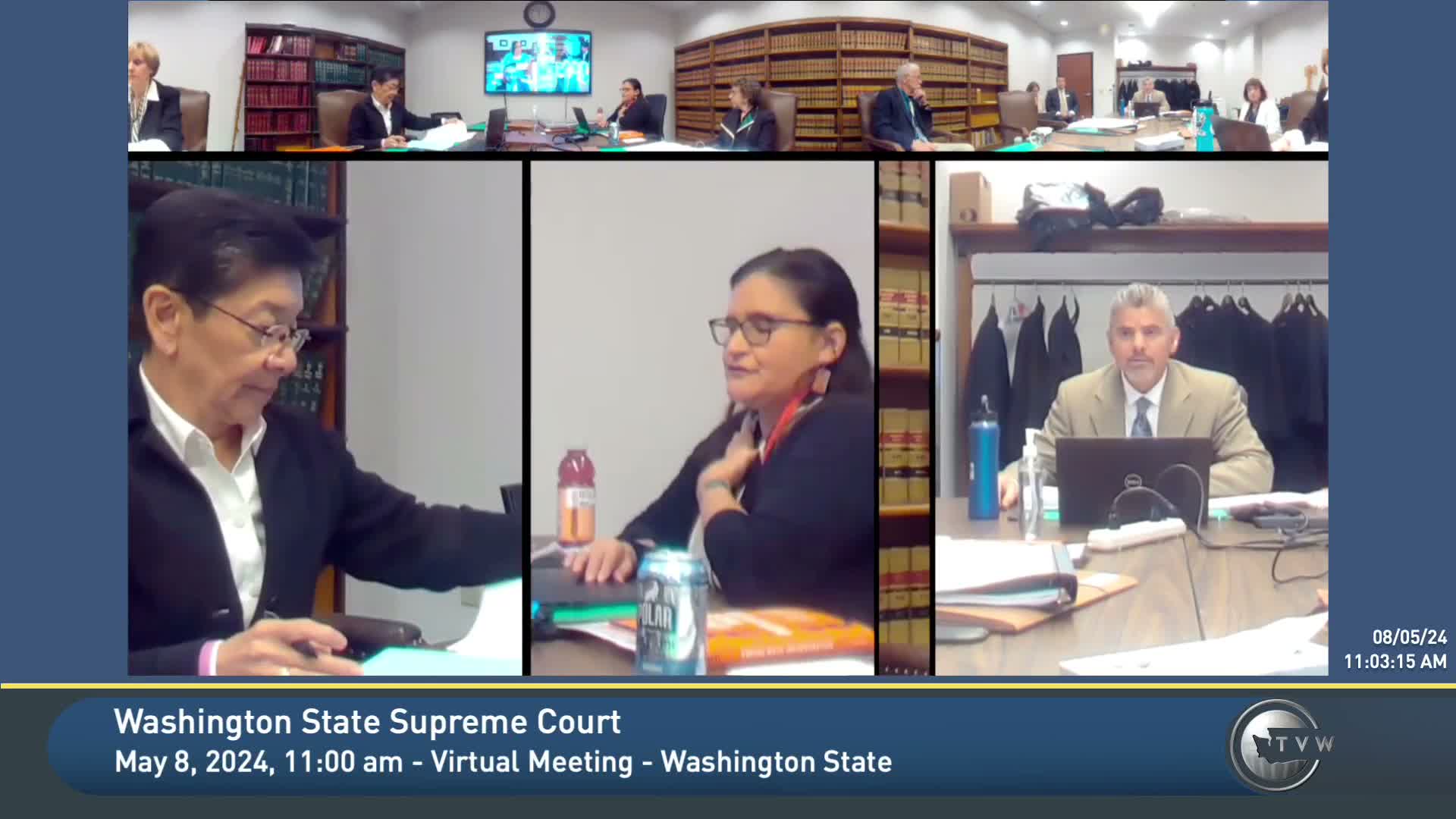
The Washington Supreme Court met May 8, 2024, to hear recommendations from the Washington Bar Licensure Task Force on how to improve the character‑and‑fitness review for prospective lawyers. Justice Montoya Lewis, the task force co‑chair, told the court the group’s aim was to “make the character and fitness process clearer” for applicants and reviewers while still protecting the public.
The task force presented several recommendations including clearer public guidance, an ombuds process to help applicants, defined aggravating and mitigating factors for reviewers, and a proposed five‑year disregard rule for certain past convictions. The panel also recommended removing a standing inquiry about applicants’ general financial responsibility (APR 21(a)(7)), arguing that common financial hardship and predatory lending practices produce disproportionate impacts on historically marginalized applicants. “We don’t think that it should be considered in determining character and fitness,” the subcommittee chair, Brent Williams Ruth, said of financial‑responsibility questions.
Several justices pushed back. Justice Gordon McLeod said he had “serious questions about totally disregarding failure to fulfill financial obligations in the past,” noting the inquiry can reflect consumer‑protection concerns when lawyers handle client funds. Other justices sought clarification about whether the five‑year rule in the draft meant five years from conviction, arrest, or completion of sentence; the subcommittee said the draft used five years from conviction but acknowledged ambiguity.
Justices and task force members also discussed alternatives to wholesale removal of financial questions, including clearer rule comments, a graduated list of aggravating and mitigating factors, and confidential conditional admissions that allow supervised entry with private conditions. The subcommittee argued confidential conditional admission is used by other states and would remain private unless conditions are violated. “There are 29 other states that do have conditional admission already,” Williams Ruth said, adding that such programs can be administered confidentially between the bar and the applicant.
A recurring theme was data and measurement. Several justices, led by Justice Whitener, noted the WSBA lacks comprehensive demographic data on applicants who appear before the character‑and‑fitness process, making it difficult to measure whether proposed changes reduce disparate outcomes. Bar representatives acknowledged the gap and said the WSBA intends to improve data collection to allow future assessment.
Law‑school admissions officials told the court that many schools already counsel applicants who disclose prior conduct at admission; schools said that earlier counseling can help, but they cannot substitute for the licensing authority’s final determination. The task force suggested stronger public information and an ombuds function to reduce surprises at the licensure stage.
The court did not take a vote. Task force leaders said they expect the court to indicate which proposals it favors and to request more detailed rule text or comments if the court wants to proceed. The court thanked the guests and said it would consider the recommendations and next procedural steps, including potential rulemaking or further drafting from the committee.
The task force presented several recommendations including clearer public guidance, an ombuds process to help applicants, defined aggravating and mitigating factors for reviewers, and a proposed five‑year disregard rule for certain past convictions. The panel also recommended removing a standing inquiry about applicants’ general financial responsibility (APR 21(a)(7)), arguing that common financial hardship and predatory lending practices produce disproportionate impacts on historically marginalized applicants. “We don’t think that it should be considered in determining character and fitness,” the subcommittee chair, Brent Williams Ruth, said of financial‑responsibility questions.
Several justices pushed back. Justice Gordon McLeod said he had “serious questions about totally disregarding failure to fulfill financial obligations in the past,” noting the inquiry can reflect consumer‑protection concerns when lawyers handle client funds. Other justices sought clarification about whether the five‑year rule in the draft meant five years from conviction, arrest, or completion of sentence; the subcommittee said the draft used five years from conviction but acknowledged ambiguity.
Justices and task force members also discussed alternatives to wholesale removal of financial questions, including clearer rule comments, a graduated list of aggravating and mitigating factors, and confidential conditional admissions that allow supervised entry with private conditions. The subcommittee argued confidential conditional admission is used by other states and would remain private unless conditions are violated. “There are 29 other states that do have conditional admission already,” Williams Ruth said, adding that such programs can be administered confidentially between the bar and the applicant.
A recurring theme was data and measurement. Several justices, led by Justice Whitener, noted the WSBA lacks comprehensive demographic data on applicants who appear before the character‑and‑fitness process, making it difficult to measure whether proposed changes reduce disparate outcomes. Bar representatives acknowledged the gap and said the WSBA intends to improve data collection to allow future assessment.
Law‑school admissions officials told the court that many schools already counsel applicants who disclose prior conduct at admission; schools said that earlier counseling can help, but they cannot substitute for the licensing authority’s final determination. The task force suggested stronger public information and an ombuds function to reduce surprises at the licensure stage.
The court did not take a vote. Task force leaders said they expect the court to indicate which proposals it favors and to request more detailed rule text or comments if the court wants to proceed. The court thanked the guests and said it would consider the recommendations and next procedural steps, including potential rulemaking or further drafting from the committee.
View the Full Meeting & All Its Details
This article offers just a summary. Unlock complete video, transcripts, and insights as a Founder Member.
✓
Watch full, unedited meeting videos
✓
Search every word spoken in unlimited transcripts
✓
AI summaries & real-time alerts (all government levels)
✓
Permanent access to expanding government content
30-day money-back guarantee
