NASA standardizes SLS and accelerates Artemis cadence; Artemis 3 refocused to low‑Earth‑orbit rendezvous
March 02, 2026 | Orleans Parish, School Boards, Louisiana
This article was created by AI summarizing key points discussed. AI makes mistakes, so for full details and context, please refer to the video of the full meeting. Please report any errors so we can fix them. Report an error »
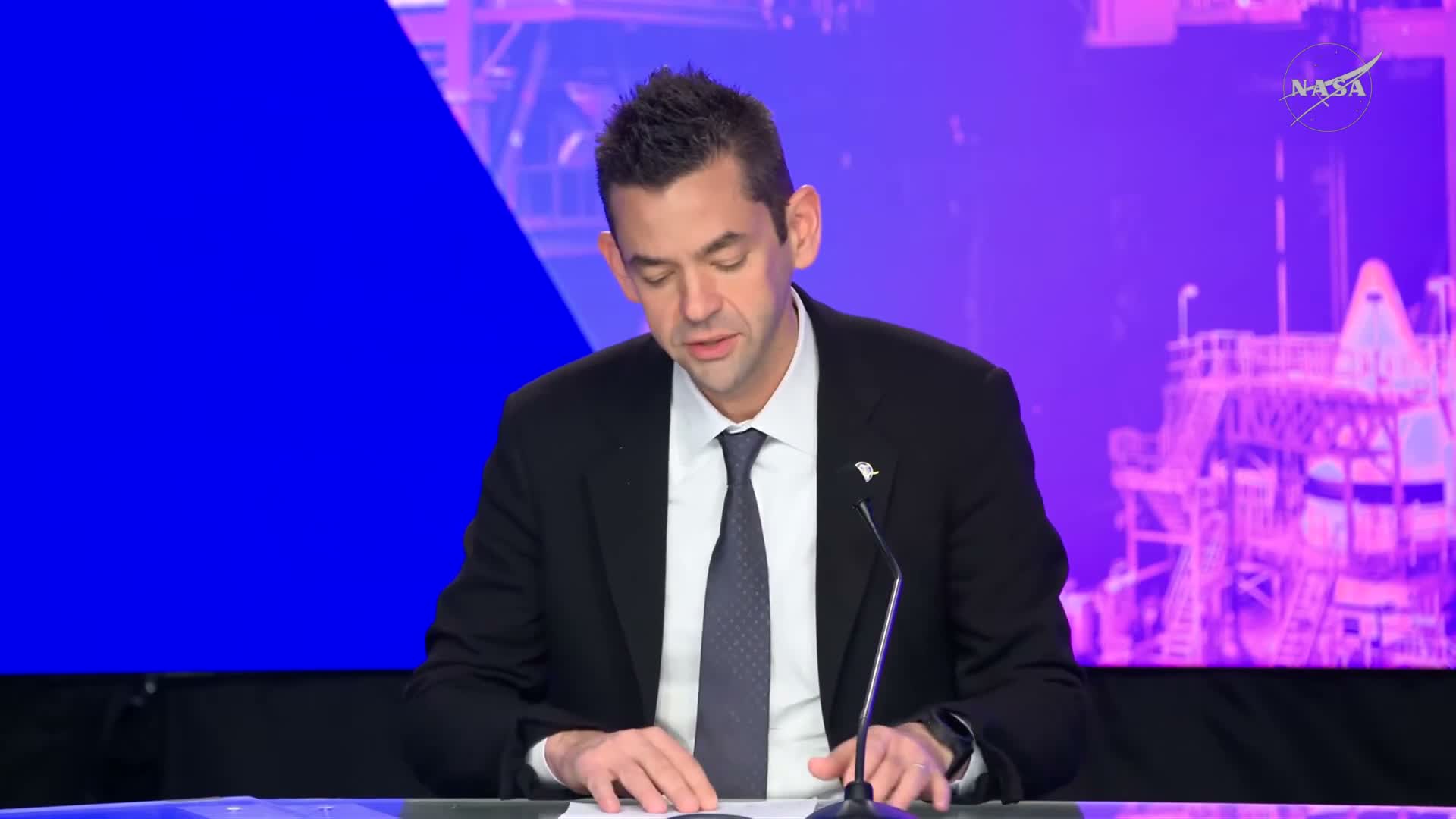
NASA announced a significant course correction for its Artemis campaign on March 3 at Kennedy Space Center, saying the agency will standardize the Space Launch System and push for a faster launch cadence to reduce risk and increase reliability.
"Today, we're announcing a standardization of the SLS fleet to what we'll call essentially a near block 1 configuration," said Jared Isaacman, NASA administrator, who framed the change as a response to recurring flow and leak issues and to the program's low flight rate. Isaacman said the agency aims to get launches "inside of a year, specifically down to potentially 10 months," and that standardization will reduce complexity and accelerate manufacturing.
Why it matters: Isaacman argued that a three‑year launch cadence erodes workforce skills and that repeating unique, heavily customized vehicles impedes learning. "A component of that is when you are launching every 3 years, your skills atrophy. You lose muscle memory," he said, calling for rebuilding core civil‑service capabilities and bringing more work in‑house where appropriate.
Program change: As part of the revision, NASA said it will revise Artemis 3 from a direct lunar landing attempt to a mission that will rendezvous in low Earth orbit with one or both Human Landing System (HLS) providers. "This is an opportunity to test out the interface between Orion and that vehicle," Isaacman said, adding that LEO operations let crews and engineers exercise docking, ingress and life‑support systems to "buy down risk for a subsequent landing."
Budget and support: Isaacman pointed to recent policy and funding as enabling factors, saying the agency has a national space policy and congressional appropriations that support the shift. He referenced the Working Family Tax Cut Act and related increases in exploration appropriations as providing the resources to pursue standardization and higher cadence.
Industry and safety: Associate Administrator Amit Chhatria said the course correction "reduces risk" and is focused on "safe and achievable missions." He and Isaacman said NASA has discussed the strategy with prime contractors and HLS providers, whom they described as supportive. Isaacman said many of the steps align with recommendations from the Aerospace Safety Advisory Panel.
Next steps and timeline: Isaacman said Artemis 2 remains the immediate priority and that the revised Artemis 3 rendezvous is targeted for mid‑2027; Artemis 4 and Artemis 5 would then create opportunities for lunar landing attempts in 2028 if the schedule holds. He cautioned that mission design details are still being developed and that crew announcements will follow mission‑design decisions.
What NASA emphasized it will not do now: Agency leaders declined to discuss specific contracting or procurement decisions at the press conference, and they said they would not "whiteboard" mission design on the record. "We're not here to talk about contractual issues," Chhatria said.
The next procedural step: NASA said it will release infographics and additional briefings to help visualize the revised campaign and will provide regular updates as mission design and hardware standardization progress.
"Today, we're announcing a standardization of the SLS fleet to what we'll call essentially a near block 1 configuration," said Jared Isaacman, NASA administrator, who framed the change as a response to recurring flow and leak issues and to the program's low flight rate. Isaacman said the agency aims to get launches "inside of a year, specifically down to potentially 10 months," and that standardization will reduce complexity and accelerate manufacturing.
Why it matters: Isaacman argued that a three‑year launch cadence erodes workforce skills and that repeating unique, heavily customized vehicles impedes learning. "A component of that is when you are launching every 3 years, your skills atrophy. You lose muscle memory," he said, calling for rebuilding core civil‑service capabilities and bringing more work in‑house where appropriate.
Program change: As part of the revision, NASA said it will revise Artemis 3 from a direct lunar landing attempt to a mission that will rendezvous in low Earth orbit with one or both Human Landing System (HLS) providers. "This is an opportunity to test out the interface between Orion and that vehicle," Isaacman said, adding that LEO operations let crews and engineers exercise docking, ingress and life‑support systems to "buy down risk for a subsequent landing."
Budget and support: Isaacman pointed to recent policy and funding as enabling factors, saying the agency has a national space policy and congressional appropriations that support the shift. He referenced the Working Family Tax Cut Act and related increases in exploration appropriations as providing the resources to pursue standardization and higher cadence.
Industry and safety: Associate Administrator Amit Chhatria said the course correction "reduces risk" and is focused on "safe and achievable missions." He and Isaacman said NASA has discussed the strategy with prime contractors and HLS providers, whom they described as supportive. Isaacman said many of the steps align with recommendations from the Aerospace Safety Advisory Panel.
Next steps and timeline: Isaacman said Artemis 2 remains the immediate priority and that the revised Artemis 3 rendezvous is targeted for mid‑2027; Artemis 4 and Artemis 5 would then create opportunities for lunar landing attempts in 2028 if the schedule holds. He cautioned that mission design details are still being developed and that crew announcements will follow mission‑design decisions.
What NASA emphasized it will not do now: Agency leaders declined to discuss specific contracting or procurement decisions at the press conference, and they said they would not "whiteboard" mission design on the record. "We're not here to talk about contractual issues," Chhatria said.
The next procedural step: NASA said it will release infographics and additional briefings to help visualize the revised campaign and will provide regular updates as mission design and hardware standardization progress.
View the Full Meeting & All Its Details
This article offers just a summary. Unlock complete video, transcripts, and insights as a Founder Member.
✓
Watch full, unedited meeting videos
✓
Search every word spoken in unlimited transcripts
✓
AI summaries & real-time alerts (all government levels)
✓
Permanent access to expanding government content
30-day money-back guarantee
