Artemis 2 rolled back to VAB after helium‑flow issue; teams replace seals and batteries, target early‑April launch window
March 02, 2026 | Orleans Parish, School Boards, Louisiana
This article was created by AI summarizing key points discussed. AI makes mistakes, so for full details and context, please refer to the video of the full meeting. Please report any errors so we can fix them. Report an error »
NASA said engineers rolled Artemis 2 back to the Vehicle Assembly Building (VAB) after detecting a problem with helium flow to the Interim Cryogenic Propulsion Stage (ICPS) during transition from wet dress rehearsal to launch configuration.
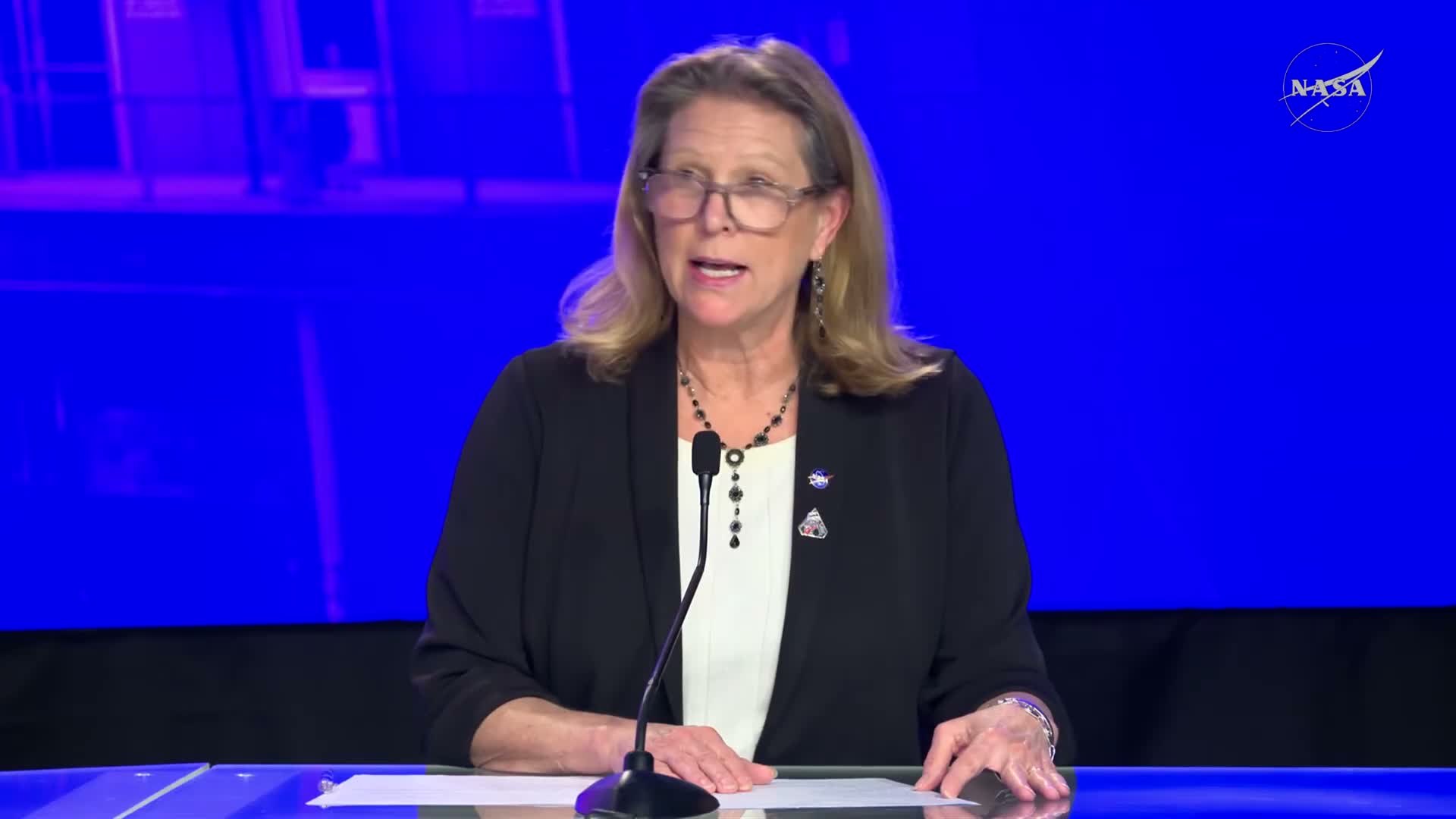
"We discovered the issue with the flow of helium to the ICPS...the data were pretty clear, that we were no go," said Lori Glaze, moon‑to‑Mars program manager. She said the team could not access the interior of the upper stage at the pad and therefore moved the vehicle back to the VAB to allow detailed inspection and repairs.
Planned work in the VAB: Glaze listed several specific tasks: remove and inspect suspected helium‑flow components to get to the root cause; replace the flight‑termination system batteries; perform another end‑to‑end test to satisfy Eastern Range safety requirements; exercise Orion closeout crew procedures; and replace the tail‑service‑mast oxygen seal that supplies liquid oxygen before liftoff. She noted the twin seal to liquid hydrogen had already been replaced at the pad.
Timeline and contingency: Glaze said the stack returned to the VAB "about 8 p.m. Wednesday night" and that platforms in the VAB have already been extended so work is underway. She described the team’s goal as preserving the best chance to launch in an early‑April window but emphasized that the schedule depends on root‑cause findings and successful inspections.
Safety and learning: Glaze said the team "allowed the data to talk to us" and that the working plan will include changes to hardware and operational procedures to reduce likelihood of recurrence. Isaacman and Chhatria framed the rollback as part of a broader effort to standardize operations and increase launch cadence while prioritizing safety.
What remains uncertain: Glaze provided specific tasks but did not commit to a fixed rollout date; she said an estimated rollout date would be provided when available. The agency also did not publish technical failure analysis in the briefing.
"We discovered the issue with the flow of helium to the ICPS...the data were pretty clear, that we were no go," said Lori Glaze, moon‑to‑Mars program manager. She said the team could not access the interior of the upper stage at the pad and therefore moved the vehicle back to the VAB to allow detailed inspection and repairs.
Planned work in the VAB: Glaze listed several specific tasks: remove and inspect suspected helium‑flow components to get to the root cause; replace the flight‑termination system batteries; perform another end‑to‑end test to satisfy Eastern Range safety requirements; exercise Orion closeout crew procedures; and replace the tail‑service‑mast oxygen seal that supplies liquid oxygen before liftoff. She noted the twin seal to liquid hydrogen had already been replaced at the pad.
Timeline and contingency: Glaze said the stack returned to the VAB "about 8 p.m. Wednesday night" and that platforms in the VAB have already been extended so work is underway. She described the team’s goal as preserving the best chance to launch in an early‑April window but emphasized that the schedule depends on root‑cause findings and successful inspections.
Safety and learning: Glaze said the team "allowed the data to talk to us" and that the working plan will include changes to hardware and operational procedures to reduce likelihood of recurrence. Isaacman and Chhatria framed the rollback as part of a broader effort to standardize operations and increase launch cadence while prioritizing safety.
What remains uncertain: Glaze provided specific tasks but did not commit to a fixed rollout date; she said an estimated rollout date would be provided when available. The agency also did not publish technical failure analysis in the briefing.
View the Full Meeting & All Its Details
This article offers just a summary. Unlock complete video, transcripts, and insights as a Founder Member.
✓
Watch full, unedited meeting videos
✓
Search every word spoken in unlimited transcripts
✓
AI summaries & real-time alerts (all government levels)
✓
Permanent access to expanding government content
30-day money-back guarantee
