Board moves ahead with first read of decal ordinance aimed at curbing out-of-county trash at convenience centers
March 01, 2026 | Washington County, Virginia
This article was created by AI summarizing key points discussed. AI makes mistakes, so for full details and context, please refer to the video of the full meeting. Please report any errors so we can fix them. Report an error »
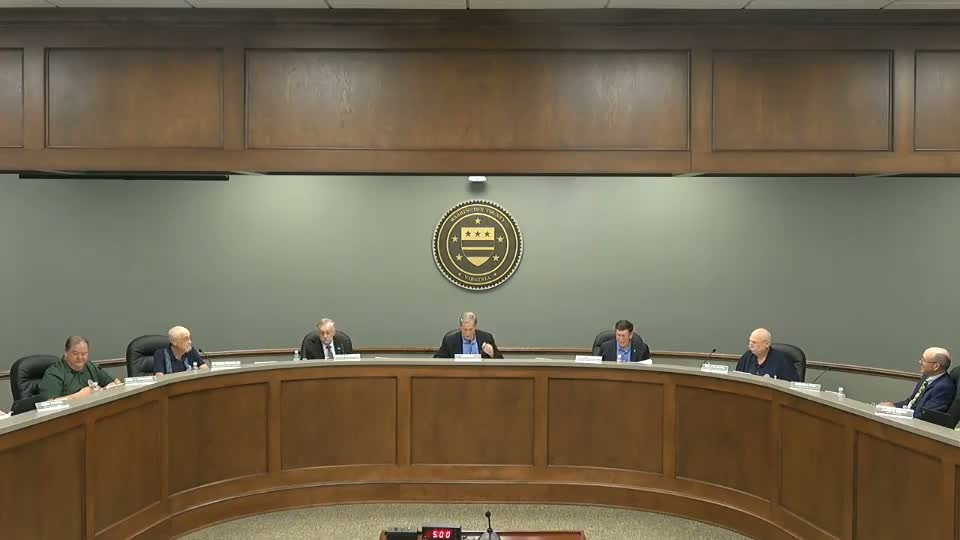
Washington County staff presented a first reading on Sept. 24 of an ordinance to reinstate an auto decal system for county convenience centers intended to curb out‑of‑county trash at county transfer and convenience stations.
Kathy Johnson, county staff, explained the plan would reissue a county sticker that is effectively already paid through the personal‑property tax statement rather than adding a new fee. Under the draft approach, all county residents who pay the existing registration fee would receive stickers (two mailed initially) and the decal would be reissued every three years. The system is intended to give station attendants a quick visual cue that a vehicle belongs to a county taxpayer; the staff plan includes a mail‑out of decals to approximately 38,000 registered personal‑property vehicles and an outreach and signage campaign before implementation.
Board members raised operational questions: how to accommodate people who haul other residents' trash (e.g., family members), how to handle vehicles with out‑of‑state plates, whether attendants should be asked to police decals, and the risk of displacement or increased roadside dumping. Staff said the policy would allow decals on vehicles with out‑of‑state plates if the vehicle can be verified as serving a Washington County taxpayer (for example, a Tennessee‑tagged work truck used by a county resident could carry a sticker). Johnson said staff would handle exceptions, mail replacement decals when residents change vehicles, and coordinate signage and outreach in advance so attendants are not required to be enforcement officers.
The board authorized the county attorney to schedule a public hearing on the ordinance; that step was approved by motion. Supervisors also asked staff to prepare clear Q&A materials and signage and to think through operational exceptions.
Why it matters: county leaders said out‑of‑county trash drives tipping fees and raises county costs; a low‑burden decal program is the county’s proposed tool to reduce that pressure without imposing an additional per‑visit fee on residents.
Next steps: staff will prepare the public‑hearing notice, finalize the ordinance language and public‑information materials, and schedule the hearing per the county attorney’s calendar.
Kathy Johnson, county staff, explained the plan would reissue a county sticker that is effectively already paid through the personal‑property tax statement rather than adding a new fee. Under the draft approach, all county residents who pay the existing registration fee would receive stickers (two mailed initially) and the decal would be reissued every three years. The system is intended to give station attendants a quick visual cue that a vehicle belongs to a county taxpayer; the staff plan includes a mail‑out of decals to approximately 38,000 registered personal‑property vehicles and an outreach and signage campaign before implementation.
Board members raised operational questions: how to accommodate people who haul other residents' trash (e.g., family members), how to handle vehicles with out‑of‑state plates, whether attendants should be asked to police decals, and the risk of displacement or increased roadside dumping. Staff said the policy would allow decals on vehicles with out‑of‑state plates if the vehicle can be verified as serving a Washington County taxpayer (for example, a Tennessee‑tagged work truck used by a county resident could carry a sticker). Johnson said staff would handle exceptions, mail replacement decals when residents change vehicles, and coordinate signage and outreach in advance so attendants are not required to be enforcement officers.
The board authorized the county attorney to schedule a public hearing on the ordinance; that step was approved by motion. Supervisors also asked staff to prepare clear Q&A materials and signage and to think through operational exceptions.
Why it matters: county leaders said out‑of‑county trash drives tipping fees and raises county costs; a low‑burden decal program is the county’s proposed tool to reduce that pressure without imposing an additional per‑visit fee on residents.
Next steps: staff will prepare the public‑hearing notice, finalize the ordinance language and public‑information materials, and schedule the hearing per the county attorney’s calendar.
Don't Miss a Word: See the Full Meeting!
Go beyond summaries. Unlock every video, transcript, and key insight with a Founder Membership.
✓
Get instant access to full meeting videos
✓
Search and clip any phrase from complete transcripts
✓
Receive AI-powered summaries & custom alerts
✓
Enjoy lifetime, unrestricted access to government data
30-day money-back guarantee
