Board agrees to add emergency-vehicle purchasing criteria to bylaws and sets carryover planning funds
March 01, 2026 | Washington County, Virginia
This article was created by AI summarizing key points discussed. AI makes mistakes, so for full details and context, please refer to the video of the full meeting. Please report any errors so we can fix them. Report an error »
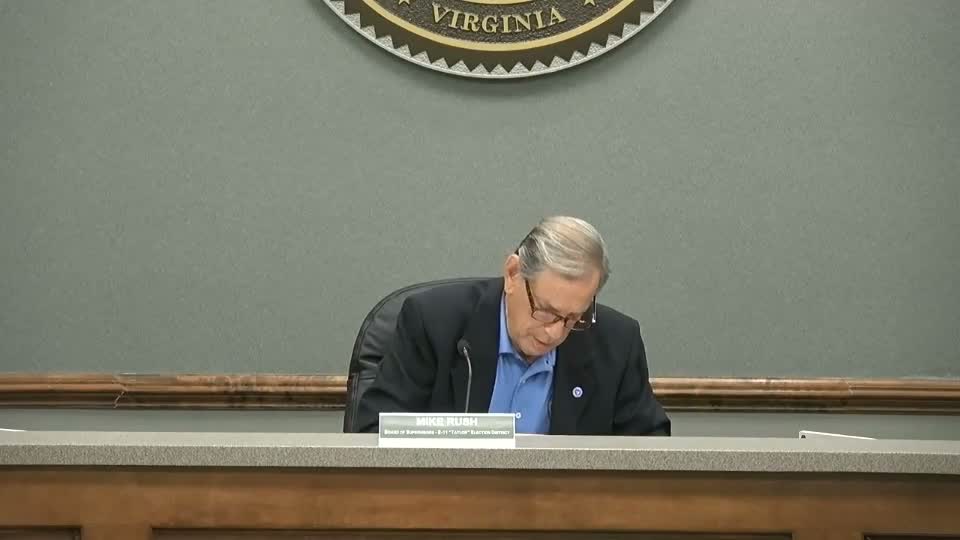
County staff led a detailed discussion on Sept. 24 about formalizing criteria and procedures for emergency‑vehicle purchases. Staff said procurement options include used apparatus, demo units, cooperative procurement and financing, and urged departments to demonstrate need and pursue grant opportunities before county funding.
Staff proposed a set of criteria to be added to the board bylaws—requirements to establish need, seek applicable grants (USDA, AFG, similar programs), consider used or demo units, sell replaced vehicles to recoup funds, and contemplate cooperative procurement to achieve better pricing. Staff also said dual titling of vehicles and shared financial responsibility between county and volunteer departments is still under consideration.
Board members expressed support for formal policy language and consensus to add the list of requirements to the bylaws, with a funding threshold discussed and adjusted during the motion (members suggested raising a prior placeholder from $300,000 to $400,000 or higher to reflect current apparatus costs). The board directed staff to incorporate the criteria into bylaw text and to plan for carryover funding to support apparatus needs, with staff noting a proposed carryover placeholder of $1.4 million for planning.
Fire chiefs who spoke during public comment highlighted local volunteer constraints: one chief described a roughly $694,000 demo truck that could meet local needs but said his volunteer department’s annual operating budget could not sustain loan payments without county support. Board members emphasized the need for objective procurement criteria and a fair, repeatable allocation process.
Why it matters: fire apparatus purchases are capital‑intensive, affect public safety and create recurring insurance and maintenance obligations. The board’s move to codify purchasing criteria is intended to create more transparent, consistent decisions across departments.
Next steps: staff will draft bylaw language, present it for board review and place approved criteria into formal bylaws; the board also directed that funding scenarios and procurement options be presented as part of future budget discussions.
Staff proposed a set of criteria to be added to the board bylaws—requirements to establish need, seek applicable grants (USDA, AFG, similar programs), consider used or demo units, sell replaced vehicles to recoup funds, and contemplate cooperative procurement to achieve better pricing. Staff also said dual titling of vehicles and shared financial responsibility between county and volunteer departments is still under consideration.
Board members expressed support for formal policy language and consensus to add the list of requirements to the bylaws, with a funding threshold discussed and adjusted during the motion (members suggested raising a prior placeholder from $300,000 to $400,000 or higher to reflect current apparatus costs). The board directed staff to incorporate the criteria into bylaw text and to plan for carryover funding to support apparatus needs, with staff noting a proposed carryover placeholder of $1.4 million for planning.
Fire chiefs who spoke during public comment highlighted local volunteer constraints: one chief described a roughly $694,000 demo truck that could meet local needs but said his volunteer department’s annual operating budget could not sustain loan payments without county support. Board members emphasized the need for objective procurement criteria and a fair, repeatable allocation process.
Why it matters: fire apparatus purchases are capital‑intensive, affect public safety and create recurring insurance and maintenance obligations. The board’s move to codify purchasing criteria is intended to create more transparent, consistent decisions across departments.
Next steps: staff will draft bylaw language, present it for board review and place approved criteria into formal bylaws; the board also directed that funding scenarios and procurement options be presented as part of future budget discussions.
Don't Miss a Word: See the Full Meeting!
Go beyond summaries. Unlock every video, transcript, and key insight with a Founder Membership.
✓
Get instant access to full meeting videos
✓
Search and clip any phrase from complete transcripts
✓
Receive AI-powered summaries & custom alerts
✓
Enjoy lifetime, unrestricted access to government data
30-day money-back guarantee
