Senate Natural Resources Committee advances energy navigator report, directs DPS to design program
February 27, 2026 | Natural Resources & Energy, SENATE, Committees, Legislative , Vermont
This article was created by AI summarizing key points discussed. AI makes mistakes, so for full details and context, please refer to the video of the full meeting. Please report any errors so we can fix them. Report an error »
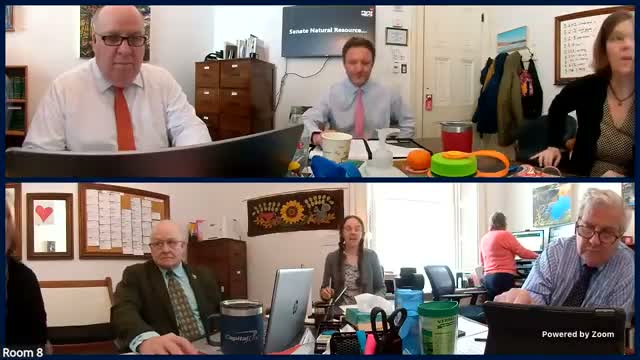
The Senate Committee on Natural Resources and Energy on Feb. 27 voted to report S-219, a bill that directs the Department of Public Service to contract with a third-party consultant to design a community-based home energy navigator and coaching program aimed at helping residential consumers—particularly low- and moderate-income households—navigate energy efficiency, weatherization and clean-energy options.
The committee’s move followed testimony from Ale Ganachek of the Department of Public Service, who said the department is already preparing an RFP for a related program review and expects the procurement process to begin "next week." Ganachek told the panel the department can include the S-219 work as a phase of that procurement but cautioned the department has limited discretionary budget authority and would rely on grant funding or future appropriations to cover added work.
The bill directs the department’s consultant to build on a comprehensive review of more than 100 publicly funded energy programs and to consult with groups including Efficiency Vermont, the Vermont Climate Action Office and community action agencies. It would require a report on program design by March 1, 2027, that may include a pilot program, technical assistance materials, cost estimates and a target number of residential consumers to be served. The draft as discussed also included two small appropriations: $25,000 to hire the third-party consultant and $10,000 to the Climate Economy Action Center to collaborate; committee members agreed appropriations language could be refined by the appropriations process.
Members questioned whether the department has sufficient funds to deliver a full program design and whether contingency language should make the report contingent on funding. Ganachek said the department can incorporate the work into the upcoming RFP and that the program review work would run roughly eight to 10 months, producing recommendations toward year-end.
The committee approved the staff draft and voted to report S-219 favorably to the next stage. The committee discussion noted the bill’s aim is to better coordinate scattered programs and to examine metrics such as participant savings, greenhouse-gas reductions and cost-effectiveness as part of the program-design deliverable. The measure will move to appropriations, where funding language and contingencies may be adjusted.
The committee’s move followed testimony from Ale Ganachek of the Department of Public Service, who said the department is already preparing an RFP for a related program review and expects the procurement process to begin "next week." Ganachek told the panel the department can include the S-219 work as a phase of that procurement but cautioned the department has limited discretionary budget authority and would rely on grant funding or future appropriations to cover added work.
The bill directs the department’s consultant to build on a comprehensive review of more than 100 publicly funded energy programs and to consult with groups including Efficiency Vermont, the Vermont Climate Action Office and community action agencies. It would require a report on program design by March 1, 2027, that may include a pilot program, technical assistance materials, cost estimates and a target number of residential consumers to be served. The draft as discussed also included two small appropriations: $25,000 to hire the third-party consultant and $10,000 to the Climate Economy Action Center to collaborate; committee members agreed appropriations language could be refined by the appropriations process.
Members questioned whether the department has sufficient funds to deliver a full program design and whether contingency language should make the report contingent on funding. Ganachek said the department can incorporate the work into the upcoming RFP and that the program review work would run roughly eight to 10 months, producing recommendations toward year-end.
The committee approved the staff draft and voted to report S-219 favorably to the next stage. The committee discussion noted the bill’s aim is to better coordinate scattered programs and to examine metrics such as participant savings, greenhouse-gas reductions and cost-effectiveness as part of the program-design deliverable. The measure will move to appropriations, where funding language and contingencies may be adjusted.
Don't Miss a Word: See the Full Meeting!
Go beyond summaries. Unlock every video, transcript, and key insight with a Founder Membership.
✓
Get instant access to full meeting videos
✓
Search and clip any phrase from complete transcripts
✓
Receive AI-powered summaries & custom alerts
✓
Enjoy lifetime, unrestricted access to government data
30-day money-back guarantee
