NRDC witness urges Vermont to bar chemical conversion, phase out DHP in medical devices and curb microplastics
February 27, 2026 | Natural Resources & Energy, SENATE, Committees, Legislative , Vermont
This article was created by AI summarizing key points discussed. AI makes mistakes, so for full details and context, please refer to the video of the full meeting. Please report any errors so we can fix them. Report an error »
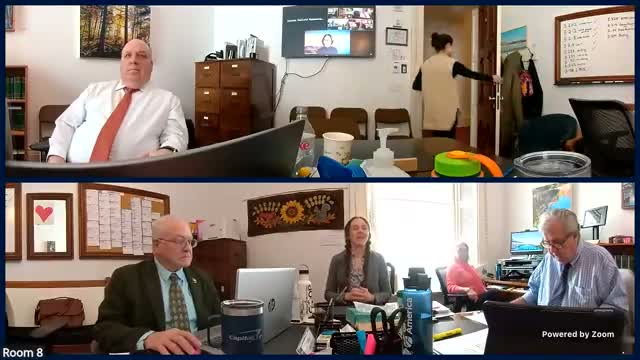
Renee Sharp, senior scientist and director of plastics and petrochemical advocacy at the Natural Resources Defense Council, told the Senate Committee on Natural Resources & Energy that S-247 addresses three linked harms from plastics: chemical conversion facilities, DHP in medical devices, and added microplastics in consumer products.
"Chemical conversion is a toxic false solution to the plastics crisis and should not be allowed in Vermont," Sharp said, summarizing the first part of her testimony. She warned that technologies promoted as ‘‘chemical recycling’’—notably pyrolysis and gasification—mostly produce fuels rather than recycled plastic, produce hazardous wastes and pose health risks. Sharp cited a 2023 National Renewable Energy Laboratory review and EPA reporting that showed pyrolysis facilities have generated hazardous wastes that are shipped across state lines.
Sharp also supported the bill’s provision to phase out di(2-ethylhexyl) phthalate, or DHP, in certain medical products, noting the chemical’s long-recognized health risks and pointing to alternatives already in use. "Safer and cost-effective alternatives to DHP exist and already are in use," she said, citing hospital transitions in other jurisdictions.
On microplastics, Sharp said S-247 removes microbeads used for abrasion and covers some leave-on products but urged the committee to broaden the measure to address additional uses of intentionally added microplastics beyond exfoliants.
Sharp closed by urging the committee to pass the bill to prevent new chemical conversion facilities in Vermont and to phase down specific toxic uses of plastics and additives. The committee thanked her and said members would follow up on technical questions about byproducts of pyrolysis and other details.
"Chemical conversion is a toxic false solution to the plastics crisis and should not be allowed in Vermont," Sharp said, summarizing the first part of her testimony. She warned that technologies promoted as ‘‘chemical recycling’’—notably pyrolysis and gasification—mostly produce fuels rather than recycled plastic, produce hazardous wastes and pose health risks. Sharp cited a 2023 National Renewable Energy Laboratory review and EPA reporting that showed pyrolysis facilities have generated hazardous wastes that are shipped across state lines.
Sharp also supported the bill’s provision to phase out di(2-ethylhexyl) phthalate, or DHP, in certain medical products, noting the chemical’s long-recognized health risks and pointing to alternatives already in use. "Safer and cost-effective alternatives to DHP exist and already are in use," she said, citing hospital transitions in other jurisdictions.
On microplastics, Sharp said S-247 removes microbeads used for abrasion and covers some leave-on products but urged the committee to broaden the measure to address additional uses of intentionally added microplastics beyond exfoliants.
Sharp closed by urging the committee to pass the bill to prevent new chemical conversion facilities in Vermont and to phase down specific toxic uses of plastics and additives. The committee thanked her and said members would follow up on technical questions about byproducts of pyrolysis and other details.
View the Full Meeting & All Its Details
This article offers just a summary. Unlock complete video, transcripts, and insights as a Founder Member.
✓
Watch full, unedited meeting videos
✓
Search every word spoken in unlimited transcripts
✓
AI summaries & real-time alerts (all government levels)
✓
Permanent access to expanding government content
30-day money-back guarantee
