Deltona outlines PFAS testing and ASR plan as residents press for transparency and town hall
February 16, 2025 | Deltona, Volusia County, Florida
This article was created by AI summarizing key points discussed. AI makes mistakes, so for full details and context, please refer to the video of the full meeting. Please report any errors so we can fix them. Report an error »
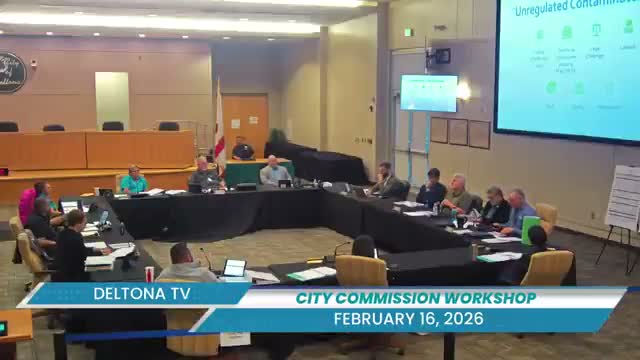
City staff updated the Deltona City Commission on PFAS monitoring, pilot testing and plans for alternative supplies including Aquifer Storage and Recovery (ASR); public commenters urged transparency, a town‑hall with engineering consultants and a ballot measure on wastewater injection.
Utilities presenter Jim said the city completed Unregulated Contaminant Monitoring (UCMR) rounds in 2023 and 2024 and has baseline PFAS data. "Our average for PFOS is 0.0046 and the MCL is 0.004," he said, and the city has commissioned a study and pilot program (to be reimbursed through ongoing litigation) to identify treatment technology and verify performance.
Nut graf: Federal and state rulemaking on PFAS remains under development; EPA narrowed the initial UCMR list and proposed enforceable MCLs with a compliance timeline that staff said extends into the early 2030s. Jim emphasized the need for a study to select appropriate technology and to avoid prematurely passing uncertain costs to ratepayers.
The presentation described the permit and monitoring approach for ASR injection wells: staff said Deltona has permitted wells for injecting treated reclaimed or surface water into confined, monitored portions of the lower aquifer and that monitoring wells and confining layers are part of the permitted design. Staff stressed that treated surface water or reclaimed water injected for storage would be used for non‑potable reclaimed purposes to relieve pressure on potable supplies.
Public comment: Speakers including Greg Gilbert and others asked for a clear public process, for a town hall with the engineering firm (Mead & Hunt) and for a ballot decision on whether treated effluent should be injected into the aquifer. Concerns voiced included pharmaceuticals, microplastics, accumulation of contaminants over time, and whether injected water can migrate through karst and limestone conduits. A resident also asked for more robust education and landscaping changes to reduce irrigation demand.
Next steps: Staff said the PFAS study and pilot will continue and that the city will schedule more public engagement, including a suggested town hall and a dedicated rates workshop to separate the financial decisions from technical project discussions.
Utilities presenter Jim said the city completed Unregulated Contaminant Monitoring (UCMR) rounds in 2023 and 2024 and has baseline PFAS data. "Our average for PFOS is 0.0046 and the MCL is 0.004," he said, and the city has commissioned a study and pilot program (to be reimbursed through ongoing litigation) to identify treatment technology and verify performance.
Nut graf: Federal and state rulemaking on PFAS remains under development; EPA narrowed the initial UCMR list and proposed enforceable MCLs with a compliance timeline that staff said extends into the early 2030s. Jim emphasized the need for a study to select appropriate technology and to avoid prematurely passing uncertain costs to ratepayers.
The presentation described the permit and monitoring approach for ASR injection wells: staff said Deltona has permitted wells for injecting treated reclaimed or surface water into confined, monitored portions of the lower aquifer and that monitoring wells and confining layers are part of the permitted design. Staff stressed that treated surface water or reclaimed water injected for storage would be used for non‑potable reclaimed purposes to relieve pressure on potable supplies.
Public comment: Speakers including Greg Gilbert and others asked for a clear public process, for a town hall with the engineering firm (Mead & Hunt) and for a ballot decision on whether treated effluent should be injected into the aquifer. Concerns voiced included pharmaceuticals, microplastics, accumulation of contaminants over time, and whether injected water can migrate through karst and limestone conduits. A resident also asked for more robust education and landscaping changes to reduce irrigation demand.
Next steps: Staff said the PFAS study and pilot will continue and that the city will schedule more public engagement, including a suggested town hall and a dedicated rates workshop to separate the financial decisions from technical project discussions.
View the Full Meeting & All Its Details
This article offers just a summary. Unlock complete video, transcripts, and insights as a Founder Member.
✓
Watch full, unedited meeting videos
✓
Search every word spoken in unlimited transcripts
✓
AI summaries & real-time alerts (all government levels)
✓
Permanent access to expanding government content
30-day money-back guarantee
