Anchorage work session advances ordinance to tighten animal-neglect rules, add 8-hour vehicle limit
February 28, 2026 | Anchorage Municipality, Alaska
This article was created by AI summarizing key points discussed. AI makes mistakes, so for full details and context, please refer to the video of the full meeting. Please report any errors so we can fix them. Report an error »
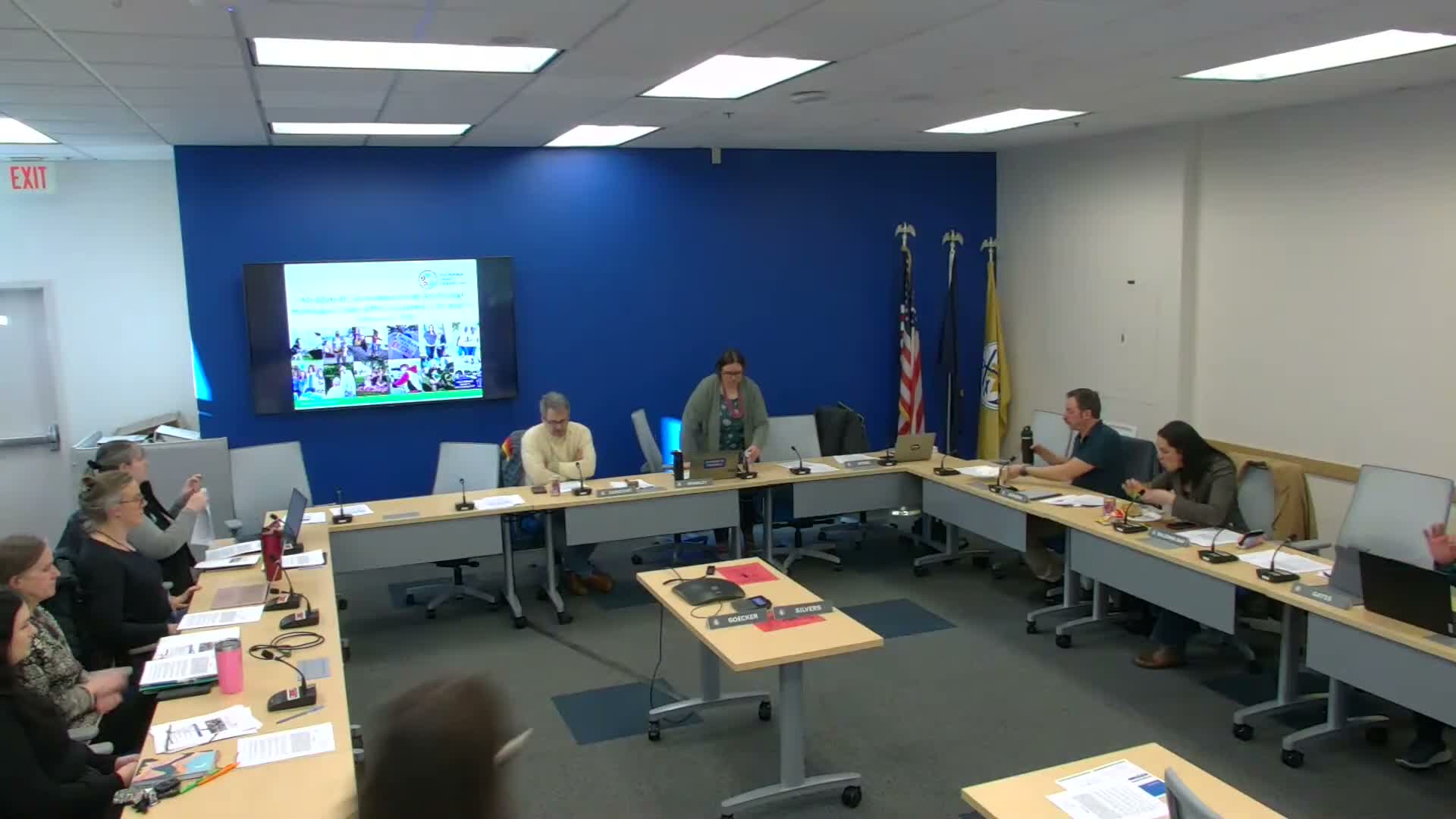
Anchorage health department staff on Tuesday walked the assembly through AO 2026-26, a draft ordinance intended to tighten local animal-neglect rules by amending Anchorage Municipal Code chapter 8.55 and title 17. Tania Liebersbach, administration manager at the Anchorage Health Department, said the changes were prompted by Assembly Resolution AR 2024-379 following a fatal vehicle fire that killed multiple dogs and prompted a cross-agency review.
Liebersbach said the draft does three main things: it adds specific criteria under the penal code for when keeping an animal in a vehicle constitutes neglect (extreme heat or cold, inadequate ventilation, lack of food or water, or insufficient space to turn around, sit, stand and lie down); it creates a misdemeanor-level animal-neglect charge for repeat violations of certain parts of title 17 (two or more violations within 10 years); and it adds a new code section making it unlawful to leave an animal unattended inside a vehicle for eight consecutive hours, with required welfare checks at least every eight hours and fines for violations. "We wanted to put some criteria in there about these are things that are endangering their health and safety so that officers ... have some clear guidance in the code that they can look at," Liebersbach said.
The draft also adds a cost-of-care bond provision for animals taken into protective custody so the municipality does not shoulder extended boarding costs while a case proceeds. Liebersbach described a prior case involving four horses that ultimately cost the municipality more than $135,000 to board and care for; AHD drew from operating budgets and later requested reappropriations to cover the expense. The ordinance would allow animal control to petition an administrative hearing officer to require an owner to post a bond for care costs, subject to evidentiary review and appeal. Liebersbach emphasized the ordinance includes due-process protections, saying the hearing officer "has to determine if the bond is fair" and owners may appeal administrative decisions.
Advisory-board members who helped draft and vet the changes reported mixed concerns. Pam Schomber, a member of the Animal Control Advisory Board and a dog musher, said bonding initially worried her because for a 12-dog kennel it "would be over $4,000 per month upfront for me to pay before I get my day in court," though she said adding third-party custodians and other safeguards led her to support posting the draft for public comment. Matthew Hall, vice chair of the Animal Control Advisory Board, said the board moved the vehicle standard from 12 hours to eight after public feedback and research; he called eight a "feasible" baseline that reflects the board's effort to set a minimum standard of care.
Assembly members pressed staff on enforceability. Zach Johnson asked whether the eight-hour standard would be practical to enforce, noting owners could claim they checked on a pet during the interval. Liebersbach acknowledged enforcement challenges but said officers can and do use evidence such as security-camera footage, neighbor videos or photos and other community-supplied proof to establish that welfare checks did not occur. "It will be a difficult thing to enforce, but it gives us one more tool in the toolbox," she said.
Staff also clarified who may be charged: the draft contemplates charging owners but allows non-owners who have custody to face charges; the code defines "household" for purposes of distinguishing owners from third-party custodians. Liebersbach said third-party custodians, foster networks or rescue groups could care for animals while a case proceeds, and the draft includes special provisions for large-animal operations so animals can, in some cases, be cared for on the owner's property under supervision.
Health-department staff and advisory-board members described outreach that included two public meetings and a written-comment period; they said most feedback supported the cruelty and vehicle-related changes while concerns clustered around bonds and their costs. Staff noted that large seizures (they referenced a 71-dog case as an example) strain shelter capacity even when direct additional expenditures are not required because animals occupy limited shelter space.
No formal vote was taken at the work session; Chair adjourned after asking ACAB to consider a name change and said AO 2026-26 will come before the assembly for consideration at the next scheduled meeting on Tuesday.
Liebersbach said the draft does three main things: it adds specific criteria under the penal code for when keeping an animal in a vehicle constitutes neglect (extreme heat or cold, inadequate ventilation, lack of food or water, or insufficient space to turn around, sit, stand and lie down); it creates a misdemeanor-level animal-neglect charge for repeat violations of certain parts of title 17 (two or more violations within 10 years); and it adds a new code section making it unlawful to leave an animal unattended inside a vehicle for eight consecutive hours, with required welfare checks at least every eight hours and fines for violations. "We wanted to put some criteria in there about these are things that are endangering their health and safety so that officers ... have some clear guidance in the code that they can look at," Liebersbach said.
The draft also adds a cost-of-care bond provision for animals taken into protective custody so the municipality does not shoulder extended boarding costs while a case proceeds. Liebersbach described a prior case involving four horses that ultimately cost the municipality more than $135,000 to board and care for; AHD drew from operating budgets and later requested reappropriations to cover the expense. The ordinance would allow animal control to petition an administrative hearing officer to require an owner to post a bond for care costs, subject to evidentiary review and appeal. Liebersbach emphasized the ordinance includes due-process protections, saying the hearing officer "has to determine if the bond is fair" and owners may appeal administrative decisions.
Advisory-board members who helped draft and vet the changes reported mixed concerns. Pam Schomber, a member of the Animal Control Advisory Board and a dog musher, said bonding initially worried her because for a 12-dog kennel it "would be over $4,000 per month upfront for me to pay before I get my day in court," though she said adding third-party custodians and other safeguards led her to support posting the draft for public comment. Matthew Hall, vice chair of the Animal Control Advisory Board, said the board moved the vehicle standard from 12 hours to eight after public feedback and research; he called eight a "feasible" baseline that reflects the board's effort to set a minimum standard of care.
Assembly members pressed staff on enforceability. Zach Johnson asked whether the eight-hour standard would be practical to enforce, noting owners could claim they checked on a pet during the interval. Liebersbach acknowledged enforcement challenges but said officers can and do use evidence such as security-camera footage, neighbor videos or photos and other community-supplied proof to establish that welfare checks did not occur. "It will be a difficult thing to enforce, but it gives us one more tool in the toolbox," she said.
Staff also clarified who may be charged: the draft contemplates charging owners but allows non-owners who have custody to face charges; the code defines "household" for purposes of distinguishing owners from third-party custodians. Liebersbach said third-party custodians, foster networks or rescue groups could care for animals while a case proceeds, and the draft includes special provisions for large-animal operations so animals can, in some cases, be cared for on the owner's property under supervision.
Health-department staff and advisory-board members described outreach that included two public meetings and a written-comment period; they said most feedback supported the cruelty and vehicle-related changes while concerns clustered around bonds and their costs. Staff noted that large seizures (they referenced a 71-dog case as an example) strain shelter capacity even when direct additional expenditures are not required because animals occupy limited shelter space.
No formal vote was taken at the work session; Chair adjourned after asking ACAB to consider a name change and said AO 2026-26 will come before the assembly for consideration at the next scheduled meeting on Tuesday.
View the Full Meeting & All Its Details
This article offers just a summary. Unlock complete video, transcripts, and insights as a Founder Member.
✓
Watch full, unedited meeting videos
✓
Search every word spoken in unlimited transcripts
✓
AI summaries & real-time alerts (all government levels)
✓
Permanent access to expanding government content
30-day money-back guarantee
