Youth Legislature finishes Day 3, passes broad slate of Senate measures including food, fuel and education bills
May 10, 2025 | General Interest TVW, Washington
This article was created by AI summarizing key points discussed. AI makes mistakes, so for full details and context, please refer to the video of the full meeting. Please report any errors so we can fix them. Report an error »
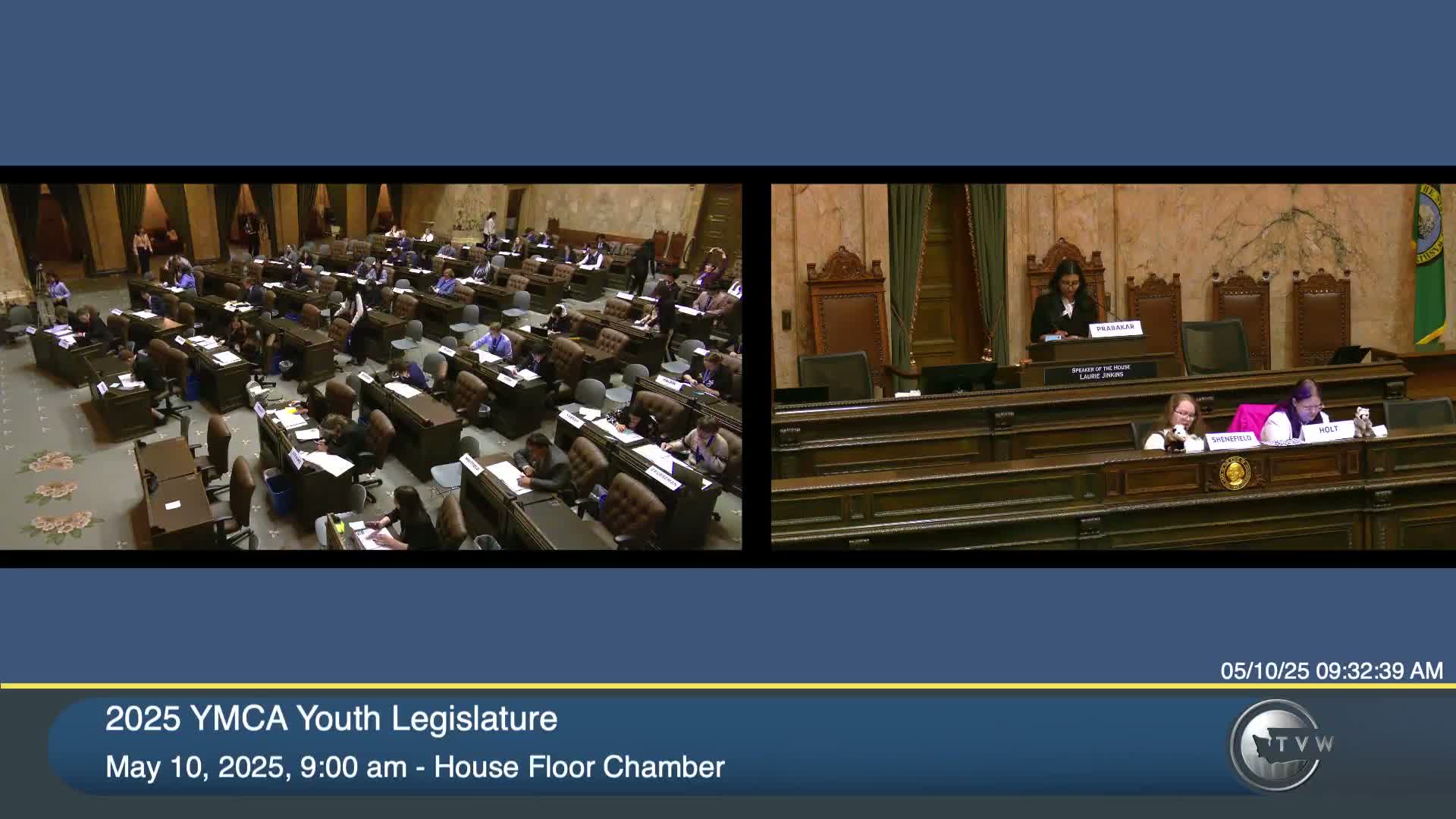
The Youth Legislature adjourned after a busy Day 3 of debate on an array of Senate bills that delegates said aim to address student needs, public health and civic access. The chamber approved measures on school lunch periods, added fuel to the state’s Basic Food benefit, required identification technology for tobacco vendors, and required menstrual products be available in public restrooms, among other bills.
Delegates debated each bill’s details and implementation. Supporters of Senate Bill 608 said a minimum 35-minute lunch period, with five additional minutes for every 960 feet between classroom and cafeteria, would give students “a reasonable chance to eat” and avoid rushed meals. Opponents and questioners pressed on how districts would schedule classes and whether the time would extend the school day; proponents said local districts would manage scheduling.
Senate Bill 919 — which would allow EBT cardholders to use Basic Food benefits to purchase gasoline at eligible vendors — drew questions about whether the change would incentivize additional fuel use. Proponent Sawyer Kunkle said the measure would not provide extra money but would allow benefit recipients “to budget how they see fit” and called fuel “a pathway to independence.”
On public health, a bill requiring identification scanners at tobacco-selling businesses was discussed at length. Sponsor Gabby Donaldson said the scanners, priced at roughly $300 apiece, are modeled on equipment used at SeaTac Airport and that state grants would be available to assist small retailers. Delegates pressed whether specifying a single model could create a monopoly and whether tribal IDs would be compatible; the sponsor said the specified scanner can read tribal IDs.
Delegates also passed a memorial urging restoration or protection of Diversity, Equity and Inclusion programming and several education, transportation and safety measures, including pilot grants for career-technical education and a high-speed rail planning provision.
Most roll-call moments ended with a chamber-wide “obvious majority” and applause; the transcripts record motion and procedural votes (PQ) at several points before final passage. The session was adjourned with a reminder about the upcoming joint closing session.
What happens next: many bills included implementation details left to local districts or state agencies, and several delegates requested follow-up information on costs and grant sources. The bills that create grant programs or mandate equipment will require agency-level planning and, in some cases, competitive grant administration.
Votes at a glance (selected bills mentioned in debate):
- SB 608 (minimum lunch period; add section to RCW 28A.235): passed by majority.
- SB 919 (allow gas purchases under Basic Food Program): passed by majority.
- SB 1020 (age-identification requirement/tobacco scanners): passed by majority.
- SB 715 (require menstrual products in public restrooms): passed by majority.
- Exec. Req. 8.21 (ranked-choice voting): untabled later in the session and passed by majority.
All vote outcomes reported in this story are taken from the day’s proceedings; specific numeric tallies were not recorded in the transcript excerpts.
Delegates debated each bill’s details and implementation. Supporters of Senate Bill 608 said a minimum 35-minute lunch period, with five additional minutes for every 960 feet between classroom and cafeteria, would give students “a reasonable chance to eat” and avoid rushed meals. Opponents and questioners pressed on how districts would schedule classes and whether the time would extend the school day; proponents said local districts would manage scheduling.
Senate Bill 919 — which would allow EBT cardholders to use Basic Food benefits to purchase gasoline at eligible vendors — drew questions about whether the change would incentivize additional fuel use. Proponent Sawyer Kunkle said the measure would not provide extra money but would allow benefit recipients “to budget how they see fit” and called fuel “a pathway to independence.”
On public health, a bill requiring identification scanners at tobacco-selling businesses was discussed at length. Sponsor Gabby Donaldson said the scanners, priced at roughly $300 apiece, are modeled on equipment used at SeaTac Airport and that state grants would be available to assist small retailers. Delegates pressed whether specifying a single model could create a monopoly and whether tribal IDs would be compatible; the sponsor said the specified scanner can read tribal IDs.
Delegates also passed a memorial urging restoration or protection of Diversity, Equity and Inclusion programming and several education, transportation and safety measures, including pilot grants for career-technical education and a high-speed rail planning provision.
Most roll-call moments ended with a chamber-wide “obvious majority” and applause; the transcripts record motion and procedural votes (PQ) at several points before final passage. The session was adjourned with a reminder about the upcoming joint closing session.
What happens next: many bills included implementation details left to local districts or state agencies, and several delegates requested follow-up information on costs and grant sources. The bills that create grant programs or mandate equipment will require agency-level planning and, in some cases, competitive grant administration.
Votes at a glance (selected bills mentioned in debate):
- SB 608 (minimum lunch period; add section to RCW 28A.235): passed by majority.
- SB 919 (allow gas purchases under Basic Food Program): passed by majority.
- SB 1020 (age-identification requirement/tobacco scanners): passed by majority.
- SB 715 (require menstrual products in public restrooms): passed by majority.
- Exec. Req. 8.21 (ranked-choice voting): untabled later in the session and passed by majority.
All vote outcomes reported in this story are taken from the day’s proceedings; specific numeric tallies were not recorded in the transcript excerpts.
View the Full Meeting & All Its Details
This article offers just a summary. Unlock complete video, transcripts, and insights as a Founder Member.
✓
Watch full, unedited meeting videos
✓
Search every word spoken in unlimited transcripts
✓
AI summaries & real-time alerts (all government levels)
✓
Permanent access to expanding government content
30-day money-back guarantee
