Guest on Local Bias warns H.4744 would reopen Massachusetts to small modular reactors and long-lived waste risks
December 30, 2025 | Easthampton, School Boards, Massachusetts
This article was created by AI summarizing key points discussed. AI makes mistakes, so for full details and context, please refer to the video of the full meeting. Please report any errors so we can fix them. Report an error »
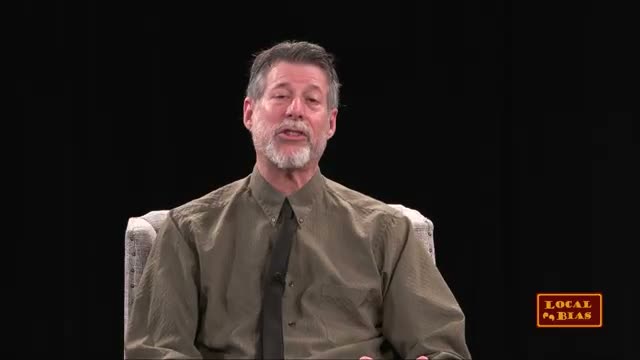
Claire Chang, a guest on the Local Bias program in Easthampton, said the Massachusetts legislature’s bill H.4744 would make ‘‘all the options available to the Commonwealth’’ — including small modular reactors — and warned that change could undo a 1982 statewide people’s referendum that required a public vote for new nuclear generation.
Chang criticized industry claims that SMRs are small, cheap and safe, saying ‘‘they have not even been built yet, and none have been designed and approved by the NRC.’’ She described SMRs as roughly 300 megawatts apiece and said manufacturers plan to install multiple units to achieve economies of scale comparable to large reactors.
Chang emphasized long-term waste risks: ‘‘Radioactive waste, plutonium, has a half life of 200,000 years,’’ she said, arguing that communities remain exposed because spent fuel and casks are often stored on site or along waterways. She cited Vermont Yankee casks on the Deerfield River and said 16 casks at that site could have been imperiled during Hurricane Irene if the Sherman Dam had failed.
On liability and insurance, Chang pointed to the Price-Anderson regime, saying it ‘‘relieves the nuclear industry of any insurance liability and responsibility.’’ Host Drew Hutchison and Chang urged listeners to hold legislators accountable; Chang named Representative Cusack as the sponsor of the measure and said constituents should contact members of the House Ways and Means Committee.
Chang framed renewable alternatives and conservation as preferable, noting solar and wind costs have fallen and that batteries and storage technologies have improved since high-profile fires in 2017. She also raised supply-chain and ethical concerns about some battery materials, saying a substantial share of lithium sourcing traces to the Democratic Republic of the Congo.
The program closed with a practical suggestion from the guest: ‘‘Letters actually have more power than a phone call,’’ Chang said, and listeners were directed to Mass.gov to find and contact their state representative. The episode did not record any formal vote or official action; it was an interview and public advocacy segment.
Chang criticized industry claims that SMRs are small, cheap and safe, saying ‘‘they have not even been built yet, and none have been designed and approved by the NRC.’’ She described SMRs as roughly 300 megawatts apiece and said manufacturers plan to install multiple units to achieve economies of scale comparable to large reactors.
Chang emphasized long-term waste risks: ‘‘Radioactive waste, plutonium, has a half life of 200,000 years,’’ she said, arguing that communities remain exposed because spent fuel and casks are often stored on site or along waterways. She cited Vermont Yankee casks on the Deerfield River and said 16 casks at that site could have been imperiled during Hurricane Irene if the Sherman Dam had failed.
On liability and insurance, Chang pointed to the Price-Anderson regime, saying it ‘‘relieves the nuclear industry of any insurance liability and responsibility.’’ Host Drew Hutchison and Chang urged listeners to hold legislators accountable; Chang named Representative Cusack as the sponsor of the measure and said constituents should contact members of the House Ways and Means Committee.
Chang framed renewable alternatives and conservation as preferable, noting solar and wind costs have fallen and that batteries and storage technologies have improved since high-profile fires in 2017. She also raised supply-chain and ethical concerns about some battery materials, saying a substantial share of lithium sourcing traces to the Democratic Republic of the Congo.
The program closed with a practical suggestion from the guest: ‘‘Letters actually have more power than a phone call,’’ Chang said, and listeners were directed to Mass.gov to find and contact their state representative. The episode did not record any formal vote or official action; it was an interview and public advocacy segment.
Don't Miss a Word: See the Full Meeting!
Go beyond summaries. Unlock every video, transcript, and key insight with a Founder Membership.
✓
Get instant access to full meeting videos
✓
Search and clip any phrase from complete transcripts
✓
Receive AI-powered summaries & custom alerts
✓
Enjoy lifetime, unrestricted access to government data
30-day money-back guarantee
