Warren Township lays out aggressive attendance strategy, warns against prescriptive state mandates
January 25, 2025 | MSD Warren Township, School Boards, Indiana
This article was created by AI summarizing key points discussed. AI makes mistakes, so for full details and context, please refer to the video of the full meeting. Please report any errors so we can fix them. Report an error »
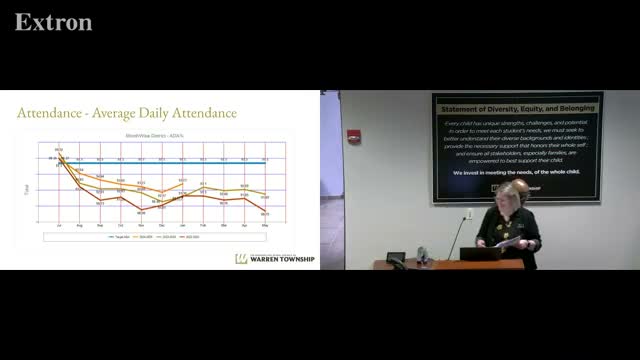
District leaders told legislators their attendance program relies on early intervention, family engagement and interagency collaboration and cautioned that state mandates risks duplicating work and overburdening partners.
Allison Woods, assistant superintendent for exceptional learners, described the district's tiered attendance work: teachers initiate calls after three days of absence, a five‑day notice is required under state law but the district interposes softer 3‑ and 4‑day letters, and staff conduct home visits and family conferences. Woods said the district has made “over 3,000 parent phone calls this year” (not robo calls) and held “over 900 family conferences” to address attendance barriers.
James Taylor, Director of Student Services and director of the Morehead Community Resource Center, urged legislators to consider interagency capacity: he said DCS and the prosecutor's office are “over inundated” and that referrals are screened. Woods said the district has referred 8 families to the prosecutor's office since September and has 10 pending certified‑letter steps. She urged caution about expanding unexcused‑absence rules to higher grades before ensuring the necessary agency coordination is in place.
Woods and Taylor said they support elements of bills that emphasize tiered attendance plans and increased flexibility—Woods specifically said they support extending the parent conference window from 5 to 10 school days in one proposed bill—but they objected to rigid, prescriptive steps that leave districts unable to tailor interventions to local needs.
Why it matters: district staff argued that attendance interventions work when districts can adapt responses to family‑level barriers (transportation, housing instability, mental‑health needs) and when community partners (probation, DCS, prosecutor) can respond in a coordinated way. They warned that a one‑size‑fits‑all statutory approach could produce duplication and uneven outcomes across counties.
Next steps: district leaders invited legislators to work with them on implementation details and to consider funding or guidance that strengthens interagency coordination rather than imposing blanket procedural steps.
Allison Woods, assistant superintendent for exceptional learners, described the district's tiered attendance work: teachers initiate calls after three days of absence, a five‑day notice is required under state law but the district interposes softer 3‑ and 4‑day letters, and staff conduct home visits and family conferences. Woods said the district has made “over 3,000 parent phone calls this year” (not robo calls) and held “over 900 family conferences” to address attendance barriers.
James Taylor, Director of Student Services and director of the Morehead Community Resource Center, urged legislators to consider interagency capacity: he said DCS and the prosecutor's office are “over inundated” and that referrals are screened. Woods said the district has referred 8 families to the prosecutor's office since September and has 10 pending certified‑letter steps. She urged caution about expanding unexcused‑absence rules to higher grades before ensuring the necessary agency coordination is in place.
Woods and Taylor said they support elements of bills that emphasize tiered attendance plans and increased flexibility—Woods specifically said they support extending the parent conference window from 5 to 10 school days in one proposed bill—but they objected to rigid, prescriptive steps that leave districts unable to tailor interventions to local needs.
Why it matters: district staff argued that attendance interventions work when districts can adapt responses to family‑level barriers (transportation, housing instability, mental‑health needs) and when community partners (probation, DCS, prosecutor) can respond in a coordinated way. They warned that a one‑size‑fits‑all statutory approach could produce duplication and uneven outcomes across counties.
Next steps: district leaders invited legislators to work with them on implementation details and to consider funding or guidance that strengthens interagency coordination rather than imposing blanket procedural steps.
View the Full Meeting & All Its Details
This article offers just a summary. Unlock complete video, transcripts, and insights as a Founder Member.
✓
Watch full, unedited meeting videos
✓
Search every word spoken in unlimited transcripts
✓
AI summaries & real-time alerts (all government levels)
✓
Permanent access to expanding government content
30-day money-back guarantee
