Jackson County coordinators say work-based learning links students to paid jobs and college-ready skills
November 11, 2024 | Jackson County, School Districts, Georgia
This article was created by AI summarizing key points discussed. AI makes mistakes, so for full details and context, please refer to the video of the full meeting. Please report any errors so we can fix them. Report an error »
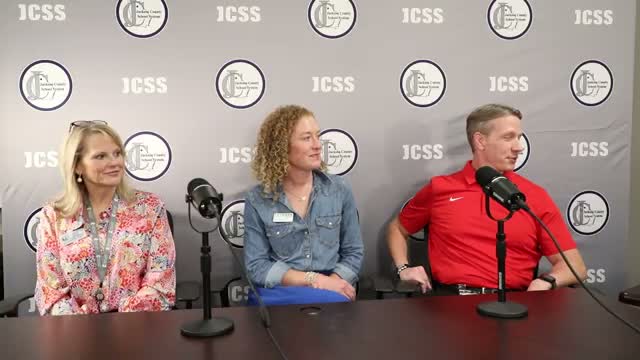
Edward Hooper, host of the Jackson County School System podcast Around the District, spoke with three work-based learning coordinators — Kate Wilson, Greg Maxwell and Holly Knapp — about how the district’s program connects high school students with paid, credit-bearing work placements.
“One of the things we try to do is partner them up with their pathway and find a partner that would link with that so they can get valuable experience,” a work-based learning coordinator said, describing the program’s core model: students who have taken CTAE (career technical agricultural education) coursework are placed in jobs tied to their pathway and may earn elective credit for that work. “Work based learning is an opportunity for a student to leave school, to go to work, and get a class credit,” the coordinator added.
The coordinators said the program is open to 10th–12th graders who are on track to graduate and who have access to a licensed vehicle for reliable transportation. Attendance and discipline records are considered when approving placements, and counselors work with students to free a schedule elective so the work-based learning assignment fits the school day.
Students interested in enrolling can scan a QR code provided by the program, speak with their school counselor, or email a coordinator to request a placement. Coordinators said the primary application window runs in January for the next school year; most rosters are set before summer but placements and approvals continue up to the first day of classes and, in some cases, during the school year.
The program also prioritizes employer outreach. Coordinators encouraged business owners to contact their local high school principal or a coordinator directly; they highlighted existing partnerships with the local Chamber of Commerce and said coordinators will visit worksites to assess culture and match students to employer needs.
Coordinators and the host emphasized benefits for both students and local businesses. Students gain employability and soft skills — interview techniques, resume building and workplace communication — that strengthen college applications and job prospects. Employers get early access to trainees who may remain with a company for years, helping with recruitment and retention in industries facing labor shortages.
Host Edward Hooper shared program metrics from the 2023–24 school year: more than 235 students participated, students logged about 98,000 paid work hours at an hourly rate averaging above $13, and collectively earned more than $1,100,000 while working across roughly 180 different businesses.
To see placements and student highlights, coordinators said they post employer visits and student evaluations on the program’s Instagram account, jcss_wbl. For businesses interested in hosting students, coordinators said they are willing to meet on site to discuss roles and identify good fits.
The episode closed with the host thanking the coordinators and encouraging students to explore the program as a way to gain real-world experience and paid work while still in high school.
“One of the things we try to do is partner them up with their pathway and find a partner that would link with that so they can get valuable experience,” a work-based learning coordinator said, describing the program’s core model: students who have taken CTAE (career technical agricultural education) coursework are placed in jobs tied to their pathway and may earn elective credit for that work. “Work based learning is an opportunity for a student to leave school, to go to work, and get a class credit,” the coordinator added.
The coordinators said the program is open to 10th–12th graders who are on track to graduate and who have access to a licensed vehicle for reliable transportation. Attendance and discipline records are considered when approving placements, and counselors work with students to free a schedule elective so the work-based learning assignment fits the school day.
Students interested in enrolling can scan a QR code provided by the program, speak with their school counselor, or email a coordinator to request a placement. Coordinators said the primary application window runs in January for the next school year; most rosters are set before summer but placements and approvals continue up to the first day of classes and, in some cases, during the school year.
The program also prioritizes employer outreach. Coordinators encouraged business owners to contact their local high school principal or a coordinator directly; they highlighted existing partnerships with the local Chamber of Commerce and said coordinators will visit worksites to assess culture and match students to employer needs.
Coordinators and the host emphasized benefits for both students and local businesses. Students gain employability and soft skills — interview techniques, resume building and workplace communication — that strengthen college applications and job prospects. Employers get early access to trainees who may remain with a company for years, helping with recruitment and retention in industries facing labor shortages.
Host Edward Hooper shared program metrics from the 2023–24 school year: more than 235 students participated, students logged about 98,000 paid work hours at an hourly rate averaging above $13, and collectively earned more than $1,100,000 while working across roughly 180 different businesses.
To see placements and student highlights, coordinators said they post employer visits and student evaluations on the program’s Instagram account, jcss_wbl. For businesses interested in hosting students, coordinators said they are willing to meet on site to discuss roles and identify good fits.
The episode closed with the host thanking the coordinators and encouraging students to explore the program as a way to gain real-world experience and paid work while still in high school.
Don't Miss a Word: See the Full Meeting!
Go beyond summaries. Unlock every video, transcript, and key insight with a Founder Membership.
✓
Get instant access to full meeting videos
✓
Search and clip any phrase from complete transcripts
✓
Receive AI-powered summaries & custom alerts
✓
Enjoy lifetime, unrestricted access to government data
30-day money-back guarantee
