Sanford commissioners push for a project dashboard and tighter fleet oversight
February 08, 2025 | Sanford, Seminole County, Florida
This article was created by AI summarizing key points discussed. AI makes mistakes, so for full details and context, please refer to the video of the full meeting. Please report any errors so we can fix them. Report an error »
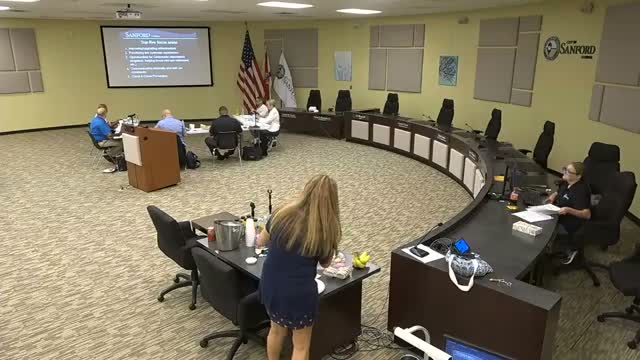
Sanford commissioners used a three-hour Feb. 18 work session to press for clearer lines of sight on the city’s infrastructure projects and for better management of vehicles and equipment.
The commission’s chair opened the discussion by laying out a plan to review the top-ranked focus areas and then examine weaknesses; the conversation quickly turned to the need for a single, high-level project dashboard that would show the status of major efforts, funding rollovers and completion milestones. “Here’s the project. Here’s the things that are supposed to be done,” the Chair said, describing a visual timeline or ‘thermometer’ view of project progress.
Commissioners said department-level lists exist but the body lacks an integrated ‘big picture’ that links projects to funding and schedules. One commissioner (Committee member S2) asked for clearer reporting on rollovers — projects that carry forward unspent funds year to year — so the commission can see which initiatives repeatedly fail to reach execution.
The meeting also included pointed critiques about operations and fleet use. A commissioner (Committee member S6) described on-site observations of crews and equipment idling and estimated “about 1,000,000 plus dollars of our trucks just sitting… rusting,” and urged better utilization or disposition of surplus vehicles. S6 added that supervisors should manage crews more tightly so smaller crews can handle tasks without large, underused teams. “If you took half of that crew to work on another project, then we could get things done,” the commissioner said.
Staff and other commissioners pushed back that some purchases are the result of state contract availability and long lead times; a commissioner (Committee member S2) noted vehicle procurement often proceeds via state contract and can give better pricing even when options appear luxurious. Commissioners agreed that a planned facilities and fleet assessment — and a separate recent fleet study — should inform decisions about outsourcing, recycling unused equipment, or changing specifications for replacements.
What happens next: the commission asked staff to produce a concise dashboard proposal and a one‑page public view showing the largest 20 projects, status, and funding picture so the commission and public can track progress. The chair said IT had been asked to create a status page and that staff would follow up with a proposed design and timeline.
The commission’s chair opened the discussion by laying out a plan to review the top-ranked focus areas and then examine weaknesses; the conversation quickly turned to the need for a single, high-level project dashboard that would show the status of major efforts, funding rollovers and completion milestones. “Here’s the project. Here’s the things that are supposed to be done,” the Chair said, describing a visual timeline or ‘thermometer’ view of project progress.
Commissioners said department-level lists exist but the body lacks an integrated ‘big picture’ that links projects to funding and schedules. One commissioner (Committee member S2) asked for clearer reporting on rollovers — projects that carry forward unspent funds year to year — so the commission can see which initiatives repeatedly fail to reach execution.
The meeting also included pointed critiques about operations and fleet use. A commissioner (Committee member S6) described on-site observations of crews and equipment idling and estimated “about 1,000,000 plus dollars of our trucks just sitting… rusting,” and urged better utilization or disposition of surplus vehicles. S6 added that supervisors should manage crews more tightly so smaller crews can handle tasks without large, underused teams. “If you took half of that crew to work on another project, then we could get things done,” the commissioner said.
Staff and other commissioners pushed back that some purchases are the result of state contract availability and long lead times; a commissioner (Committee member S2) noted vehicle procurement often proceeds via state contract and can give better pricing even when options appear luxurious. Commissioners agreed that a planned facilities and fleet assessment — and a separate recent fleet study — should inform decisions about outsourcing, recycling unused equipment, or changing specifications for replacements.
What happens next: the commission asked staff to produce a concise dashboard proposal and a one‑page public view showing the largest 20 projects, status, and funding picture so the commission and public can track progress. The chair said IT had been asked to create a status page and that staff would follow up with a proposed design and timeline.
View the Full Meeting & All Its Details
This article offers just a summary. Unlock complete video, transcripts, and insights as a Founder Member.
✓
Watch full, unedited meeting videos
✓
Search every word spoken in unlimited transcripts
✓
AI summaries & real-time alerts (all government levels)
✓
Permanent access to expanding government content
30-day money-back guarantee
