Sanford commissioners debate limits on public feeding and explore a centralized sharing center
February 08, 2025 | Sanford, Seminole County, Florida
This article was created by AI summarizing key points discussed. AI makes mistakes, so for full details and context, please refer to the video of the full meeting. Please report any errors so we can fix them. Report an error »
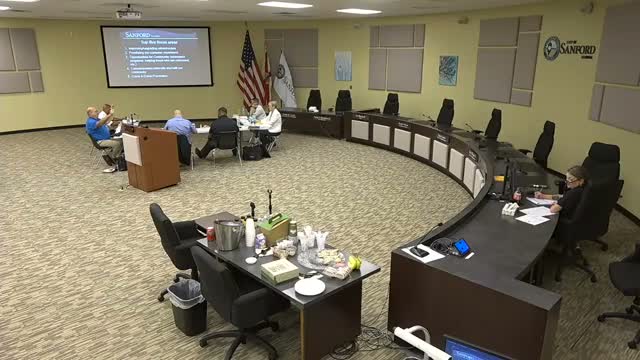
Sanford commissioners devoted a substantial portion of the Feb. 18 work session to homelessness policy, public feeding events and options for coordinating service providers.
Several commissioners said ad-hoc public feeding events can attract nonresidents and create camping and nuisance concerns in certain neighborhoods. One commissioner (Committee member S6) argued the city should encourage established, vetted organizations to deliver services through centralized providers and limit feeding that draws large, recurring crowds: "We do not allow public feeding in residential areas," the commissioner said as an example of a potential policy approach.
Others warned against shutting down charitable efforts without offering alternatives. Commissioners suggested bringing public‑service providers to the table — including the Picnic Project and the Seminole‑area sharing center model used in Longwood — to explore coordinated options that include hygiene, training and case management while avoiding permanent encampment. The commission discussed the pros and cons of a local sharing center (a daytime facility with showers, laundry, training and pantry services) and whether the Rescue Mission or other regional partners could be part of that solution.
Some members said a centralized facility could help move people toward services and reduce lingering congregation downtown; others raised concerns about geography, capacity and whether the city would end up bearing ongoing operational costs.
What happens next: the commission asked staff and the homeless task force to continue outreach to providers and report back with options, including whether a sharing center model is feasible in Sanford and whether feeding regulations or permitting changes should be drafted for future consideration.
Several commissioners said ad-hoc public feeding events can attract nonresidents and create camping and nuisance concerns in certain neighborhoods. One commissioner (Committee member S6) argued the city should encourage established, vetted organizations to deliver services through centralized providers and limit feeding that draws large, recurring crowds: "We do not allow public feeding in residential areas," the commissioner said as an example of a potential policy approach.
Others warned against shutting down charitable efforts without offering alternatives. Commissioners suggested bringing public‑service providers to the table — including the Picnic Project and the Seminole‑area sharing center model used in Longwood — to explore coordinated options that include hygiene, training and case management while avoiding permanent encampment. The commission discussed the pros and cons of a local sharing center (a daytime facility with showers, laundry, training and pantry services) and whether the Rescue Mission or other regional partners could be part of that solution.
Some members said a centralized facility could help move people toward services and reduce lingering congregation downtown; others raised concerns about geography, capacity and whether the city would end up bearing ongoing operational costs.
What happens next: the commission asked staff and the homeless task force to continue outreach to providers and report back with options, including whether a sharing center model is feasible in Sanford and whether feeding regulations or permitting changes should be drafted for future consideration.
View the Full Meeting & All Its Details
This article offers just a summary. Unlock complete video, transcripts, and insights as a Founder Member.
✓
Watch full, unedited meeting videos
✓
Search every word spoken in unlimited transcripts
✓
AI summaries & real-time alerts (all government levels)
✓
Permanent access to expanding government content
30-day money-back guarantee
