Sumner County ad hoc committee elects Clay Haynes to lead courthouse preservation planning
February 27, 2026 | Sumner County, Tennessee
This article was created by AI summarizing key points discussed. AI makes mistakes, so for full details and context, please refer to the video of the full meeting. Please report any errors so we can fix them. Report an error »
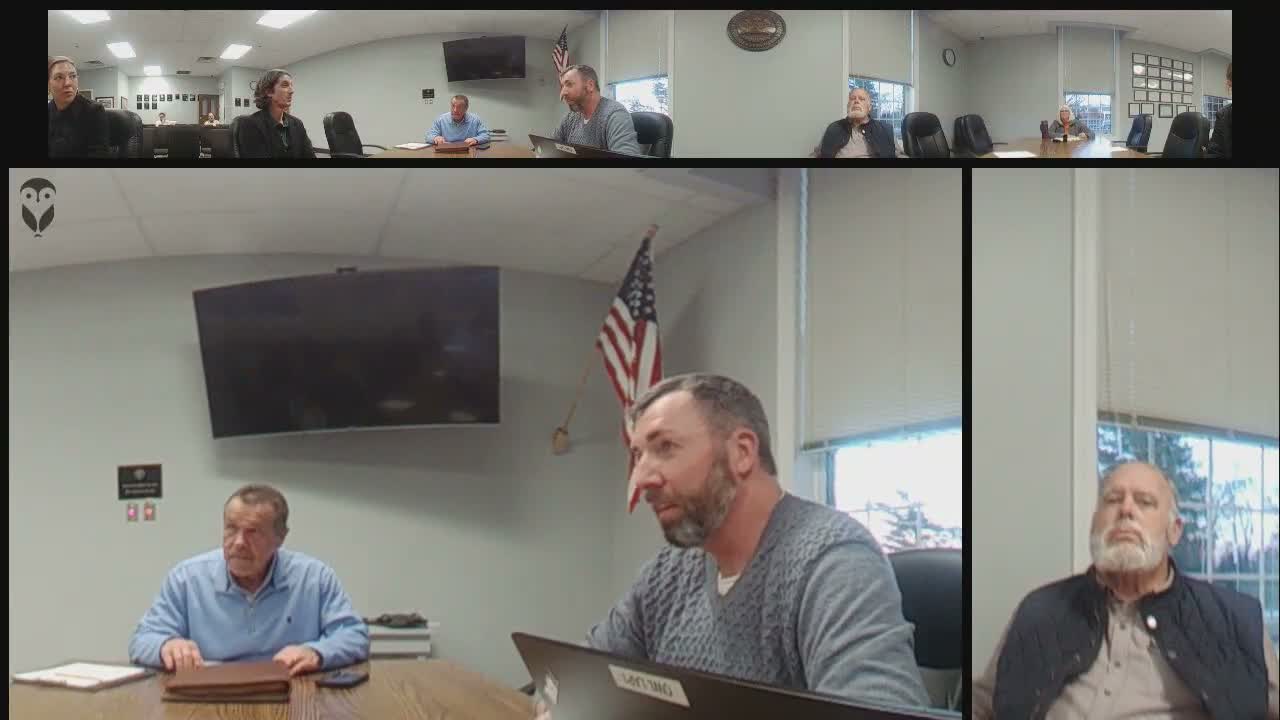
Clay Haynes was elected chair of Sumner County's new ad hoc committee on the old county courthouse, and Reggie Mudd was chosen vice chair, as members organized work to scope preservation, reuse and financing for the vacant courthouse in Gallatin.
The committee met to nominate officers and set its mission: to produce a plan and a scope of work that identifies what needs to be done with the courthouse and what does not, and to return a preliminary report to the General Operations Committee in April. "I will accept the nomination," Haynes said after being nominated; members then voiced approval.
The group opened a wide-ranging discussion about preservation goals and reuse options, from keeping the county's ownership and renovating for public use to pursuing a private-sector lease or mixed use. Amy Nixon, executive director of Historic Downtown Gallatin, urged consideration of a downtown historic-overlay that could include the courthouse and said the building "has huge potential for bringing tourists and 'visitors into downtown." Haynes and others emphasized that "people being the measure of success" should guide reuse decisions.
Speakers flagged financing and technical unknowns as immediate priorities. One attendee said a full renovation could be "in the ballpark of $10,000,000," and members repeatedly noted that accurate costs depend on structural, code and remediation analyses and the availability of grant or county funds. The committee discussed options to protect county interests in private reuse, such as reverter clauses or leases that retain ownership while outsourcing operations.
Committee members agreed on a short list of early tasks: assemble existing reports and historical materials into a shared folder, determine which professional studies (structural, codes, hazardous-materials) are needed, draft a simple public survey and start stakeholder outreach. Chair Haynes said the group should return rough estimates and a list of the "unknowns that require third-party professionals" before asking the General Operations Committee for funding to commission analyses.
The committee also agreed to meet again in March (members proposed March 26 at 5:30 p.m.), to set recurring monthly meetings and to publicly notice future sessions. The meeting closed after members summarized homework assignments and agreed to continue work toward an April progress report.
The committee's next steps are to collect existing documentation, scope professional analyses and prepare community engagement materials; specific funding commitments and detailed cost estimates were not made at the meeting and remain to be developed.
The committee met to nominate officers and set its mission: to produce a plan and a scope of work that identifies what needs to be done with the courthouse and what does not, and to return a preliminary report to the General Operations Committee in April. "I will accept the nomination," Haynes said after being nominated; members then voiced approval.
The group opened a wide-ranging discussion about preservation goals and reuse options, from keeping the county's ownership and renovating for public use to pursuing a private-sector lease or mixed use. Amy Nixon, executive director of Historic Downtown Gallatin, urged consideration of a downtown historic-overlay that could include the courthouse and said the building "has huge potential for bringing tourists and 'visitors into downtown." Haynes and others emphasized that "people being the measure of success" should guide reuse decisions.
Speakers flagged financing and technical unknowns as immediate priorities. One attendee said a full renovation could be "in the ballpark of $10,000,000," and members repeatedly noted that accurate costs depend on structural, code and remediation analyses and the availability of grant or county funds. The committee discussed options to protect county interests in private reuse, such as reverter clauses or leases that retain ownership while outsourcing operations.
Committee members agreed on a short list of early tasks: assemble existing reports and historical materials into a shared folder, determine which professional studies (structural, codes, hazardous-materials) are needed, draft a simple public survey and start stakeholder outreach. Chair Haynes said the group should return rough estimates and a list of the "unknowns that require third-party professionals" before asking the General Operations Committee for funding to commission analyses.
The committee also agreed to meet again in March (members proposed March 26 at 5:30 p.m.), to set recurring monthly meetings and to publicly notice future sessions. The meeting closed after members summarized homework assignments and agreed to continue work toward an April progress report.
The committee's next steps are to collect existing documentation, scope professional analyses and prepare community engagement materials; specific funding commitments and detailed cost estimates were not made at the meeting and remain to be developed.
Don't Miss a Word: See the Full Meeting!
Go beyond summaries. Unlock every video, transcript, and key insight with a Founder Membership.
✓
Get instant access to full meeting videos
✓
Search and clip any phrase from complete transcripts
✓
Receive AI-powered summaries & custom alerts
✓
Enjoy lifetime, unrestricted access to government data
30-day money-back guarantee
