TRPA, USFS and Nevada partners point to EIP-funded treatments and new forest-health thresholds
February 27, 2026 | 2026 Legislature NV, Nevada
This article was created by AI summarizing key points discussed. AI makes mistakes, so for full details and context, please refer to the video of the full meeting. Please report any errors so we can fix them. Report an error »
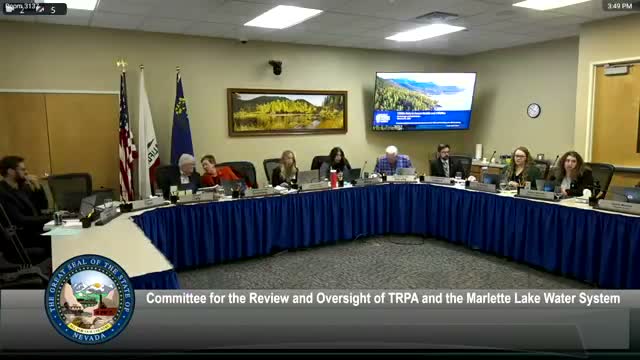
TRPA officials told the TRPA Oversight Committee that the agency is advancing a three‑track approach to wildfire and forest health: setting science‑based thresholds, using regulation and permitting to manage development and defensible space, and convening and coordinating projects through the Environmental Improvement Program (EIP).
Kim Caringer (chief partnerships officer) and Kat McIntyre (EIP division manager) described regulatory changes since Angora that made defensible‑space work easier—raising permit tree‑diameter limits for property owners and streamlining online permits—and said TRPA has added fire‑expert seats to planning review processes so fire districts sign off on large development proposals.
McIntyre said basin partners have deployed roughly $271 million toward forest‑health and wildfire‑risk projects since 2010 and that federal funding (SNPLMA, Lake Tahoe Restoration Act) remains a backbone for coordinated work. TRPA reported new forest‑health threshold standards adopted recently by the governing board to acknowledge active fire management and a first standard for community wildfire protection.
Speakers from the Forest Service and the Nevada Division of Forestry described implementation priorities: treating WUI defense zones nearest neighborhoods, fuel reduction in utility corridors (NV Energy/Liberty Utilities), shaded fuel breaks, and a push to increase acres treated per year. Victor Lyon (USFS) said the Basin is planning an above‑average treatment year—roughly 3,000 acres offered for implementation compared with an historical 2,000—plus substantial pile burning to reduce backlog.
Agency representatives said administrative complexity and limited contractor capacity remain constraints; they emphasized the need for multiyear funding continuity and for improved biomass utilization and pile‑burning capacity so treated material does not create new hazards.
The committee asked about remaining recommendations from the Blue Ribbon (Emergency Bi‑State) Fire Commission; TRPA staff said roughly 90% of the recommendations are implemented, with biomass utilization and long‑term management among the outstanding needs.
No committee votes were taken; staff offered to provide additional data on project lists and funding breakdowns.
Kim Caringer (chief partnerships officer) and Kat McIntyre (EIP division manager) described regulatory changes since Angora that made defensible‑space work easier—raising permit tree‑diameter limits for property owners and streamlining online permits—and said TRPA has added fire‑expert seats to planning review processes so fire districts sign off on large development proposals.
McIntyre said basin partners have deployed roughly $271 million toward forest‑health and wildfire‑risk projects since 2010 and that federal funding (SNPLMA, Lake Tahoe Restoration Act) remains a backbone for coordinated work. TRPA reported new forest‑health threshold standards adopted recently by the governing board to acknowledge active fire management and a first standard for community wildfire protection.
Speakers from the Forest Service and the Nevada Division of Forestry described implementation priorities: treating WUI defense zones nearest neighborhoods, fuel reduction in utility corridors (NV Energy/Liberty Utilities), shaded fuel breaks, and a push to increase acres treated per year. Victor Lyon (USFS) said the Basin is planning an above‑average treatment year—roughly 3,000 acres offered for implementation compared with an historical 2,000—plus substantial pile burning to reduce backlog.
Agency representatives said administrative complexity and limited contractor capacity remain constraints; they emphasized the need for multiyear funding continuity and for improved biomass utilization and pile‑burning capacity so treated material does not create new hazards.
The committee asked about remaining recommendations from the Blue Ribbon (Emergency Bi‑State) Fire Commission; TRPA staff said roughly 90% of the recommendations are implemented, with biomass utilization and long‑term management among the outstanding needs.
No committee votes were taken; staff offered to provide additional data on project lists and funding breakdowns.
View the Full Meeting & All Its Details
This article offers just a summary. Unlock complete video, transcripts, and insights as a Founder Member.
✓
Watch full, unedited meeting videos
✓
Search every word spoken in unlimited transcripts
✓
AI summaries & real-time alerts (all government levels)
✓
Permanent access to expanding government content
30-day money-back guarantee
