Grand Island advisory board presses for clearer tree law language and an administrative enforcement path
February 27, 2026 | Grand Island, Erie County, New York
This article was created by AI summarizing key points discussed. AI makes mistakes, so for full details and context, please refer to the video of the full meeting. Please report any errors so we can fix them. Report an error »
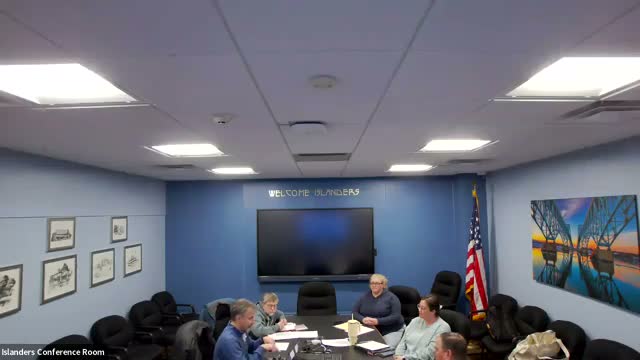
The conservation advisory board examined a redlined draft of a local tree law on Feb. 26 and recommended clarifications aimed at preserving ecological benefits while allowing the town an administrative remedy for hazardous trees and abandoned properties.
A Lawmaker (speaker 1) summarized why the town sought an administrative, corrective process rather than criminal enforcement: the criminal-code approach requires personal service and a court process that is impractical when owners are unreachable. "We took that Cheektowaga law. I made it into a Grand Island law," the Lawmaker said, describing consultations with outside municipal attorneys and engineers to adapt an administrative remedy that would allow notices, posting and, if necessary, town-contracted remediation.
Members said the draft redline returned by the town attorney (identified in the discussion as Adrian Godfrey) appeared to insert an older version and language — including references to committee structure — that the board said they did not intend. The Chair and committee members asked for a cleaned-up draft before the next meeting so members could review a current version and provide informed comment.
Board members emphasized distinguishing hazardous trees (defined in the draft as those creating a clear safety risk to people, buildings, utilities or access) from nonhazardous dead or declining trees that can remain for ecological benefit. "Dead or declining trees that do not pose a safety risk for people, buildings, utilities . . . may be left in place for ecological benefit," a speaker summarized from language proposed in the draft.
Members discussed enforcement costs and who fronts remediation expenses. A committee estimate suggested the town could front modest remediation costs (one speaker estimated about $2,500 per year in a scenario where enforcement on a list of properties was required), with county processes potentially reimbursing some costs in certain cases.
Next steps: the board will circulate a cleaned-up redline and associated clarifications and continue to press for language that balances public safety, enforceability and ecological stewardship. Because the advisory board lacked a quorum, no vote was taken at this meeting.
A Lawmaker (speaker 1) summarized why the town sought an administrative, corrective process rather than criminal enforcement: the criminal-code approach requires personal service and a court process that is impractical when owners are unreachable. "We took that Cheektowaga law. I made it into a Grand Island law," the Lawmaker said, describing consultations with outside municipal attorneys and engineers to adapt an administrative remedy that would allow notices, posting and, if necessary, town-contracted remediation.
Members said the draft redline returned by the town attorney (identified in the discussion as Adrian Godfrey) appeared to insert an older version and language — including references to committee structure — that the board said they did not intend. The Chair and committee members asked for a cleaned-up draft before the next meeting so members could review a current version and provide informed comment.
Board members emphasized distinguishing hazardous trees (defined in the draft as those creating a clear safety risk to people, buildings, utilities or access) from nonhazardous dead or declining trees that can remain for ecological benefit. "Dead or declining trees that do not pose a safety risk for people, buildings, utilities . . . may be left in place for ecological benefit," a speaker summarized from language proposed in the draft.
Members discussed enforcement costs and who fronts remediation expenses. A committee estimate suggested the town could front modest remediation costs (one speaker estimated about $2,500 per year in a scenario where enforcement on a list of properties was required), with county processes potentially reimbursing some costs in certain cases.
Next steps: the board will circulate a cleaned-up redline and associated clarifications and continue to press for language that balances public safety, enforceability and ecological stewardship. Because the advisory board lacked a quorum, no vote was taken at this meeting.
View the Full Meeting & All Its Details
This article offers just a summary. Unlock complete video, transcripts, and insights as a Founder Member.
✓
Watch full, unedited meeting videos
✓
Search every word spoken in unlimited transcripts
✓
AI summaries & real-time alerts (all government levels)
✓
Permanent access to expanding government content
30-day money-back guarantee
