Washington hearing exposes sharp split over 340B expansion and reporting in SSB 5981
February 27, 2026 | Legislative Sessions, Washington
This article was created by AI summarizing key points discussed. AI makes mistakes, so for full details and context, please refer to the video of the full meeting. Please report any errors so we can fix them. Report an error »
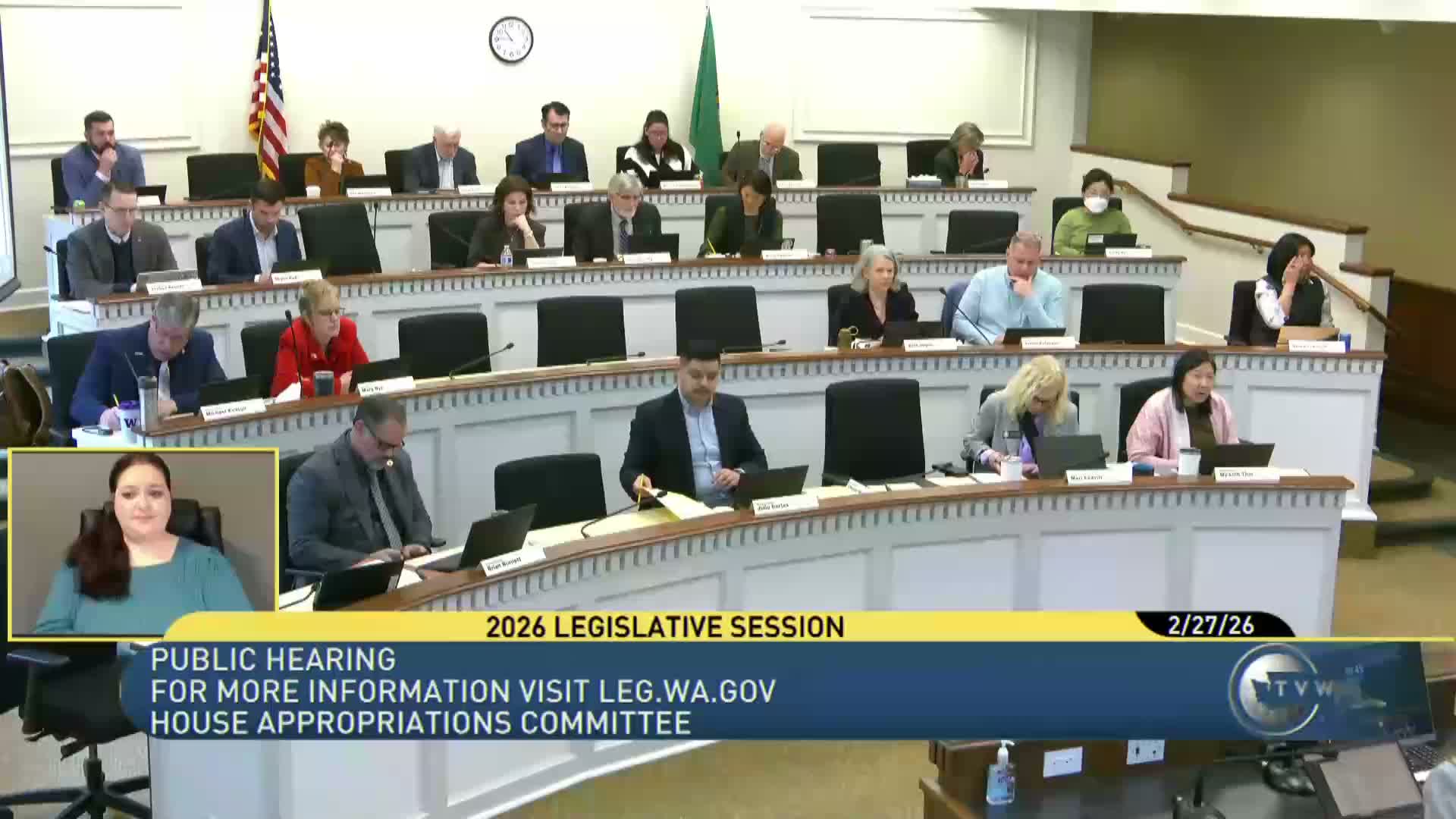
Ethan Moreno and committee staff opened the hearing by briefing members on SSB 5981, which would require hospitals, federally qualified health centers and manufacturers to report acquisition costs, claims counts and other data about 340B‑eligible drugs to the Health Care Authority (HCA) and would allow HCA to set a tiered annual filing fee and civil penalties for noncompliance.
The fiscal picture was a central theme. Committee analysts told members HCA estimates roughly $608,000 per year to administer the reporting system and several full‑time staff; that estimate underpinned committee questions about who should bear the administrative cost and whether a fee cap or tiering was needed.
Proponents from safety‑net hospitals, tribal health programs and patient groups said the bill would preserve 340B access for providers who use discounts to fund services for uninsured and underserved patients. Simona Dasgupta of UW Medicine told the committee the program preserves critical services for patients facing transportation, language and housing barriers and that transparency provisions in the bill would show how savings are used to benefit patients.
Industry witnesses—including life‑sciences trade groups, manufacturers and employer associations—pressed the committee in the opposite direction. Curtis Knapp of Life Science Washington said expanding contract pharmacy arrangements could increase state costs by reducing Medicaid rebates and shift costs to employers and commercial plans; Corbin Santo of Johnson & Johnson warned recent federal filings and litigation raise the risk that state laws like this will be held preempted by federal law. Several industry witnesses offered to provide data to the committee but urged collection of comprehensive transparency data before changing program access.
Members probed legal and budgetary risks. Representative Marshall asked whether federal amicus briefs and out‑of‑state litigation created exposure for Washington; staff said courts in other states have pending suits, that the Ninth Circuit has not yet ruled on identical issues, and that staff would follow up with more detailed legal analysis. Witnesses from manufacturers described litigation in other states and cautioned that duplicative state enforcement could spawn private‑rights litigation with per‑violation penalties.
Committee members heard calls on both sides for amendments: some asked for a tighter fee design or for sequencing that requires collection of specified data first; others urged moving the bill to preserve access. After several hours of testimony and questioning, the committee concluded the public hearing and later took multiple executive‑session votes on a packed agenda (see votes summary). The bill remains active in the committee record with extensive public testimony and fiscal and legal questions for staff to follow up on.
The committee is expected to review follow‑up analysis on preemption risk, the HCA fee design, and requested data before acting further. The hearing transcript includes detailed roll‑call votes on dozens of bills at the end of the meeting; the committee sent many bills forward with due‑pass recommendations.
The fiscal picture was a central theme. Committee analysts told members HCA estimates roughly $608,000 per year to administer the reporting system and several full‑time staff; that estimate underpinned committee questions about who should bear the administrative cost and whether a fee cap or tiering was needed.
Proponents from safety‑net hospitals, tribal health programs and patient groups said the bill would preserve 340B access for providers who use discounts to fund services for uninsured and underserved patients. Simona Dasgupta of UW Medicine told the committee the program preserves critical services for patients facing transportation, language and housing barriers and that transparency provisions in the bill would show how savings are used to benefit patients.
Industry witnesses—including life‑sciences trade groups, manufacturers and employer associations—pressed the committee in the opposite direction. Curtis Knapp of Life Science Washington said expanding contract pharmacy arrangements could increase state costs by reducing Medicaid rebates and shift costs to employers and commercial plans; Corbin Santo of Johnson & Johnson warned recent federal filings and litigation raise the risk that state laws like this will be held preempted by federal law. Several industry witnesses offered to provide data to the committee but urged collection of comprehensive transparency data before changing program access.
Members probed legal and budgetary risks. Representative Marshall asked whether federal amicus briefs and out‑of‑state litigation created exposure for Washington; staff said courts in other states have pending suits, that the Ninth Circuit has not yet ruled on identical issues, and that staff would follow up with more detailed legal analysis. Witnesses from manufacturers described litigation in other states and cautioned that duplicative state enforcement could spawn private‑rights litigation with per‑violation penalties.
Committee members heard calls on both sides for amendments: some asked for a tighter fee design or for sequencing that requires collection of specified data first; others urged moving the bill to preserve access. After several hours of testimony and questioning, the committee concluded the public hearing and later took multiple executive‑session votes on a packed agenda (see votes summary). The bill remains active in the committee record with extensive public testimony and fiscal and legal questions for staff to follow up on.
The committee is expected to review follow‑up analysis on preemption risk, the HCA fee design, and requested data before acting further. The hearing transcript includes detailed roll‑call votes on dozens of bills at the end of the meeting; the committee sent many bills forward with due‑pass recommendations.
Don't Miss a Word: See the Full Meeting!
Go beyond summaries. Unlock every video, transcript, and key insight with a Founder Membership.
✓
Get instant access to full meeting videos
✓
Search and clip any phrase from complete transcripts
✓
Receive AI-powered summaries & custom alerts
✓
Enjoy lifetime, unrestricted access to government data
30-day money-back guarantee
