Committee hears push and pull over EITE rules, leakage study in SSB 6246
February 27, 2026 | Legislative Sessions, Washington
This article was created by AI summarizing key points discussed. AI makes mistakes, so for full details and context, please refer to the video of the full meeting. Please report any errors so we can fix them. Report an error »
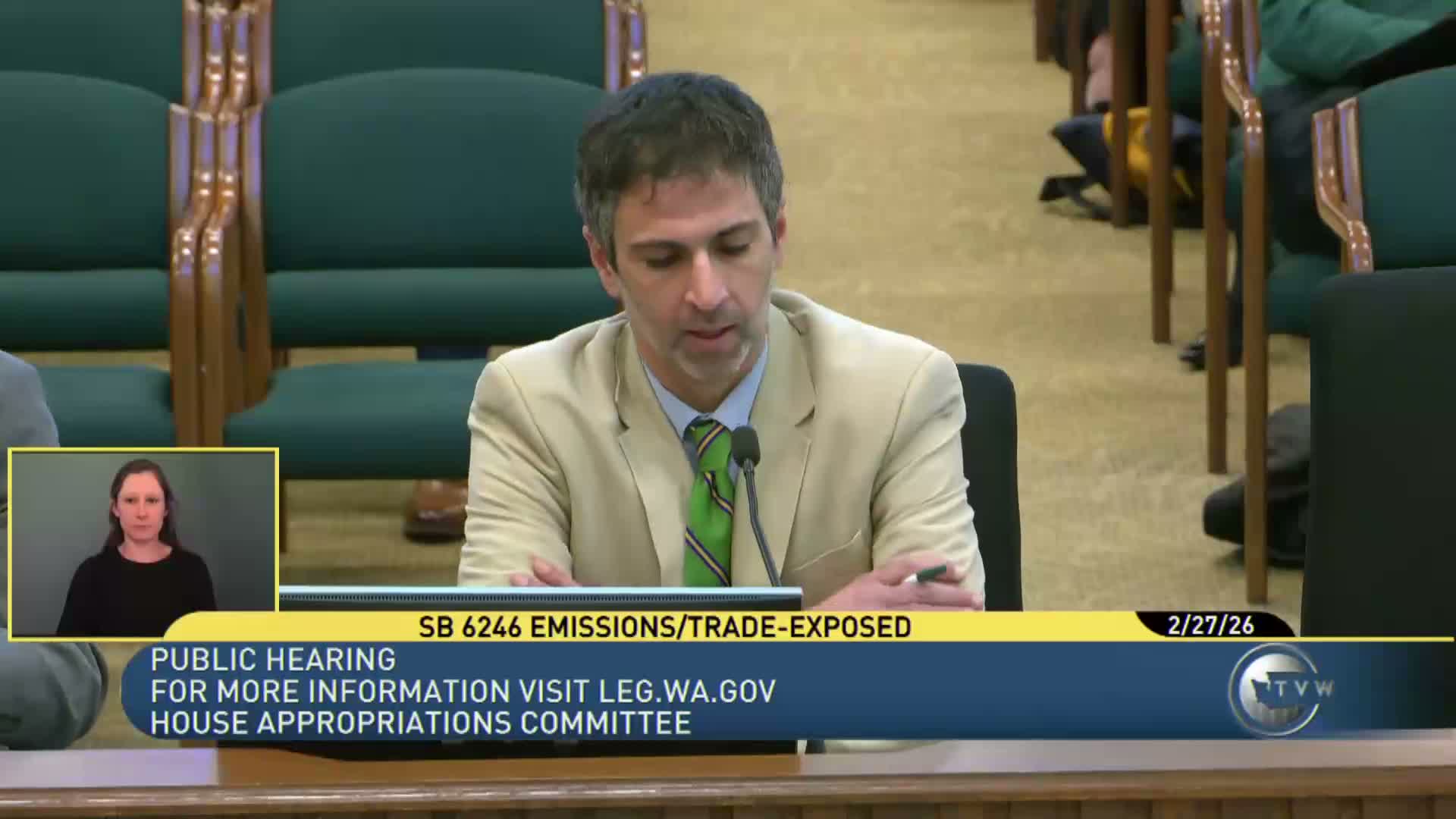
Committee staff briefed members that SSB 6246 would require Ecology to produce design recommendations and an allocation method for no‑cost allowances to emissions‑intensive, trade‑exposed (EITE) facilities under the Climate Commitment Act, commission a third‑party leakage study by 2028, and require periodic facility assessments beginning in 2028. Staff also noted confidentiality protections for information submitted under the bill and that Ecology would need significant resources to support the new reporting and review requirements.
Fiscal staff presented a wide range of potential costs in the fiscal note: Ecology estimated ongoing costs in the low‑hundreds of thousands per fiscal year for technical assistance and staff time, and one witness (Dan Jones) noted a higher estimate when including contracted third‑party work. Industry witnesses—the pulp and paper sector, large industrial employers and trade associations—supported the bill’s focus on leakage analysis but pressed for careful scoping and assurances that the analysis would account for sector dynamics and global pressures; several urged that allocation changes avoid creating sudden competitiveness disadvantages.
Labor and climate advocates framed the legislation as necessary to preserve program integrity and meet climate goals while protecting high‑wage jobs. Leah Masick of Climate Solutions told the committee that EITE allocation trajectories left unchecked could exceed the emissions cap and threaten program integrity; she urged the reporting and planning requirements as essential to balancing climate goals and preventing leakage.
Members questioned the scope and timing of Ecology’s work, requested more precise fiscal estimates and asked how confidential facility assessment data would be treated. Witnesses from local manufacturers and trade groups emphasized the importance of stakeholder engagement and called for the bill to include robust leakage and job‑impact analysis that can inform durable policy.
The committee received substantial public testimony from industry, labor, tribes and environmental groups. After extensive Q&A the hearing concluded with staff noting the Senate budget included funding at some level and with members flagging follow‑up on fiscal estimates and the scope of contracted analysis. The bill remains under committee consideration.
Fiscal staff presented a wide range of potential costs in the fiscal note: Ecology estimated ongoing costs in the low‑hundreds of thousands per fiscal year for technical assistance and staff time, and one witness (Dan Jones) noted a higher estimate when including contracted third‑party work. Industry witnesses—the pulp and paper sector, large industrial employers and trade associations—supported the bill’s focus on leakage analysis but pressed for careful scoping and assurances that the analysis would account for sector dynamics and global pressures; several urged that allocation changes avoid creating sudden competitiveness disadvantages.
Labor and climate advocates framed the legislation as necessary to preserve program integrity and meet climate goals while protecting high‑wage jobs. Leah Masick of Climate Solutions told the committee that EITE allocation trajectories left unchecked could exceed the emissions cap and threaten program integrity; she urged the reporting and planning requirements as essential to balancing climate goals and preventing leakage.
Members questioned the scope and timing of Ecology’s work, requested more precise fiscal estimates and asked how confidential facility assessment data would be treated. Witnesses from local manufacturers and trade groups emphasized the importance of stakeholder engagement and called for the bill to include robust leakage and job‑impact analysis that can inform durable policy.
The committee received substantial public testimony from industry, labor, tribes and environmental groups. After extensive Q&A the hearing concluded with staff noting the Senate budget included funding at some level and with members flagging follow‑up on fiscal estimates and the scope of contracted analysis. The bill remains under committee consideration.
View the Full Meeting & All Its Details
This article offers just a summary. Unlock complete video, transcripts, and insights as a Founder Member.
✓
Watch full, unedited meeting videos
✓
Search every word spoken in unlimited transcripts
✓
AI summaries & real-time alerts (all government levels)
✓
Permanent access to expanding government content
30-day money-back guarantee
