Senate passes supplemental operating budget after prolonged amendment fights
February 27, 2026 | Legislative Sessions, Washington
This article was created by AI summarizing key points discussed. AI makes mistakes, so for full details and context, please refer to the video of the full meeting. Please report any errors so we can fix them. Report an error »
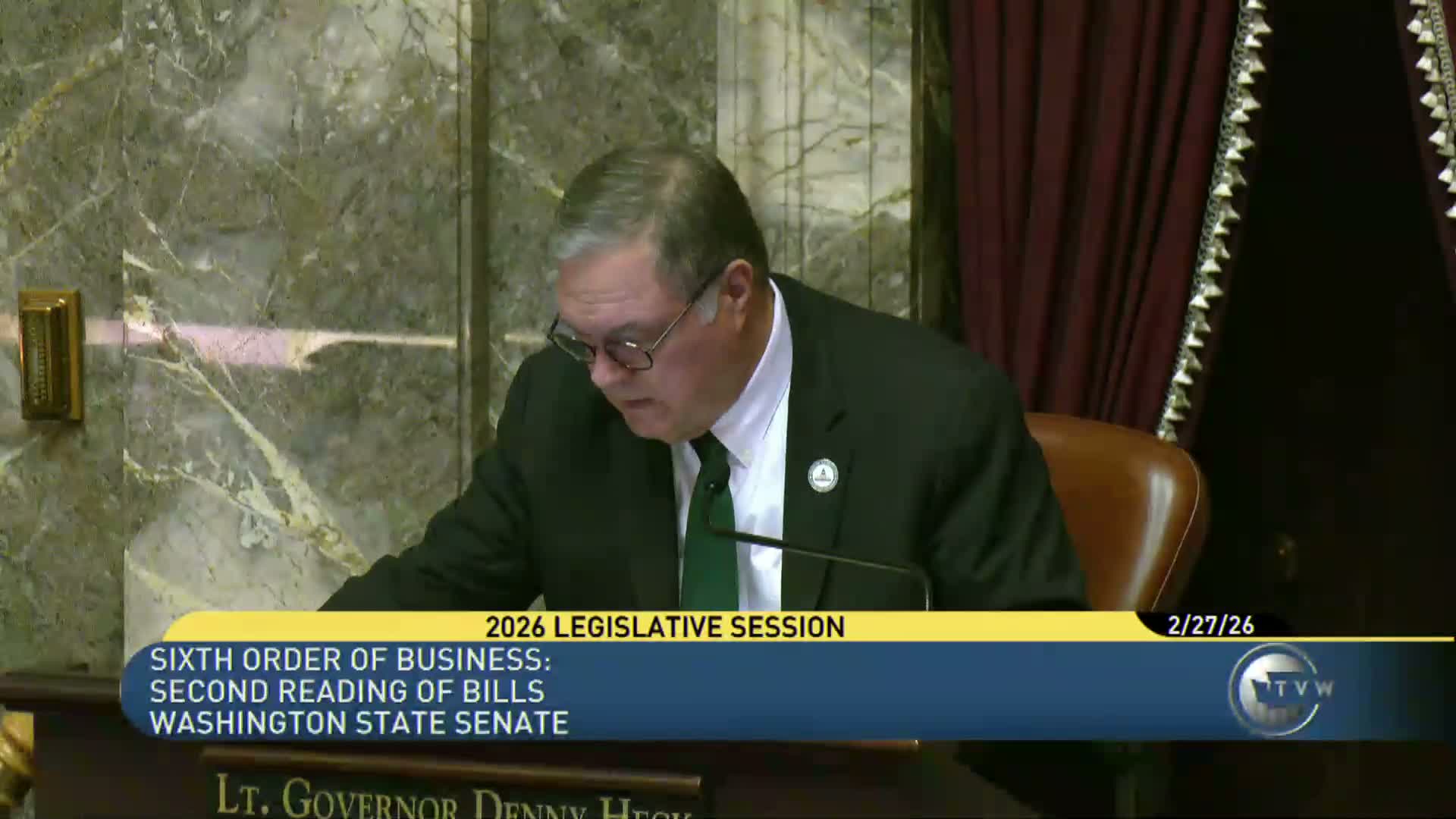
The Washington State Senate passed the engrossed substitute to Senate Bill 5,998, a supplemental operating budget, on Feb. 23 after extended floor debate and a series of roll-call votes.
Senate Majority Leader Robinson framed the package as a constrained but necessary response to flat revenues and federal funding uncertainty, saying the work "is about protecting the programs that Washingtonians need and mitigating federal harms wherever we could." He urged colleagues to support the measure as crafted by the Ways and Means committee.
Floor debate produced several high-profile amendment battles. Senator Dozier offered amendment 0 7 7 2 to create a broader housing task force aimed at studying drivers of rising housing costs; Dozier said the task force would "look into why our housing costs have skyrocketed" and examine potential legislative changes. The amendment failed on voice and subsequent votes after Senators Bateman and others argued the body already had effective efforts underway.
A pitched set of exchanges focused on the Paid Family and Medical Leave (PFML) program. Senator Gildan and allies proposed an amendment (numbered in the transcript as 0 7 7) to prohibit concurrent use of sick leave and PFML when it resulted in effectively 190% of pay; supporters said the change would save state dollars and restore parity with legislative practice, while opponents warned the fiscal effects and worker impacts required more study. That amendment was put to a roll-call and failed to secure a majority (22 aye, 27 nay on the roll call recorded in debate).
Other amendments were adopted and rejected across a range of program areas: amendment 0 7 9 1 directing a Commerce study on utility cost drivers was adopted; several proposed restores of targeted funds (for local planning grants, ballot-related reimbursements and other items) were not adopted. After debate concluded, the Senate advanced the engrossed substitute to third reading and passed it on final passage by a recorded vote of 38 yays to 19 nays.
The Senate’s floor record shows extensive back-and-forth on budget priorities — from funding for developmental disabilities wait lists to child-protection front-line staffing — and a mix of bipartisan votes on both amendments and final passage. The bill’s passage sends the engrossed substitute to the next steps required for enactment; specific line-item changes remain as adopted on the floor.
Senate Majority Leader Robinson framed the package as a constrained but necessary response to flat revenues and federal funding uncertainty, saying the work "is about protecting the programs that Washingtonians need and mitigating federal harms wherever we could." He urged colleagues to support the measure as crafted by the Ways and Means committee.
Floor debate produced several high-profile amendment battles. Senator Dozier offered amendment 0 7 7 2 to create a broader housing task force aimed at studying drivers of rising housing costs; Dozier said the task force would "look into why our housing costs have skyrocketed" and examine potential legislative changes. The amendment failed on voice and subsequent votes after Senators Bateman and others argued the body already had effective efforts underway.
A pitched set of exchanges focused on the Paid Family and Medical Leave (PFML) program. Senator Gildan and allies proposed an amendment (numbered in the transcript as 0 7 7) to prohibit concurrent use of sick leave and PFML when it resulted in effectively 190% of pay; supporters said the change would save state dollars and restore parity with legislative practice, while opponents warned the fiscal effects and worker impacts required more study. That amendment was put to a roll-call and failed to secure a majority (22 aye, 27 nay on the roll call recorded in debate).
Other amendments were adopted and rejected across a range of program areas: amendment 0 7 9 1 directing a Commerce study on utility cost drivers was adopted; several proposed restores of targeted funds (for local planning grants, ballot-related reimbursements and other items) were not adopted. After debate concluded, the Senate advanced the engrossed substitute to third reading and passed it on final passage by a recorded vote of 38 yays to 19 nays.
The Senate’s floor record shows extensive back-and-forth on budget priorities — from funding for developmental disabilities wait lists to child-protection front-line staffing — and a mix of bipartisan votes on both amendments and final passage. The bill’s passage sends the engrossed substitute to the next steps required for enactment; specific line-item changes remain as adopted on the floor.
Don't Miss a Word: See the Full Meeting!
Go beyond summaries. Unlock every video, transcript, and key insight with a Founder Membership.
✓
Get instant access to full meeting videos
✓
Search and clip any phrase from complete transcripts
✓
Receive AI-powered summaries & custom alerts
✓
Enjoy lifetime, unrestricted access to government data
30-day money-back guarantee
