Committee hears bill to expand senior and disabled property-tax relief; staff projects about 30,000 more households qualify
February 27, 2026 | Legislative Sessions, Washington
This article was created by AI summarizing key points discussed. AI makes mistakes, so for full details and context, please refer to the video of the full meeting. Please report any errors so we can fix them. Report an error »
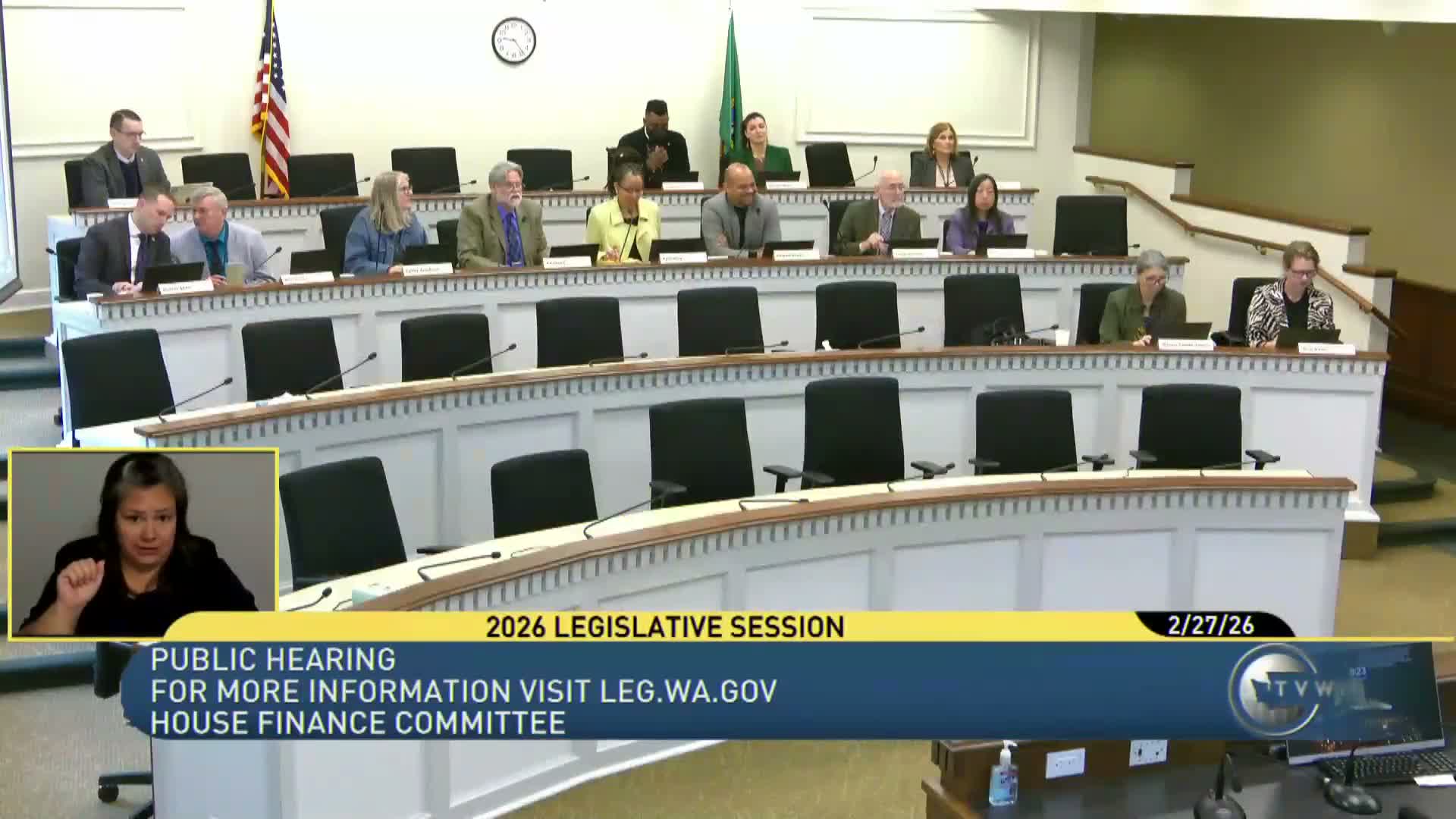
Committee staff briefed members that Senate Bill 61-62 would consolidate the state property tax into a single levy, expand eligibility and increase income thresholds for the senior and disabled exemption program, and add a $7,500 per-person standard deduction to simplify applications. Staff said approximately 30,000 additional households would qualify and that the bill would be roughly revenue neutral in the near term but would shift some burdens between state and local levies in later biennia.
Prime sponsor (identified in the transcript as Senator for the 26th District) described the bill as an effort to strengthen property-tax exemptions for vulnerable residents and to streamline a cumbersome application process. "This streamlining will also benefit our county assessor's offices because it's time consuming for them to process all of this and that will streamline that, saving them time and money," the sponsor said.
Local assessors testified in support. Thurston County Assessor Steven Drew said assessors statewide had worked with staff and stakeholders on the policy and called the bill "ready for prime time." Pierce County Assessor-Treasurer Marty Campbell said raising income thresholds and expanding exempt assessed value would allow more property owners on fixed or limited incomes to remain in their homes.
Opposition testimony raised concerns about shifting local revenue burdens and possible gaps in veteran exemptions. Eric Lundberg, speaking as a taxpayer, said his disabled veteran father still paid substantial property taxes and urged language guaranteeing broader veteran exemptions; Tim Eyman and other opponents said the bill expanded the property tax base and shifted costs to other taxpayers.
Staff confirmed there is a fiscal note: the Department of Revenue estimated minor implementation costs in FY27–28 and projected larger statewide shifts in later biennia (staff cited a $2,000,000 increase in 2027–29 and larger effects in the 2029–31 biennium, and local levy shifts in later years). Committee members asked follow-up questions about how the consolidated rate interacts with the state’s budget-based collection system and whether the bill would return to a budget-based system after the initial year; staff said they would follow up with additional detail.
Next steps: The committee held extensive public testimony and indicated additional questions for staff; the bill will be taken up further as amendments are finalized.
Prime sponsor (identified in the transcript as Senator for the 26th District) described the bill as an effort to strengthen property-tax exemptions for vulnerable residents and to streamline a cumbersome application process. "This streamlining will also benefit our county assessor's offices because it's time consuming for them to process all of this and that will streamline that, saving them time and money," the sponsor said.
Local assessors testified in support. Thurston County Assessor Steven Drew said assessors statewide had worked with staff and stakeholders on the policy and called the bill "ready for prime time." Pierce County Assessor-Treasurer Marty Campbell said raising income thresholds and expanding exempt assessed value would allow more property owners on fixed or limited incomes to remain in their homes.
Opposition testimony raised concerns about shifting local revenue burdens and possible gaps in veteran exemptions. Eric Lundberg, speaking as a taxpayer, said his disabled veteran father still paid substantial property taxes and urged language guaranteeing broader veteran exemptions; Tim Eyman and other opponents said the bill expanded the property tax base and shifted costs to other taxpayers.
Staff confirmed there is a fiscal note: the Department of Revenue estimated minor implementation costs in FY27–28 and projected larger statewide shifts in later biennia (staff cited a $2,000,000 increase in 2027–29 and larger effects in the 2029–31 biennium, and local levy shifts in later years). Committee members asked follow-up questions about how the consolidated rate interacts with the state’s budget-based collection system and whether the bill would return to a budget-based system after the initial year; staff said they would follow up with additional detail.
Next steps: The committee held extensive public testimony and indicated additional questions for staff; the bill will be taken up further as amendments are finalized.
View the Full Meeting & All Its Details
This article offers just a summary. Unlock complete video, transcripts, and insights as a Founder Member.
✓
Watch full, unedited meeting videos
✓
Search every word spoken in unlimited transcripts
✓
AI summaries & real-time alerts (all government levels)
✓
Permanent access to expanding government content
30-day money-back guarantee
