Bill would require continuous, ADA‑compliant pedestrian routes during construction near hospitals, parks and schools
February 26, 2026 | Legislative Sessions, Washington
This article was created by AI summarizing key points discussed. AI makes mistakes, so for full details and context, please refer to the video of the full meeting. Please report any errors so we can fix them. Report an error »
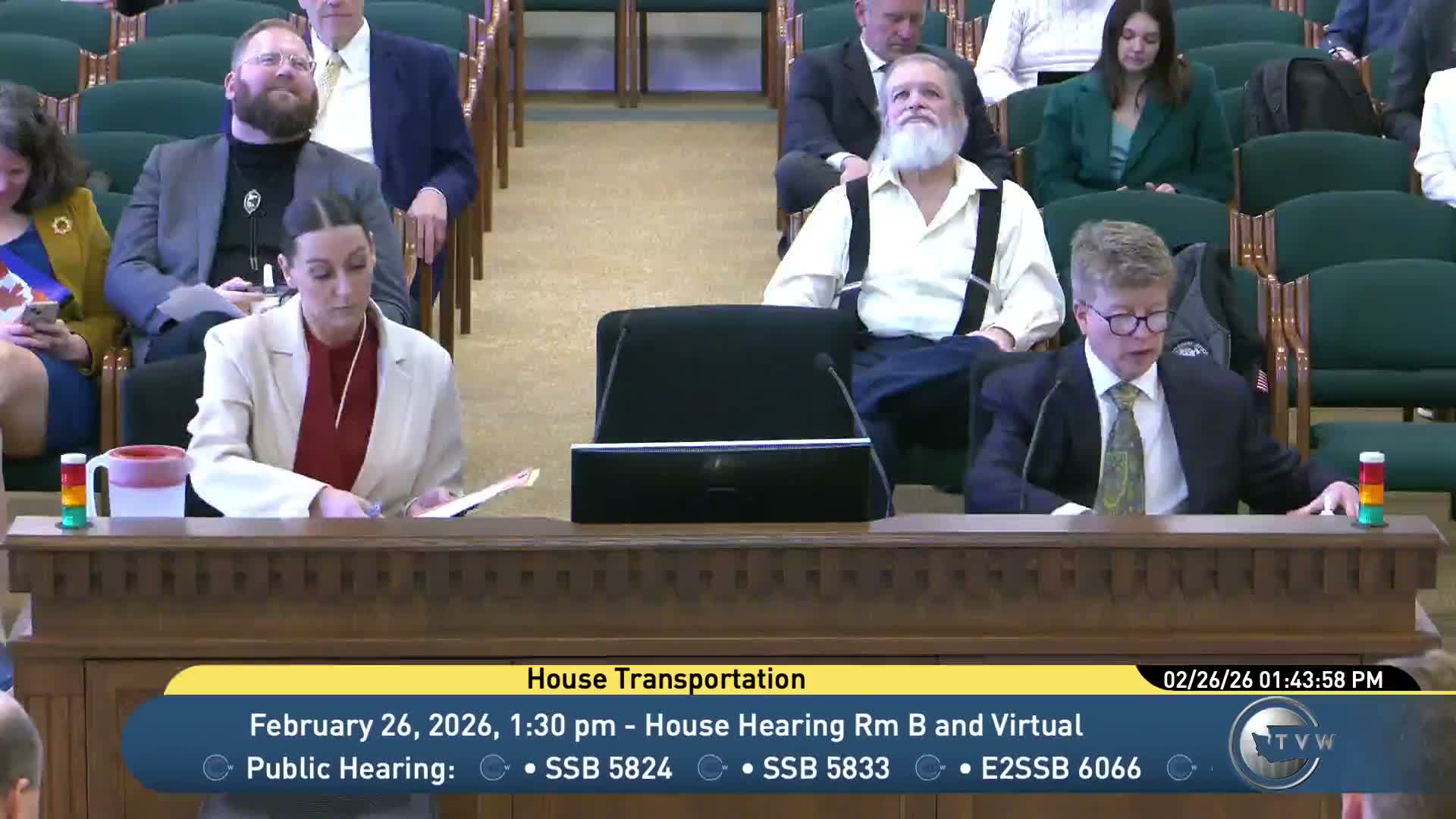
Mark Madsen, committee staff, told the committee that engrossed substitute SB 6311 would require permittees working in specified zones to provide a continuous, ADA‑compliant pedestrian route during construction unless infeasible under clear objective standards.
Madsen said the bill applies in four defined contexts including a hospital impact zone (public pedestrian facilities within 300 feet of hospital property), public park impact zones, school speed zones on school days, and school walk zones within a one‑mile radius of schools used for active transportation. He described required features for temporary routes: smooth, continuous surfaces; ADA‑compliant curb ramps and signage; physical separation from traffic; and adequate lighting.
The bill authorizes local permitting authorities (and WSDOT where applicable) to inspect work zones, issue stop‑work orders or civil penalties if permittees fail to remedy noncompliance after 24 hours, and, for repeated violations, revoke permits. It prevents local governments from being held liable for damages from lack of compliance.
Senator Marco Liias, sponsor of the bill, said the measure grew from a constituent report of unsafe pedestrian access near a hospital and that Tacoma’s existing policy informed the bill’s standards. He emphasized the bill’s focus on places with known pedestrian use and said local governments provided feedback during drafting.
Committee members asked whether terms such as 'hospital impact zone' already exist; staff replied that 'school walk zone' exists in statute but the other zone names are created by the bill. Fiscal staff said WSDOT estimated some annual costs for staff review and local projects (including temporary barriers/lighting) and that local fiscal impacts are indeterminate because jurisdictions don’t know how many zones would be designated.
During public testimony, AGC (Jerry Vanderwood) requested an amendment to align design responsibility and liability for temporary pedestrian routes in design‑bid‑build projects so contractors are not exposed to liability for preexisting design conditions; Transportation Choices Coalition and local governments supported the bill’s accessibility goals.
Next steps: The committee suspended the hearing on SB 6311 to consider other bills. No final committee action occurred during this session.
Madsen said the bill applies in four defined contexts including a hospital impact zone (public pedestrian facilities within 300 feet of hospital property), public park impact zones, school speed zones on school days, and school walk zones within a one‑mile radius of schools used for active transportation. He described required features for temporary routes: smooth, continuous surfaces; ADA‑compliant curb ramps and signage; physical separation from traffic; and adequate lighting.
The bill authorizes local permitting authorities (and WSDOT where applicable) to inspect work zones, issue stop‑work orders or civil penalties if permittees fail to remedy noncompliance after 24 hours, and, for repeated violations, revoke permits. It prevents local governments from being held liable for damages from lack of compliance.
Senator Marco Liias, sponsor of the bill, said the measure grew from a constituent report of unsafe pedestrian access near a hospital and that Tacoma’s existing policy informed the bill’s standards. He emphasized the bill’s focus on places with known pedestrian use and said local governments provided feedback during drafting.
Committee members asked whether terms such as 'hospital impact zone' already exist; staff replied that 'school walk zone' exists in statute but the other zone names are created by the bill. Fiscal staff said WSDOT estimated some annual costs for staff review and local projects (including temporary barriers/lighting) and that local fiscal impacts are indeterminate because jurisdictions don’t know how many zones would be designated.
During public testimony, AGC (Jerry Vanderwood) requested an amendment to align design responsibility and liability for temporary pedestrian routes in design‑bid‑build projects so contractors are not exposed to liability for preexisting design conditions; Transportation Choices Coalition and local governments supported the bill’s accessibility goals.
Next steps: The committee suspended the hearing on SB 6311 to consider other bills. No final committee action occurred during this session.
Don't Miss a Word: See the Full Meeting!
Go beyond summaries. Unlock every video, transcript, and key insight with a Founder Membership.
✓
Get instant access to full meeting videos
✓
Search and clip any phrase from complete transcripts
✓
Receive AI-powered summaries & custom alerts
✓
Enjoy lifetime, unrestricted access to government data
30-day money-back guarantee
