Nonprofits, schools and professional groups urge carve-outs as committee reviews technical tax bill
February 27, 2026 | Legislative Sessions, Washington
This article was created by AI summarizing key points discussed. AI makes mistakes, so for full details and context, please refer to the video of the full meeting. Please report any errors so we can fix them. Report an error »
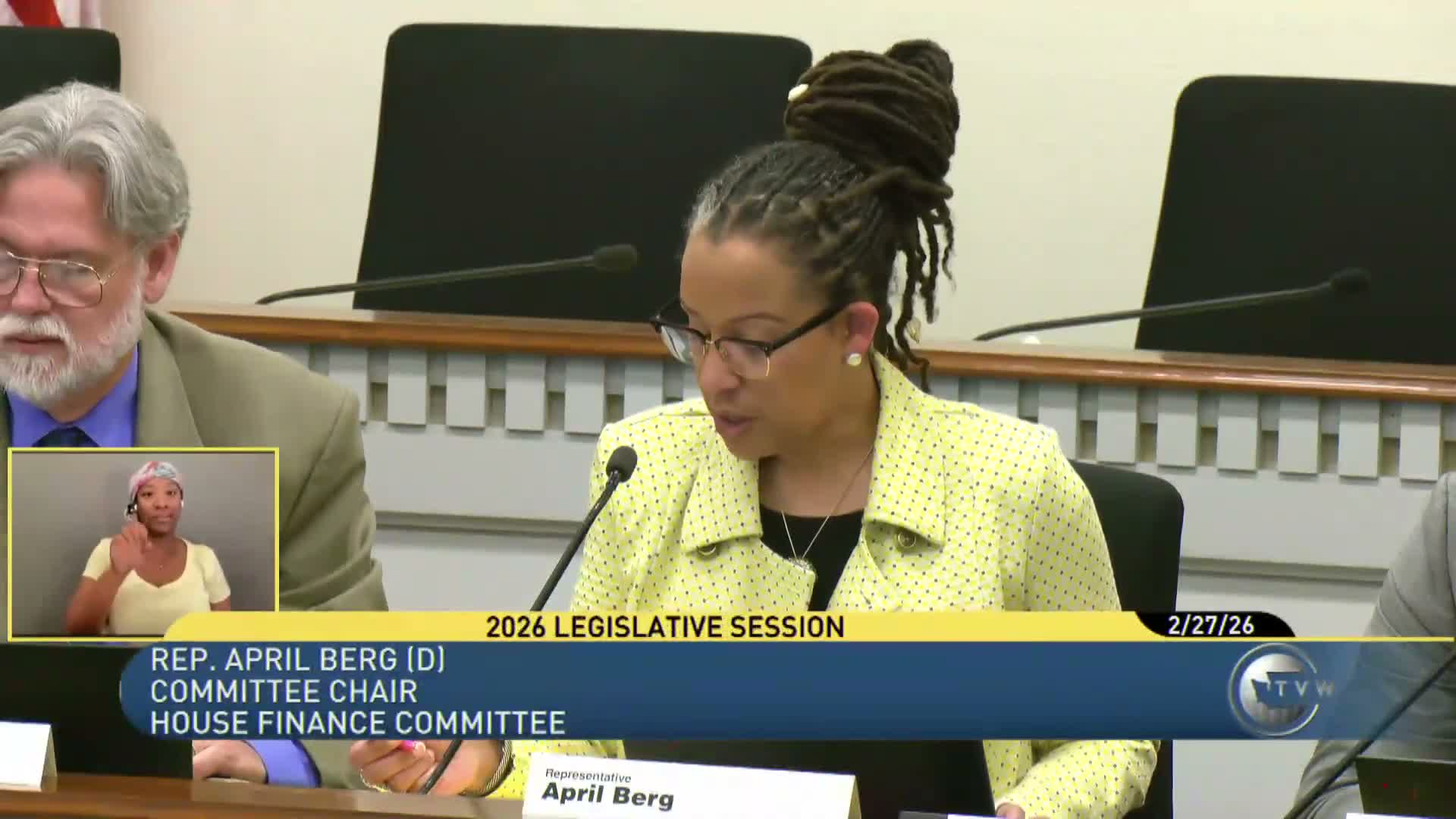
Committee staff described Senate Bill 6113 as a set of administrative and technical fixes to last year’s tax changes and a companion to House Bill 2257. Department of Revenue staff told the committee the bill is intended to correct statutory references, clarify retail-service definitions and include a temporary penalty-waiver window for certain reporting periods; DOR said it anticipates no net revenue impact and a one-time implementation cost.
Several nonprofit, education and professional groups asked the committee to restore or add exemptions for live presentations and nonprofit providers. Kevin Schilling of the Washington State Dental Association and Patty Belmonte of the Hands On Children’s Museum asked the committee to exempt nonprofit training and children’s-museum programs from the live-presentation sales-tax change because the added costs would harm access and operations. The Washington Federation of Independent Schools and the Northwest Career College Federation asked for workforce-training and K–12 carve-outs. The Washington Library Association urged an exemption for libraries; the Washington State Medical Association and the Mechanical Contractors Association also requested limited carve-outs to protect continuing education and licensure training.
DOR staff (Steve Ewing) confirmed there is a penalty-waiver provision limited to taxpayers who were timely in the prior 24 months and noted agencies may request clarifying amendments to make administrative procedures more efficient. Nonprofit witnesses warned the definition of taxable "live presentations" could create unexpected costs for educators, museums and training providers: "The sales tax legislation has resulted in an estimated annual increase to our budget of more than $40,000," the museum’s representative said.
The committee did not take final action; staff said they may offer technical amendments to clarify exemptions and the department said it might propose clarifying language for the penalty-waiver process.
Next steps: Committee staff will consider amendment language to address nonprofit, library, school and workforce-training concerns and may return the bill to the floor with technical fixes after stakeholder review.
Several nonprofit, education and professional groups asked the committee to restore or add exemptions for live presentations and nonprofit providers. Kevin Schilling of the Washington State Dental Association and Patty Belmonte of the Hands On Children’s Museum asked the committee to exempt nonprofit training and children’s-museum programs from the live-presentation sales-tax change because the added costs would harm access and operations. The Washington Federation of Independent Schools and the Northwest Career College Federation asked for workforce-training and K–12 carve-outs. The Washington Library Association urged an exemption for libraries; the Washington State Medical Association and the Mechanical Contractors Association also requested limited carve-outs to protect continuing education and licensure training.
DOR staff (Steve Ewing) confirmed there is a penalty-waiver provision limited to taxpayers who were timely in the prior 24 months and noted agencies may request clarifying amendments to make administrative procedures more efficient. Nonprofit witnesses warned the definition of taxable "live presentations" could create unexpected costs for educators, museums and training providers: "The sales tax legislation has resulted in an estimated annual increase to our budget of more than $40,000," the museum’s representative said.
The committee did not take final action; staff said they may offer technical amendments to clarify exemptions and the department said it might propose clarifying language for the penalty-waiver process.
Next steps: Committee staff will consider amendment language to address nonprofit, library, school and workforce-training concerns and may return the bill to the floor with technical fixes after stakeholder review.
View the Full Meeting & All Its Details
This article offers just a summary. Unlock complete video, transcripts, and insights as a Founder Member.
✓
Watch full, unedited meeting videos
✓
Search every word spoken in unlimited transcripts
✓
AI summaries & real-time alerts (all government levels)
✓
Permanent access to expanding government content
30-day money-back guarantee
