Rep. Prasnow and committee consider creating in‑house mediator, staff attorney for Vermont Labor Relations Board with $250,000 request
February 28, 2026 | Appropriations, HOUSE OF REPRESENTATIVES, Committees, Legislative , Vermont
This article was created by AI summarizing key points discussed. AI makes mistakes, so for full details and context, please refer to the video of the full meeting. Please report any errors so we can fix them. Report an error »
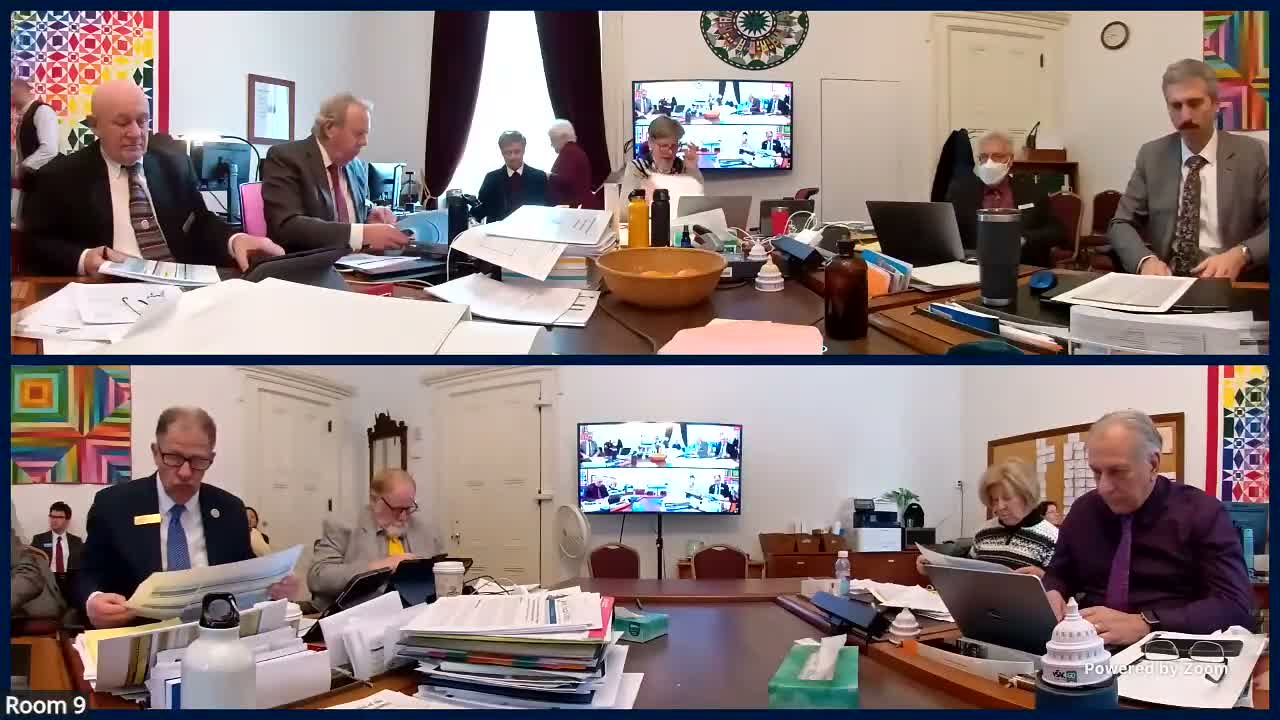
The House Appropriations Committee on Feb. 27 reviewed a bill to create an in‑house mediator position within the Vermont Labor Relations Board and to add a classified staff attorney position, accompanied by a $250,000 appropriation to cover salary and benefits for the two positions.
Sophie Sedatny of the Office of Legislative Council told the committee that the Federal Mediation and Conciliation Service (FMCS) — historically used by parties in Vermont to secure mediators for bargaining impasses — has lost substantial capacity, and state parties have begun to face gaps in service. "The Federal Mediation and Conciliation Service was a victim of some significant cuts ... the mediators were laid off," Sedatny said, describing the rationale for adding an in‑house mediator who would handle public‑sector bargaining impasses and, when capacity allows, may offer free mediation on grievances and unfair labor practice charges.
The bill as drafted also requires the board to develop policies and procedures to ensure confidential information acquired in mediation remains protected and separate from board and staff access. During committee consideration, members suggested adding a staff attorney to help the board with backlog and legal workload; proponents said the board's staffing is very lean and that an attorney had been a recurring request.
Representative Prasnow (South Burlington), the bill sponsor, said the original intent was to create the mediator position and that committee members later proposed adding the attorney role. Committee members pressed for clarity about which positions the labor board explicitly requested and whether state departments could be charged for mediation services; some members raised a neutrality concern if departments were asked to pay for mediation because that could affect perceived impartiality.
Patrick Titterton of the Joint Fiscal Office summarized the fiscal note: the request is for a $250,000 appropriation to cover the two positions; members asked whether the appropriation could be divided between the two jobs. No formal vote occurred in the recorded discussion; the chair instructed staff to explore alternative funding mechanisms while signaling the mediator role as the committee's priority.
Ending: The committee paused for a break and planned follow‑up work on funding options and final fiscal wording before a planned vote.
Sophie Sedatny of the Office of Legislative Council told the committee that the Federal Mediation and Conciliation Service (FMCS) — historically used by parties in Vermont to secure mediators for bargaining impasses — has lost substantial capacity, and state parties have begun to face gaps in service. "The Federal Mediation and Conciliation Service was a victim of some significant cuts ... the mediators were laid off," Sedatny said, describing the rationale for adding an in‑house mediator who would handle public‑sector bargaining impasses and, when capacity allows, may offer free mediation on grievances and unfair labor practice charges.
The bill as drafted also requires the board to develop policies and procedures to ensure confidential information acquired in mediation remains protected and separate from board and staff access. During committee consideration, members suggested adding a staff attorney to help the board with backlog and legal workload; proponents said the board's staffing is very lean and that an attorney had been a recurring request.
Representative Prasnow (South Burlington), the bill sponsor, said the original intent was to create the mediator position and that committee members later proposed adding the attorney role. Committee members pressed for clarity about which positions the labor board explicitly requested and whether state departments could be charged for mediation services; some members raised a neutrality concern if departments were asked to pay for mediation because that could affect perceived impartiality.
Patrick Titterton of the Joint Fiscal Office summarized the fiscal note: the request is for a $250,000 appropriation to cover the two positions; members asked whether the appropriation could be divided between the two jobs. No formal vote occurred in the recorded discussion; the chair instructed staff to explore alternative funding mechanisms while signaling the mediator role as the committee's priority.
Ending: The committee paused for a break and planned follow‑up work on funding options and final fiscal wording before a planned vote.
View the Full Meeting & All Its Details
This article offers just a summary. Unlock complete video, transcripts, and insights as a Founder Member.
✓
Watch full, unedited meeting videos
✓
Search every word spoken in unlimited transcripts
✓
AI summaries & real-time alerts (all government levels)
✓
Permanent access to expanding government content
30-day money-back guarantee
