Board debates how to capture revenue from livestreams and photography at Mercer County school events
November 22, 2025 | MERCER COUNTY SCHOOLS, School Districts, West Virginia
This article was created by AI summarizing key points discussed. AI makes mistakes, so for full details and context, please refer to the video of the full meeting. Please report any errors so we can fix them. Report an error »
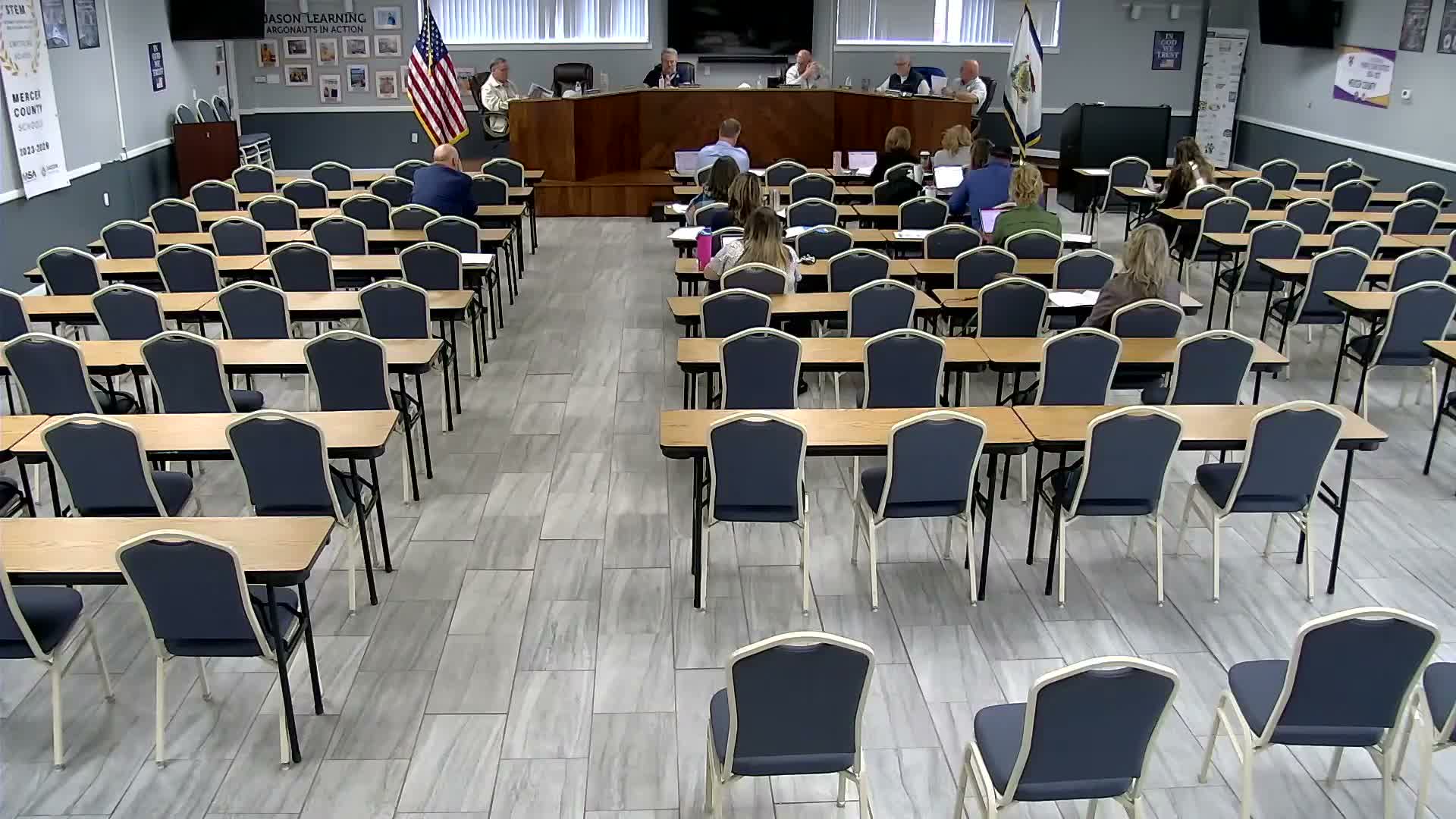
Board members and staff devoted an extended portion of the Nov. 21 work session to how the district should handle third‑party livestreaming, radio overlays and photography of school athletic events, after the chair said outside parties were monetizing broadcasts without routing revenue back to the district.
The chair framed the issue bluntly: independent streamers and photographers are selling ads and running banner advertisements on streams of Mercer County games but the district and student programs receive little or none of that revenue. "They're coming to our facilities and they're making money on our sports that they're not sharing with us," the chair said during the discussion.
Board members and administrators offered a range of potential responses. Options discussed included issuing a request for proposals (RFP) for exclusive county‑wide production rights, charging per‑game or per‑season licensing fees, negotiating percentage‑of‑revenue arrangements, or developing an in‑house production capability through vocational/technical programs (McTac) to retain more control over distribution and ads. One board member suggested a straightforward license fee (for example, a modest per‑game charge) as a simple starting point for principals and athletic directors; others warned a flat fee could leave revenue on the table if a provider earned substantially more on some broadcasts.
A recurring practical concern was verification and enforcement. Board members noted that percentage‑based deals require audited financial reporting from providers to confirm the revenue amounts — a difficult administrative burden — and recalled a past incident where a radio salesperson had already sold ads before the district negotiated rights. Several members proposed a scaled approach in an RFP that would allow bidders to propose either a flat fee or a percentage and to require audited or verifiable reporting at season’s end.
Staff and board members also discussed an in‑house model. One administrator described partnerships with local vocational programs and suggested McTac could build internal production capacity to make the district’s own stream a product controlled by the schools, with any ad revenue directed to student activities. That option would require investment in equipment and staffing, and some members cautioned the district currently lacks the human resources to field large‑scale in‑house production across multiple schools.
No formal action was taken; board members asked administration to gather comparative models from other counties and from the West Virginia secondary‑school association (WBSSAC/WVSSAC) and to return with recommendations for an RFP or pilot approach.
What’s next: staff were asked to research existing county and state models, outline potential RFP language and describe verification approaches so the board can consider a policy or procurement action in coming months.
The chair framed the issue bluntly: independent streamers and photographers are selling ads and running banner advertisements on streams of Mercer County games but the district and student programs receive little or none of that revenue. "They're coming to our facilities and they're making money on our sports that they're not sharing with us," the chair said during the discussion.
Board members and administrators offered a range of potential responses. Options discussed included issuing a request for proposals (RFP) for exclusive county‑wide production rights, charging per‑game or per‑season licensing fees, negotiating percentage‑of‑revenue arrangements, or developing an in‑house production capability through vocational/technical programs (McTac) to retain more control over distribution and ads. One board member suggested a straightforward license fee (for example, a modest per‑game charge) as a simple starting point for principals and athletic directors; others warned a flat fee could leave revenue on the table if a provider earned substantially more on some broadcasts.
A recurring practical concern was verification and enforcement. Board members noted that percentage‑based deals require audited financial reporting from providers to confirm the revenue amounts — a difficult administrative burden — and recalled a past incident where a radio salesperson had already sold ads before the district negotiated rights. Several members proposed a scaled approach in an RFP that would allow bidders to propose either a flat fee or a percentage and to require audited or verifiable reporting at season’s end.
Staff and board members also discussed an in‑house model. One administrator described partnerships with local vocational programs and suggested McTac could build internal production capacity to make the district’s own stream a product controlled by the schools, with any ad revenue directed to student activities. That option would require investment in equipment and staffing, and some members cautioned the district currently lacks the human resources to field large‑scale in‑house production across multiple schools.
No formal action was taken; board members asked administration to gather comparative models from other counties and from the West Virginia secondary‑school association (WBSSAC/WVSSAC) and to return with recommendations for an RFP or pilot approach.
What’s next: staff were asked to research existing county and state models, outline potential RFP language and describe verification approaches so the board can consider a policy or procurement action in coming months.
View the Full Meeting & All Its Details
This article offers just a summary. Unlock complete video, transcripts, and insights as a Founder Member.
✓
Watch full, unedited meeting videos
✓
Search every word spoken in unlimited transcripts
✓
AI summaries & real-time alerts (all government levels)
✓
Permanent access to expanding government content
30-day money-back guarantee
