Senate committee approves bill to require voter approval, four-year reauthorization for school-district recreation mills
February 27, 2026 | Joint & Standing, Committees, Legislative, Wyoming
This article was created by AI summarizing key points discussed. AI makes mistakes, so for full details and context, please refer to the video of the full meeting. Please report any errors so we can fix them. Report an error »
Representative Nyman presented House Bill 127 as an accountability measure that would give taxpayers a periodic opportunity to affirm school-district recreation mill levies at the ballot box. "This is just a simple accountability option for people to be able to say if it's doing its job," Nyman said, explaining the proposal grew from constituent concerns after a school board in his area levied a rec mill without a public vote.
Supporters of the bill argued voters should have direct oversight for a recurring tax that can grow into a long-term funding source. Senator Eyde said, "Let the people decide," and praised the idea of giving taxpayers an opportunity to reauthorize levies.
Opponents — including the Wyoming School Boards Association’s Nick Bellack, multiple local officials, and recreation professionals — argued the bill would undermine representative local government, introduce recurring campaign costs and create instability for long-term capital projects and operations. Bellack told the committee the measure "weakens local representative government and creates instability in communities," adding that levies already face public oversight through elections and open meetings.
Multiple local witnesses described concrete impacts: Emmy Damoto Riley, vice chair of the Friends of the Pinedale Aquatic Center, said the PAC’s annual operating budget is $2.1 million, nearly 75% of which comes from the school-district rec mill levy, and warned that forcing reauthorization every four years could imperil small-pool operations and swim lessons. Other speakers, including Dr. Mark Rinnie (Cheyenne City Council) and Sandy Newsome (former Shoshone Rec District board member), described the mills as essential for maintenance, programming and staff.
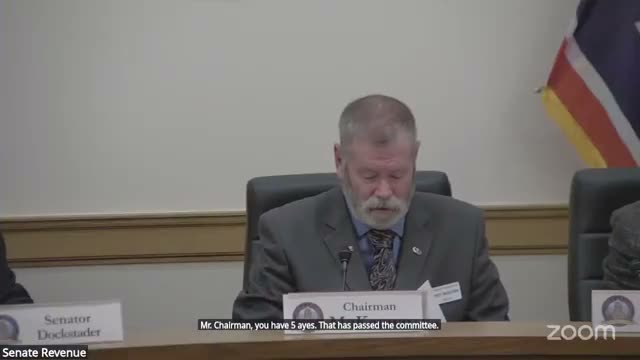
The committee considered, amended and passed a dates-focused amendment offered by Senator Case that revised multiple effective dates and set an effective date in mid-2029 for aspects of the bill; the amendment passed on a voice vote. On the final roll call for the engrossed bill as amended, the clerk recorded three ayes and two nos (Senator Dockstader and Senator Pappas opposed), and the committee advanced HB127 to the floor. Chairman McEwen indicated the bill would go to the Senate floor next.
The record contains extensive local testimony both for and against the proposal; the committee’s amendment adjusts implementation timing but leaves substantial policy questions about whether targeted voter-approval requirements should apply to recreation mills while other special districts remain subject to existing representative-authority structures.
Supporters of the bill argued voters should have direct oversight for a recurring tax that can grow into a long-term funding source. Senator Eyde said, "Let the people decide," and praised the idea of giving taxpayers an opportunity to reauthorize levies.
Opponents — including the Wyoming School Boards Association’s Nick Bellack, multiple local officials, and recreation professionals — argued the bill would undermine representative local government, introduce recurring campaign costs and create instability for long-term capital projects and operations. Bellack told the committee the measure "weakens local representative government and creates instability in communities," adding that levies already face public oversight through elections and open meetings.
Multiple local witnesses described concrete impacts: Emmy Damoto Riley, vice chair of the Friends of the Pinedale Aquatic Center, said the PAC’s annual operating budget is $2.1 million, nearly 75% of which comes from the school-district rec mill levy, and warned that forcing reauthorization every four years could imperil small-pool operations and swim lessons. Other speakers, including Dr. Mark Rinnie (Cheyenne City Council) and Sandy Newsome (former Shoshone Rec District board member), described the mills as essential for maintenance, programming and staff.
The committee considered, amended and passed a dates-focused amendment offered by Senator Case that revised multiple effective dates and set an effective date in mid-2029 for aspects of the bill; the amendment passed on a voice vote. On the final roll call for the engrossed bill as amended, the clerk recorded three ayes and two nos (Senator Dockstader and Senator Pappas opposed), and the committee advanced HB127 to the floor. Chairman McEwen indicated the bill would go to the Senate floor next.
The record contains extensive local testimony both for and against the proposal; the committee’s amendment adjusts implementation timing but leaves substantial policy questions about whether targeted voter-approval requirements should apply to recreation mills while other special districts remain subject to existing representative-authority structures.
View the Full Meeting & All Its Details
This article offers just a summary. Unlock complete video, transcripts, and insights as a Founder Member.
✓
Watch full, unedited meeting videos
✓
Search every word spoken in unlimited transcripts
✓
AI summaries & real-time alerts (all government levels)
✓
Permanent access to expanding government content
30-day money-back guarantee
