Committee advances bill to expand who can perform court-ordered mental health exams and require 7-day timeline
February 27, 2026 | Joint & Standing, Committees, Legislative, Wyoming
This article was created by AI summarizing key points discussed. AI makes mistakes, so for full details and context, please refer to the video of the full meeting. Please report any errors so we can fix them. Report an error »
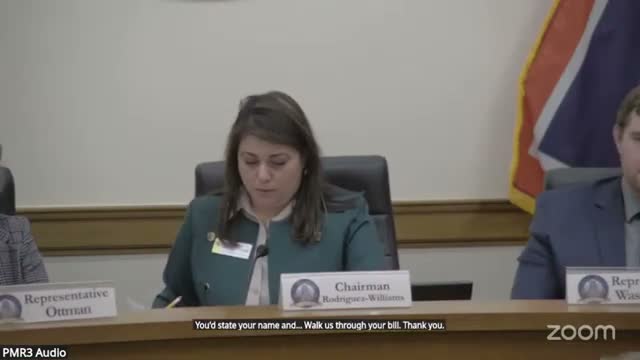
Senate File 23, which would expand who may perform court-ordered outpatient examinations and set a seven-day timeline for completing those exams, passed the House Labor, Health and Social Services Committee after sponsor Senator Schueller and state health officials answered members’ questions.
Senator Schueller (Senate District 15) told the committee the bill is intended to speed access to evaluations in communities that lack psychiatrists or licensed psychologists: "The timeliness of getting that examination done in 7 days is really the the big deal of this bill." She said the change would add licensed physician assistants and advanced practice registered nurses to the list of qualified examiners and that any clinician asked to perform an exam could decline if they did not feel comfortable.
The bill keeps a judicial check on the process. Schueller described a Senate amendment that requires a secondary review, when indicated, to be done by a licensed psychiatric mental health nurse practitioner or a physician assistant with documented education, training and experience in psychiatric assessment and diagnosis. "Most of the time the judge will take a look at it... the big thing is getting the exam done," she said.
Stefan Johansen, director of the Wyoming Department of Health, framed the measure as a practical balance between access and protecting civil liberties. "This is a civil rights issue," Johansen said, urging the panel to weigh the seriousness of involuntary hospitalization against rural provider shortages and noting that judges retain discretion to order further review.
Committee members asked whether telehealth could be used, who pays for examinations, when secondary reviews are triggered, and how the process is started. Johansen said telepsychiatry is permitted under Title 25 and Title 7 and that counties generally cover short-term detention costs while the state finances treatment after the initial 72-hour period.
The committee approved technical and wording amendments during debate, including language clarifying that the court shall appoint "one of the following" qualified examiners and replacing a gendered pronoun with "the patient." A motion to substitute narrower language for initial examiners failed for lack of a second. The committee then voted on final passage by roll call; the clerk announced nine ayes and the bill passed the committee as amended.
Senator Schueller was asked to find a House member to carry the bill to floor consideration.
What happens next: The bill will proceed to be carried in the House if a member agrees to sponsor it there; no floor action was recorded in the committee meeting.
Senator Schueller (Senate District 15) told the committee the bill is intended to speed access to evaluations in communities that lack psychiatrists or licensed psychologists: "The timeliness of getting that examination done in 7 days is really the the big deal of this bill." She said the change would add licensed physician assistants and advanced practice registered nurses to the list of qualified examiners and that any clinician asked to perform an exam could decline if they did not feel comfortable.
The bill keeps a judicial check on the process. Schueller described a Senate amendment that requires a secondary review, when indicated, to be done by a licensed psychiatric mental health nurse practitioner or a physician assistant with documented education, training and experience in psychiatric assessment and diagnosis. "Most of the time the judge will take a look at it... the big thing is getting the exam done," she said.
Stefan Johansen, director of the Wyoming Department of Health, framed the measure as a practical balance between access and protecting civil liberties. "This is a civil rights issue," Johansen said, urging the panel to weigh the seriousness of involuntary hospitalization against rural provider shortages and noting that judges retain discretion to order further review.
Committee members asked whether telehealth could be used, who pays for examinations, when secondary reviews are triggered, and how the process is started. Johansen said telepsychiatry is permitted under Title 25 and Title 7 and that counties generally cover short-term detention costs while the state finances treatment after the initial 72-hour period.
The committee approved technical and wording amendments during debate, including language clarifying that the court shall appoint "one of the following" qualified examiners and replacing a gendered pronoun with "the patient." A motion to substitute narrower language for initial examiners failed for lack of a second. The committee then voted on final passage by roll call; the clerk announced nine ayes and the bill passed the committee as amended.
Senator Schueller was asked to find a House member to carry the bill to floor consideration.
What happens next: The bill will proceed to be carried in the House if a member agrees to sponsor it there; no floor action was recorded in the committee meeting.
View the Full Meeting & All Its Details
This article offers just a summary. Unlock complete video, transcripts, and insights as a Founder Member.
✓
Watch full, unedited meeting videos
✓
Search every word spoken in unlimited transcripts
✓
AI summaries & real-time alerts (all government levels)
✓
Permanent access to expanding government content
30-day money-back guarantee
