Committee advances amendment to make injuring an officer a felony, adds 'serious' modifier
February 27, 2026 | Joint & Standing, Committees, Legislative, Wyoming
This article was created by AI summarizing key points discussed. AI makes mistakes, so for full details and context, please refer to the video of the full meeting. Please report any errors so we can fix them. Report an error »
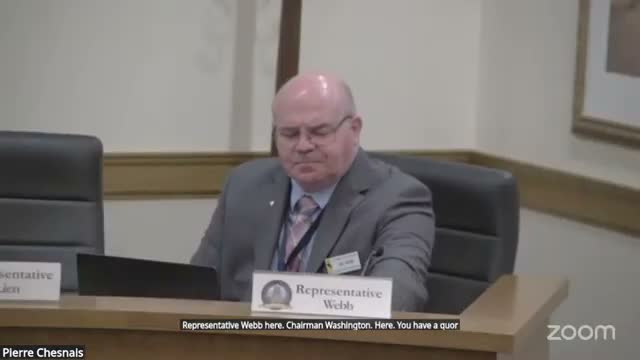
Senate File 87, a bill to elevate certain injuries to peace officers to a felony when they occur during obstructive conduct, moved forward in the House Judiciary Committee after members added the word "serious" to limit the offense.
Senator Kolb introduced the measure, saying it responds to incidents in which officers were injured — including a stabbing — and that the bill aims to give prosecutors a clearer path to charge those who physically harm officers while they are performing their duties. "You don't have the right to hurt police officers," the sponsor said, arguing the bill protects law enforcement from intentional and injurious interference.
Proponents and opponents clashed over how broadly the change would reach. Representative Chesnick warned that importing misdemeanor language into the felony provision could criminalize protesters or bystanders if an officer suffered even a minor scrape. "If there's a protest ... and one of them trips and falls and skins his knee, now the protesters have a 10‑year felony," the representative said in a hypothetical illustrating the concern.
Representative Justice read the existing statutory definition of "bodily injury" (citing the code provision read aloud in committee): the code defines bodily injury to include a cut, abrasion, burn, temporary disfigurement, physical pain or impairment of a bodily function. That prompted members to propose an amendment adding the word "serious" before "bodily injury" to limit felony exposure to more substantial harms.
Supporters of the narrower amendment argued it avoids criminalizing minor, incidental harms and protects vulnerable people who might resist arrest without intent to injure. Opponents said prosecutors exercise discretion and would not pursue felony charges for trivial injuries, so adding "serious" could weaken the statute's purpose. One committee member said the amendment might be revisited in conference committee or on the floor.
The committee adopted the amendment and then approved the bill as amended on a roll call: the clerk recorded 6 ayes, 1 no, and two members excused. Committee members emphasized that courts and prosecutors will continue to resolve factual intent and causation questions in individual cases.
The committee moved the bill to the next stage; no floor action date was set in the hearing.
Senator Kolb introduced the measure, saying it responds to incidents in which officers were injured — including a stabbing — and that the bill aims to give prosecutors a clearer path to charge those who physically harm officers while they are performing their duties. "You don't have the right to hurt police officers," the sponsor said, arguing the bill protects law enforcement from intentional and injurious interference.
Proponents and opponents clashed over how broadly the change would reach. Representative Chesnick warned that importing misdemeanor language into the felony provision could criminalize protesters or bystanders if an officer suffered even a minor scrape. "If there's a protest ... and one of them trips and falls and skins his knee, now the protesters have a 10‑year felony," the representative said in a hypothetical illustrating the concern.
Representative Justice read the existing statutory definition of "bodily injury" (citing the code provision read aloud in committee): the code defines bodily injury to include a cut, abrasion, burn, temporary disfigurement, physical pain or impairment of a bodily function. That prompted members to propose an amendment adding the word "serious" before "bodily injury" to limit felony exposure to more substantial harms.
Supporters of the narrower amendment argued it avoids criminalizing minor, incidental harms and protects vulnerable people who might resist arrest without intent to injure. Opponents said prosecutors exercise discretion and would not pursue felony charges for trivial injuries, so adding "serious" could weaken the statute's purpose. One committee member said the amendment might be revisited in conference committee or on the floor.
The committee adopted the amendment and then approved the bill as amended on a roll call: the clerk recorded 6 ayes, 1 no, and two members excused. Committee members emphasized that courts and prosecutors will continue to resolve factual intent and causation questions in individual cases.
The committee moved the bill to the next stage; no floor action date was set in the hearing.
View the Full Meeting & All Its Details
This article offers just a summary. Unlock complete video, transcripts, and insights as a Founder Member.
✓
Watch full, unedited meeting videos
✓
Search every word spoken in unlimited transcripts
✓
AI summaries & real-time alerts (all government levels)
✓
Permanent access to expanding government content
30-day money-back guarantee
