House committee approves select committee on gaming with $37,000 appropriation
February 27, 2026 | Joint & Standing, Committees, Legislative, Wyoming
This article was created by AI summarizing key points discussed. AI makes mistakes, so for full details and context, please refer to the video of the full meeting. Please report any errors so we can fix them. Report an error »
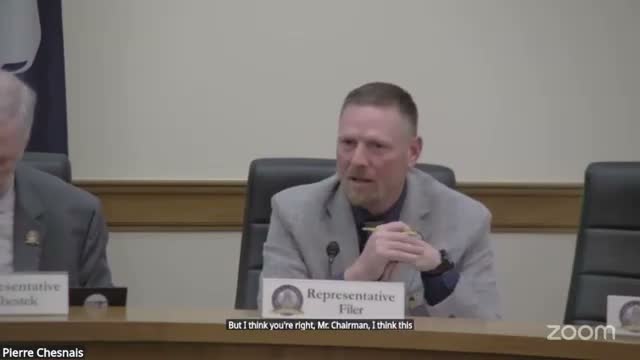
The House Judiciary Committee approved Senate File 111 to establish a select committee on gaming and fund it with an appropriation of about $37,000, with lawmakers saying the state’s gaming sector is large and complex and needs a legislative venue for sustained attention.
Sponsor Senator Kolb described gaming as a roughly $2 billion industry in the state and said a standing legislative committee would help the Legislature keep pace with technological and regulatory change. "We only tackle the very few select areas," he said, arguing the committee would provide continuity and the ability to draft legislation.
Industry and stakeholder witnesses supported the measure. Affie Ellis, an attorney representing Cowboy Racing, suggested adding explicit language directing the committee to study industry best practices, licensing disqualifiers and the history and connection between live horse racing and historic pari‑mutuel gaming. "We think it's important to add and understand for committee members that connection," Ellis said.
Nick Laramendi, executive director of the Wyoming Gaming Commission (testifying remotely), said gaming is highly complex and that in January, about $230 million was wagered on historic horse racing and skill‑based amusement games in Wyoming. County Commissioners Association representative Jeremiah Reaman said local governments need a single legislative venue to address funding and operational issues.
Lawmakers debated a proposed amendment to explicitly add "best industry practices" and the history/connection to live horse racing to the committee’s charge. Supporters said the language would make the committee’s work clearer; opponents worried the phrasing might be overly prescriptive. The motion to insert the broader language failed on a tied show‑of‑hands. A roll call on the bill recorded seven ayes with absent/excused members; the sponsor said he would carry the bill on the floor.
The committee advanced SF111 as drafted; members discussed whether the committee should have a sunset provision to ensure accountability, but the appropriations language included a funding sunset tied to June 30, 2028, that the sponsor said would constrain operations without further appropriation.
Sponsor Senator Kolb described gaming as a roughly $2 billion industry in the state and said a standing legislative committee would help the Legislature keep pace with technological and regulatory change. "We only tackle the very few select areas," he said, arguing the committee would provide continuity and the ability to draft legislation.
Industry and stakeholder witnesses supported the measure. Affie Ellis, an attorney representing Cowboy Racing, suggested adding explicit language directing the committee to study industry best practices, licensing disqualifiers and the history and connection between live horse racing and historic pari‑mutuel gaming. "We think it's important to add and understand for committee members that connection," Ellis said.
Nick Laramendi, executive director of the Wyoming Gaming Commission (testifying remotely), said gaming is highly complex and that in January, about $230 million was wagered on historic horse racing and skill‑based amusement games in Wyoming. County Commissioners Association representative Jeremiah Reaman said local governments need a single legislative venue to address funding and operational issues.
Lawmakers debated a proposed amendment to explicitly add "best industry practices" and the history/connection to live horse racing to the committee’s charge. Supporters said the language would make the committee’s work clearer; opponents worried the phrasing might be overly prescriptive. The motion to insert the broader language failed on a tied show‑of‑hands. A roll call on the bill recorded seven ayes with absent/excused members; the sponsor said he would carry the bill on the floor.
The committee advanced SF111 as drafted; members discussed whether the committee should have a sunset provision to ensure accountability, but the appropriations language included a funding sunset tied to June 30, 2028, that the sponsor said would constrain operations without further appropriation.
Don't Miss a Word: See the Full Meeting!
Go beyond summaries. Unlock every video, transcript, and key insight with a Founder Membership.
✓
Get instant access to full meeting videos
✓
Search and clip any phrase from complete transcripts
✓
Receive AI-powered summaries & custom alerts
✓
Enjoy lifetime, unrestricted access to government data
30-day money-back guarantee
